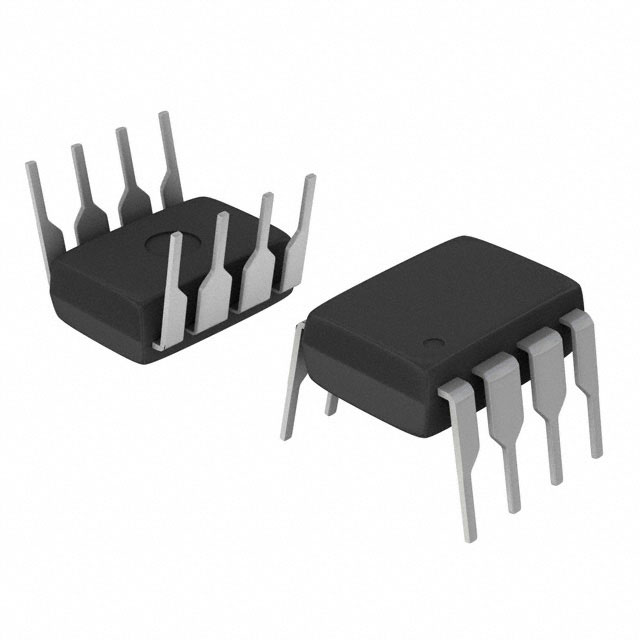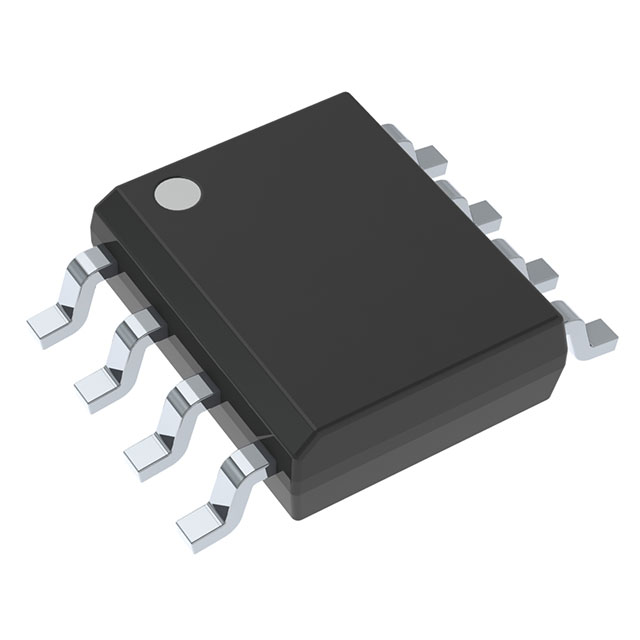
DS8921ATM/NOPB
ActiveSINGLE TRANSMITTER/RECEIVER RS-422 8-PIN SOIC TUBE
Deep-Dive with AI
Search across all available documentation for this part.
DS8921ATM/NOPB
ActiveSINGLE TRANSMITTER/RECEIVER RS-422 8-PIN SOIC TUBE
Technical Specifications
Parameters and characteristics for this part
| Specification | DS8921ATM/NOPB |
|---|---|
| Duplex | Full |
| Mounting Type | Surface Mount |
| Operating Temperature [Max] | 85 °C |
| Operating Temperature [Min] | -40 °C |
| Package / Case | 8-SOIC |
| Package / Case [x] | 0.154 in |
| Package / Case [y] | 3.9 mm |
| Protocol | RS422, RS485 |
| Receiver Hysteresis | 70 mV |
| Supplier Device Package | 8-SOIC |
| Type | Transceiver |
| Voltage - Supply [Max] | 5.5 V |
| Voltage - Supply [Min] | 4.5 V |
Pricing
Prices provided here are for design reference only. For realtime values and availability, please visit the distributors directly
| Distributor | Package | Quantity | $ | |
|---|---|---|---|---|
| Arrow | N/A | 95 | $ 1.90 | |
| Digikey | Tube | 1 | $ 3.34 | |
| 10 | $ 3.00 | |||
| 95 | $ 2.46 | |||
| 285 | $ 2.33 | |||
| 570 | $ 2.09 | |||
| 1045 | $ 1.77 | |||
| 2565 | $ 1.68 | |||
| 5035 | $ 1.61 | |||
| Newark | Each | 1 | $ 4.61 | |
| 10 | $ 4.34 | |||
| 25 | $ 4.10 | |||
| 50 | $ 3.92 | |||
| 190 | $ 3.75 | |||
| 285 | $ 3.57 | |||
| 570 | $ 3.50 | |||
| Texas Instruments | TUBE | 1 | $ 2.52 | |
| 100 | $ 2.21 | |||
| 250 | $ 1.55 | |||
| 1000 | $ 1.25 | |||
Description
General part information
DS8921 Series
The DS8921, DS8921A, and DS8921AT devices are differential line driver and receiver pairs designed specifically for applications meeting the ST506, ST412, and ESDI disk drive standards. In addition, these devices meet the requirements of the EIA standard RS-422.
The DS8921x receivers offer an input sensitivity of 200 mV over a &plsumn;7 V common mode operating range. Hysteresis is incorporated (typically 70 mV) to improve noise margin for slowly changing input waveforms.
The DS8921x drivers are designed to provide unipolar differential drive to twisted-pair or parallel wire transmission lines. Complementary outputs are logically ANDed and provide an output skew of 0.5 ns (typical) with propagation delays of 12 ns.