Deep-Dive with AI
Search across all available documentation for this part.
Deep-Dive with AI
Technical Specifications
Parameters and characteristics for this part
| Specification | SN74ALS232BN |
|---|---|
| Access Time | 30 ns |
| Bus Directional | Uni-Directional |
| Current - Supply (Max) [Max] | 125 mA |
| Data Rate | 40 MHz |
| Expansion Type | Width |
| Function | Asynchronous |
| FWFT Support | False |
| Memory Size | 64 |
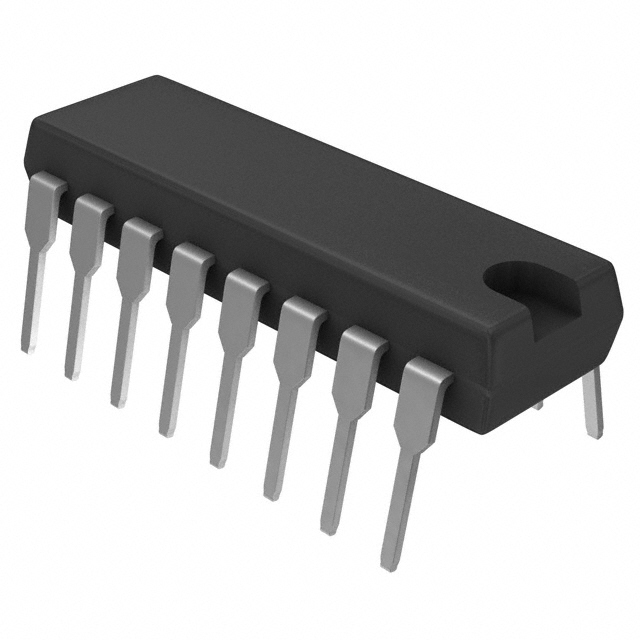
| Mounting Type | Through Hole |
| Operating Temperature [Max] | 70 °C |
| Operating Temperature [Min] | 0 °C |
| Package / Case | 16-DIP |
| Package / Case [x] | 0.3 in |
| Package / Case [x] | 7.62 mm |
| Programmable Flags Support | False |
| Retransmit Capability | False |
| Supplier Device Package | 16-PDIP |
| Voltage - Supply [Max] | 5.5 V |
| Voltage - Supply [Min] | 4.5 V |
Pricing
Prices provided here are for design reference only. For realtime values and availability, please visit the distributors directly
| Distributor | Package | Quantity | $ | |
|---|---|---|---|---|
| Digikey | N/A | 0 | $ 15.84 | |
| 6402 | $ 15.84 | |||
| Tube | 75 | $ 13.25 | ||
| Mouser | N/A | 75 | $ 13.95 | |
| 100 | $ 13.34 | |||
| 250 | $ 13.19 | |||
| 500 | $ 12.88 | |||
| Texas Instruments | TUBE | 1 | $ 16.33 | |
| 100 | $ 13.31 | |||
| 250 | $ 10.46 | |||
| 1000 | $ 8.88 | |||
Description
General part information
74ALS232 Series
This 64-bit memory features high speed and fast fall-through times. It is organized as 16 words by 4 bits.
A first-in, first-out (FIFO) memory is a storage device that allows data to be written into and read from its array at independent data rates. This FIFO is designed to process data at rates up to 40MHz in a bit-parallel format, word by word.
Data is written into memory on a low-to-high transition at the load-clock (LDCK) input and is read out on a low-to-high transition at the unload-clock (UNCK) input. The memory is full when the number of words clocked in exceeds by 16 the number of words clocked out. When the memory is full, LDCK signals have no effect on the data residing in memory. When the memory is empty, UNCK signals have no effect.
Documents
Technical documentation and resources