


Deep-Dive with AI
Search across all available documentation for this part.
Deep-Dive with AI
Technical Specifications
Parameters and characteristics for this part
| Specification | TPS65261EVM-650 |
|---|---|
| Board Type | Fully Populated |
| Contents | Board(s) |
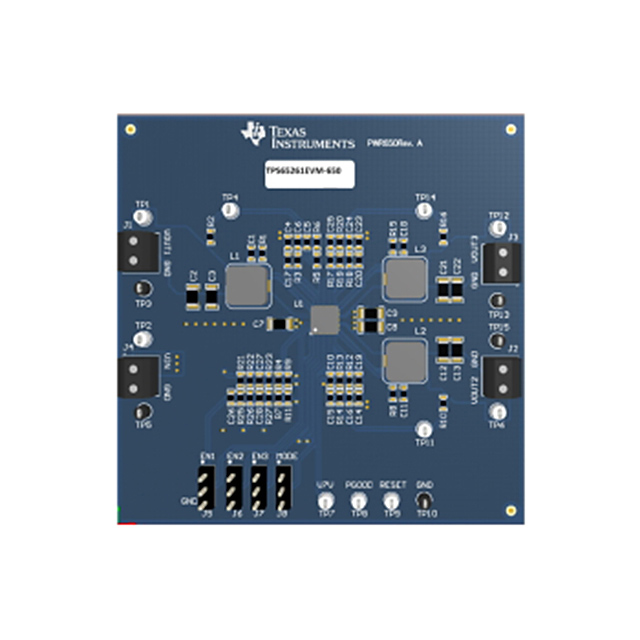
| Current - Output | 3 A, 2 A |
| Frequency - Switching | 600 kHz |
| Main Purpose | DC/DC, Step Down |
| Outputs and Type | Non-Isolated, Non-Isolated Outputs |
| Outputs and Type | 3 |
| Outputs and Type [custom] | 3 |
| Regulator Topology | Buck |
| Supplied Contents | Board(s) |
| Utilized IC / Part | TPS65261 |
| Voltage - Input [Max] | 18 V |
| Voltage - Input [Min] | 4.5 V |
| Voltage - Output | 1.8 V, 1.2 V, 3.3 V |
TPS65261 Series
4.5V to 18V Input Voltage, 3A/2A/2A Output Current Triple Synchronous Buck Converter
| Part | Output Configuration | Current - Output | Voltage - Input (Min) [Min] | Output Type | Synchronous Rectifier | Number of Outputs | Frequency - Switching [Max] | Frequency - Switching [Min] | Voltage - Output (Min/Fixed) | Voltage - Output (Max) [Max] | Topology | Function | Mounting Type | Voltage - Input (Max) [Max] | Operating Temperature [Max] | Operating Temperature [Min] | Package / Case | Supplier Device Package | Board Type | Supplied Contents | Outputs and Type | Outputs and Type | Voltage - Input [Max] | Voltage - Input [Min] | Regulator Topology | Outputs and Type [custom] | Utilized IC / Part | Contents | Voltage - Output | Main Purpose | Frequency - Switching |
|---|---|---|---|---|---|---|---|---|---|---|---|---|---|---|---|---|---|---|---|---|---|---|---|---|---|---|---|---|---|---|---|
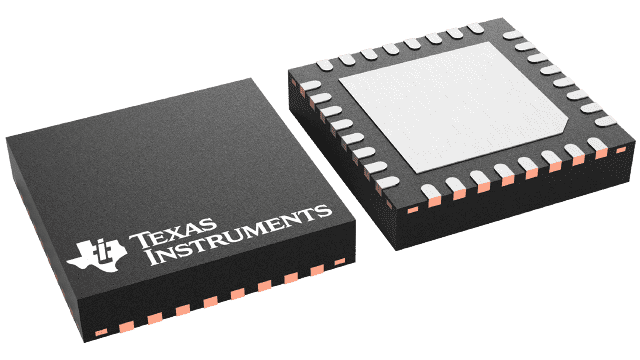 Texas Instruments | Positive | 2 A 3 A | 4.5 V | Adjustable | 3 | 2 MHz | 250 kHz | 0.6 V | 18 V | Buck | Step-Down | Surface Mount | 18 V | 85 C | -40 ¯C | 32-VFQFN Exposed Pad | 32-VQFN (5x5) | ||||||||||||||
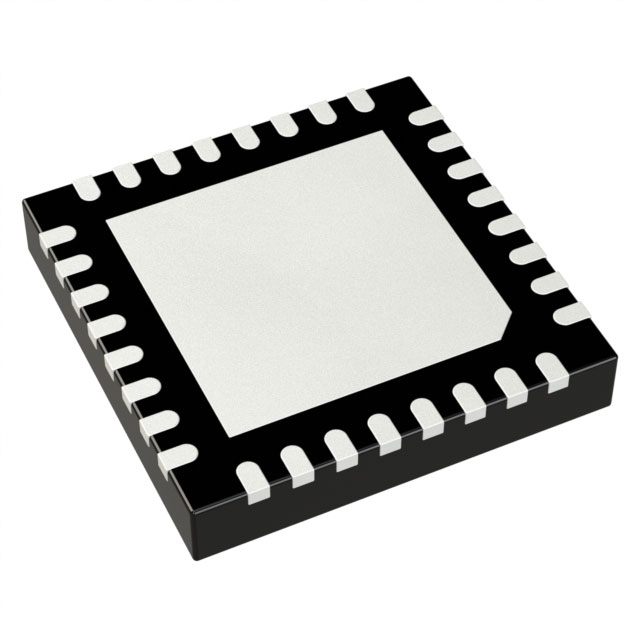 Texas Instruments | Positive | 2 A 3 A | 4.5 V | Adjustable | 3 | 2 MHz | 250 kHz | 0.6 V | 18 V | Buck | Step-Down | Surface Mount | 18 V | 85 C | -40 ¯C | 32-VFQFN Exposed Pad | 32-VQFN (5x5) | ||||||||||||||
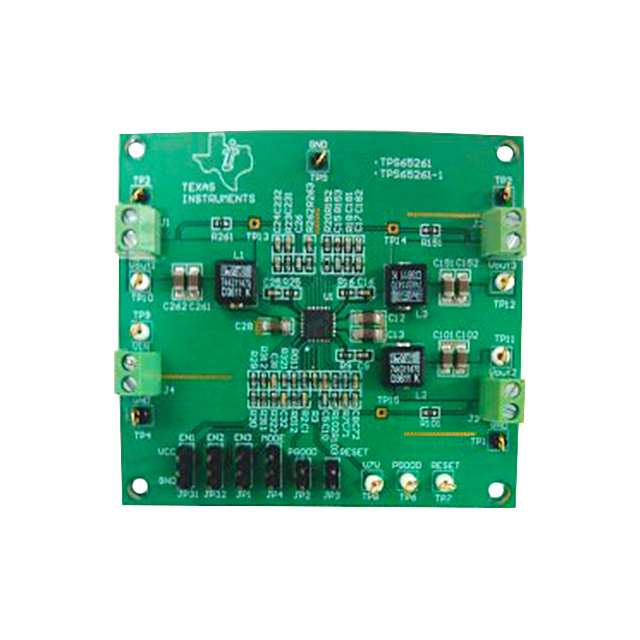 Texas Instruments | 2 A 3 A | Fully Populated | Board(s) | Non-Isolated Non-Isolated Outputs | 3 | 18 V | 4.5 V | Buck | 3 | TPS65261-1 | Board(s) | 1.2 V 1.8 V 3.3 V | DC/DC Step Down | 600 kHz | |||||||||||||||||
Texas Instruments | Positive | 2 A 3 A | 4.5 V | Adjustable | 3 | 2 MHz | 250 kHz | 0.6 V | 18 V | Buck | Step-Down | Surface Mount | 18 V | 85 C | -40 ¯C | 32-VFQFN Exposed Pad | 32-VQFN (5x5) | ||||||||||||||
Texas Instruments | 2 A 3 A | Fully Populated | Board(s) | Non-Isolated Non-Isolated Outputs | 3 | 18 V | 4.5 V | Buck | 3 | TPS65261 | Board(s) | 1.2 V 1.8 V 3.3 V | DC/DC Step Down | 600 kHz | |||||||||||||||||
Texas Instruments | Positive | 2 A 3 A | 4.5 V | Adjustable | 3 | 2 MHz | 250 kHz | 0.6 V | 18 V | Buck | Step-Down | Surface Mount | 18 V | 85 C | -40 ¯C | 32-VFQFN Exposed Pad | 32-VQFN (5x5) |
Pricing
Prices provided here are for design reference only. For realtime values and availability, please visit the distributors directly
| Distributor | Package | Quantity | $ | |
|---|---|---|---|---|
| Digikey | Box | 1 | $ 118.80 | |
| N/A | 4 | $ 118.80 | ||
Description
General part information
TPS65261 Series
The TPS65261, TPS65261-1 is a monolithic triple synchronous step-down (buck) converter with 3-A/2-A/2-A output currents. A wide 4.5-V to 18-V input supply voltage range encompasses the most intermediate bus voltages operating off 5-V, 9-V, 12-V or 15-V power bus. The converter, with constant frequency peak current mode, is designed to simplify its application while giving designers options to optimize the system according to targeted applications. The switching frequency of the converters can be adjusted from 250 kHz to 2 MHz with an external resistor. The 180° out-of-phase operation between Buck1 and Buck2, 3 (Buck2 and 3 run in phase) minimizes the input filter requirements.
The TPS65261, TPS65261-1 features an automatic power sequence with connecting MODE pin to V7V and configuring EN1/2/3 pins. The device also features an open drain RESET signal to monitor power down.
At light load, the TPS65261 automatically operates in pulse skipping mode (PSM) and the TPS65261-1 operates in force continuous current mode (FCC). PSM mode provides high efficiency by reducing switching losses at light loads and FCC mode reduces noise susceptibility and RF interference.
Documents
Technical documentation and resources