


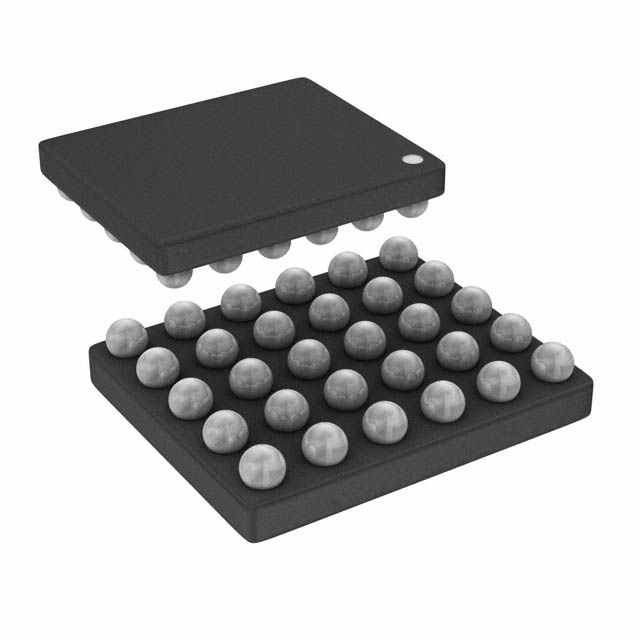
AFE4410YZR
ActiveLOW POWER INTEGRATED AFE WITH FIFO FOR WEARABLE OPTICAL HEART-RATE MONITORING AND BIOSENSING
Deep-Dive with AI
Search across all available documentation for this part.
AFE4410YZR
ActiveLOW POWER INTEGRATED AFE WITH FIFO FOR WEARABLE OPTICAL HEART-RATE MONITORING AND BIOSENSING
Technical Specifications
Parameters and characteristics for this part
| Specification | AFE4410YZR |
|---|---|
| Mounting Type | Surface Mount |
| Number of Bits | 24 |
| Number of Channels [custom] | 3 |
| Package / Case | 30-XFBGA, DSBGA |
| Supplier Device Package | 30-DSBGA |
Pricing
Prices provided here are for design reference only. For realtime values and availability, please visit the distributors directly
| Distributor | Package | Quantity | $ | |
|---|---|---|---|---|
| Digikey | Cut Tape (CT) | 1 | $ 5.91 | |
| 10 | $ 5.30 | |||
| 25 | $ 5.02 | |||
| 100 | $ 4.35 | |||
| 250 | $ 4.12 | |||
| 500 | $ 3.70 | |||
| 1000 | $ 3.12 | |||
| Digi-Reel® | 1 | $ 5.91 | ||
| 10 | $ 5.30 | |||
| 25 | $ 5.02 | |||
| 100 | $ 4.35 | |||
| 250 | $ 4.12 | |||
| 500 | $ 3.70 | |||
| 1000 | $ 3.12 | |||
| Tape & Reel (TR) | 3000 | $ 1.91 | ||
| Texas Instruments | LARGE T&R | 1 | $ 3.08 | |
| 100 | $ 2.70 | |||
| 250 | $ 1.89 | |||
| 1000 | $ 1.52 | |||
Description
General part information
AFE4410 Series
TheAFE4410is an analog front-end for optical biosensing applications, such as heart rate monitoring (HRM). The device supports a maximum of four switching light-emitting diodes (LEDs) and a maximum of three photodiodes (PDs). The electrical current from the photodiode is converted into voltage by the transimpedance amplifier (TIA) and digitized using an analog-to-digital converter (ADC). The ADC code is stored in a 128-sample first-in, first-out block (FIFO) with programmable depth. The FIFO can be read out using either an I2C interface or a serial peripheral interface (SPI). The AFE also has a fully integrated LED driver with 8-bit current control. The device has high dynamic range transmit-and-receive circuitry offering a dynamic range of up to 100 dB that enables accurate heart ratesensing. The AFE achieves extremely low current levels by operating an ultralow power (ULP) mode set by using the ENABLE_ULP register bit.
TheAFE4410is an analog front-end for optical biosensing applications, such as heart rate monitoring (HRM). The device supports a maximum of four switching light-emitting diodes (LEDs) and a maximum of three photodiodes (PDs). The electrical current from the photodiode is converted into voltage by the transimpedance amplifier (TIA) and digitized using an analog-to-digital converter (ADC). The ADC code is stored in a 128-sample first-in, first-out block (FIFO) with programmable depth. The FIFO can be read out using either an I2C interface or a serial peripheral interface (SPI). The AFE also has a fully integrated LED driver with 8-bit current control. The device has high dynamic range transmit-and-receive circuitry offering a dynamic range of up to 100 dB that enables accurate heart ratesensing. The AFE achieves extremely low current levels by operating an ultralow power (ULP) mode set by using the ENABLE_ULP register bit.