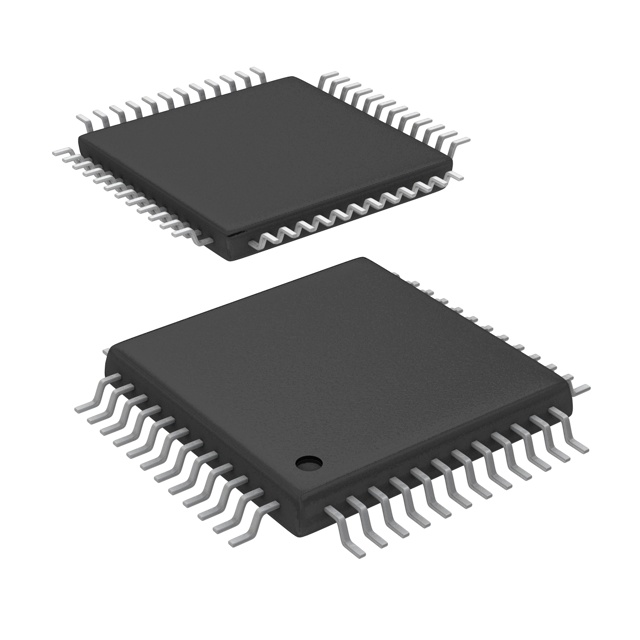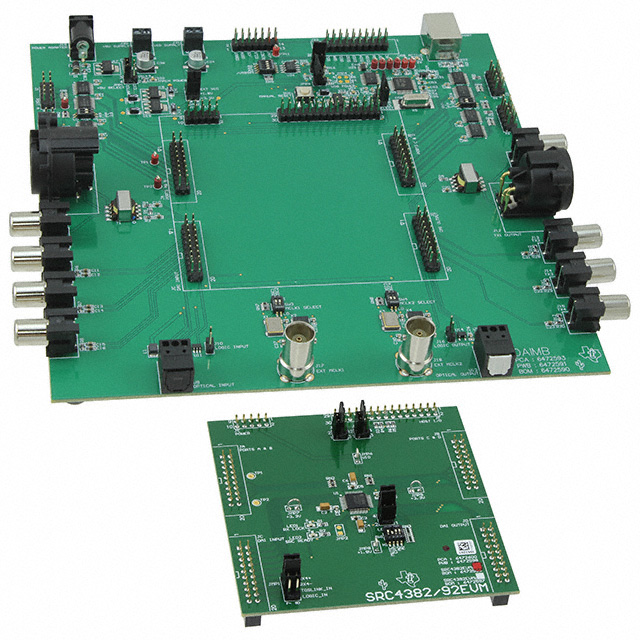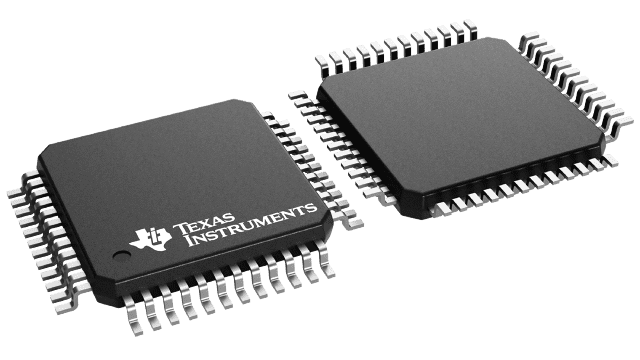
SRC4382IPFBR
ActiveSAMPLE RATE CONVERTER 216KSPS 24BIT 48-PIN TQFP T/R
Deep-Dive with AI
Search across all available documentation for this part.
SRC4382IPFBR
ActiveSAMPLE RATE CONVERTER 216KSPS 24BIT 48-PIN TQFP T/R
Technical Specifications
Parameters and characteristics for this part
| Specification | SRC4382IPFBR |
|---|---|
| Applications | Digital Audio Interfacing |
| Function | Sample Rate Converter |
| Interface | I2C, SPI |
| Mounting Type | Surface Mount |
| Number of Channels [custom] | 2 |
| Operating Temperature [Max] | 85 °C |
| Operating Temperature [Min] | -40 °C |
| Package / Case | 48-TQFP |
| Specifications [Max] | 216 kHz |
| Specifications [Min] | 4 kHz |
| Supplier Device Package | 48-TQFP (7x7) |
| Voltage - Supply [Max] | 3.6 V |
| Voltage - Supply [Min] | 3 V |
Pricing
Prices provided here are for design reference only. For realtime values and availability, please visit the distributors directly
| Distributor | Package | Quantity | $ | |
|---|---|---|---|---|
| Digikey | Cut Tape (CT) | 1 | $ 13.55 | |
| 10 | $ 12.45 | |||
| 25 | $ 11.94 | |||
| 100 | $ 10.52 | |||
| 250 | $ 10.00 | |||
| 500 | $ 9.36 | |||
| Digi-Reel® | 1 | $ 13.55 | ||
| 10 | $ 12.45 | |||
| 25 | $ 11.94 | |||
| 100 | $ 10.52 | |||
| 250 | $ 10.00 | |||
| 500 | $ 9.36 | |||
| Tape & Reel (TR) | 1000 | $ 7.99 | ||
| Texas Instruments | LARGE T&R | 1 | $ 9.02 | |
| 100 | $ 7.88 | |||
| 250 | $ 6.07 | |||
| 1000 | $ 5.43 | |||
Description
General part information
SRC4382 Series
The SRC4382 is a highly-integrated CMOS device designed for use in professional and broadcast digital audio systems. The SRC4382 combines a high-performance, two-channel, asynchronous sample rate converter (SRC) with a digital audio interface receiver (DIR) and transmitter (DIT), two audio serial ports, and flexible distribution logic for interconnection of the function block data and clocks.
The DIR and DIT are compatible with the AES3, S/PDIF, IEC 60958, and EIAJ CP-1201 interface standards. The audio serial ports, DIT, and SRC may be operated at sampling rates up to 216kHz. The DIR lock range includes sampling rates from 20kHz to 216kHz.
The SRC4382 is configured using on-chip control registers and data buffers, which are accessed through either a 4-wire serial peripheral interface (SPI) port, or a 2-wire Philips I2C bus interface. Status registers provide access to a variety of flag and error bits, which are derived from the various function blocks. An open drain interrupt output pin is provided, and is supported by flexible interrupt reporting and mask options via control register settings. A master reset input pin is provided for initialization by a host processor or supervisory functions.
Documents
Technical documentation and resources