FAN7688SJX
ActiveRESONANT CONTROLLER WITH SYNCHRONOUS RECTIFIER CONTROL
Deep-Dive with AI
Search across all available documentation for this part.
FAN7688SJX
ActiveRESONANT CONTROLLER WITH SYNCHRONOUS RECTIFIER CONTROL
Deep-Dive with AI
Technical Specifications
Parameters and characteristics for this part
| Specification | FAN7688SJX |
|---|---|
| Applications | Secondary-Side Controller, Synchronous Rectifier |
| Current - Supply | 80 µA |
| Mounting Type | Surface Mount |
| Operating Temperature [Max] | 125 °C |
| Operating Temperature [Min] | -40 °C |
| Package / Case | 0.209 " |
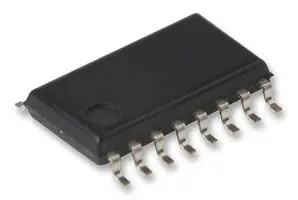
| Package / Case | 16-SOIC |
| Package / Case | 5.3 mm |
| Supplier Device Package | 16-SOP |
| Voltage - Supply [Max] | 18 V |
| Voltage - Supply [Min] | 0 V |
Pricing
Prices provided here are for design reference only. For realtime values and availability, please visit the distributors directly
| Distributor | Package | Quantity | $ | |
|---|---|---|---|---|
| Digikey | Cut Tape (CT) | 1 | $ 2.45 | |
| 10 | $ 2.20 | |||
| 25 | $ 2.07 | |||
| 100 | $ 1.66 | |||
| 250 | $ 1.45 | |||
| 500 | $ 1.41 | |||
| 1000 | $ 1.12 | |||
| Digi-Reel® | 1 | $ 2.45 | ||
| 10 | $ 2.20 | |||
| 25 | $ 2.07 | |||
| 100 | $ 1.66 | |||
| 250 | $ 1.45 | |||
| 500 | $ 1.41 | |||
| 1000 | $ 1.12 | |||
| Tape & Reel (TR) | 2000 | $ 1.08 | ||
| 6000 | $ 1.04 | |||
| Newark | Each (Supplied on Cut Tape) | 1 | $ 2.78 | |
| ON Semiconductor | N/A | 1 | $ 0.94 | |
Description
General part information
FAN7688 Series
The FAN7688 is an advanced Pulse Frequency Modulated (PFM) controller for LLC resonant converters with Synchronous Rectification (SR) that offers best in class efficiency for isolated DC/DC converters. It employs a current mode control technique based on a charge control, where the triangular waveform from the oscillator is combined with the integrated switch current information to determine the switching frequency. This provides a better control-to-output transfer function of the power stage simplifying the feedback loop design while allowing true input power limit capability. Closed-loop soft-start prevents saturation of the error amplifier and allows monotonic rising of the output voltage regardless of load condition. A dual edge tracking adaptive dead time control minimizes the body diode conduction time thus maximizing efficiency.
Documents
Technical documentation and resources