


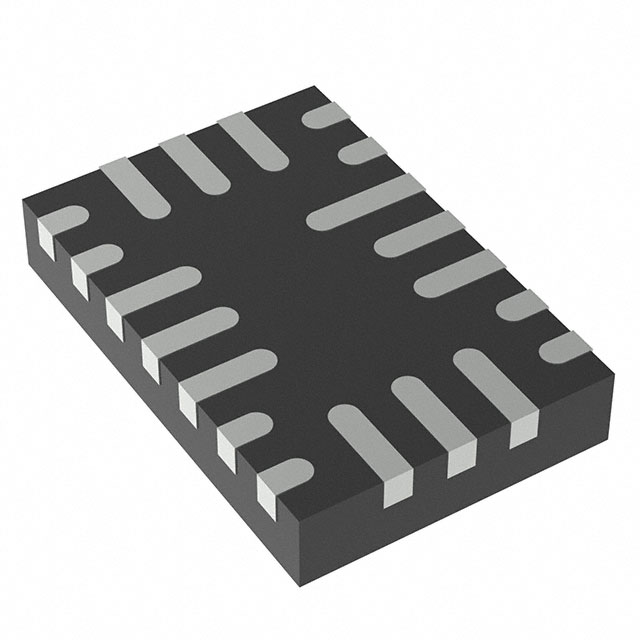
SLG46538V
ActivePROGRAMMABLE MIXED SIGNAL MATRIX, ASM, DUAL, 17 GPIOS, 17 LUTS, 1.8 V TO 5 V, STQFN-20, 2MM X 3MM
Deep-Dive with AI
Search across all available documentation for this part.
SLG46538V
ActivePROGRAMMABLE MIXED SIGNAL MATRIX, ASM, DUAL, 17 GPIOS, 17 LUTS, 1.8 V TO 5 V, STQFN-20, 2MM X 3MM
Deep-Dive with AI
Technical Specifications
Parameters and characteristics for this part
| Specification | SLG46538V |
|---|---|
| Mounting Type | Surface Mount |
| Number of Gates | 1 |
| Number of I/O | 16 |
| Number of Macrocells | 19 |
| Operating Temperature [Max] | 85 C |
| Operating Temperature [Min] | -40 ¯C |
| Package / Case | 20-UFQFN |
| Programmable Type | OTP |
| Supplier Device Package | 20-STQFN (2x3) |
| Voltage Supply - Internal [Max] | 1.89 V, 3.6 V, 5.5 V |
| Voltage Supply - Internal [Min] | 4.5 V, 1.71 V, 3 V |
Pricing
Prices provided here are for design reference only. For realtime values and availability, please visit the distributors directly
Description
General part information
SLG46538 Series
SLG46538V is a GreenPAK™ programmable mixed-signal matrix with asynchronous state machine and dual supply in STQFN-20 package. SLG46538 provides a small, low power component for commonly used mixed-signal functions. The user creates their circuit design by programming the one time NVM to configure the interconnect logic, the I/O pins and the macro cells of the SLG46538. This highly versatile device allows a wide variety of mixed-signal functions to be designed within a very small, low power single integrated circuit. The VDD2 on the SLG46538 provides the ability to interface two independent voltage domains within the same design. Users can configure pins, dedicated to each power supply, as inputs, outputs, or both (controlled dynamically by internal logic) to both VDD and VDD2 voltage domains. Using the available macro-cells designers can implement mixed-signal functions bridging both domains or simply pass through level-translation in both high to low and low to high directions.
Documents
Technical documentation and resources


