SN74LVT8980ADW
ActiveEMBEDDED TEST-BUS CONTROLLERS IEEE STD 1149.1 (JTAG) TAP MASTERS W/ 8-BIT GENERIC HOST INTERFACES
Deep-Dive with AI
Search across all available documentation for this part.
SN74LVT8980ADW
ActiveEMBEDDED TEST-BUS CONTROLLERS IEEE STD 1149.1 (JTAG) TAP MASTERS W/ 8-BIT GENERIC HOST INTERFACES
Technical Specifications
Parameters and characteristics for this part
| Specification | SN74LVT8980ADW |
|---|---|
| Logic Type | Embedded Test-Bus Controllers |
| Mounting Type | Surface Mount |
| Number of Bits | 8 |
| Operating Temperature [Max] | 85 °C |
| Operating Temperature [Min] | -40 °C |
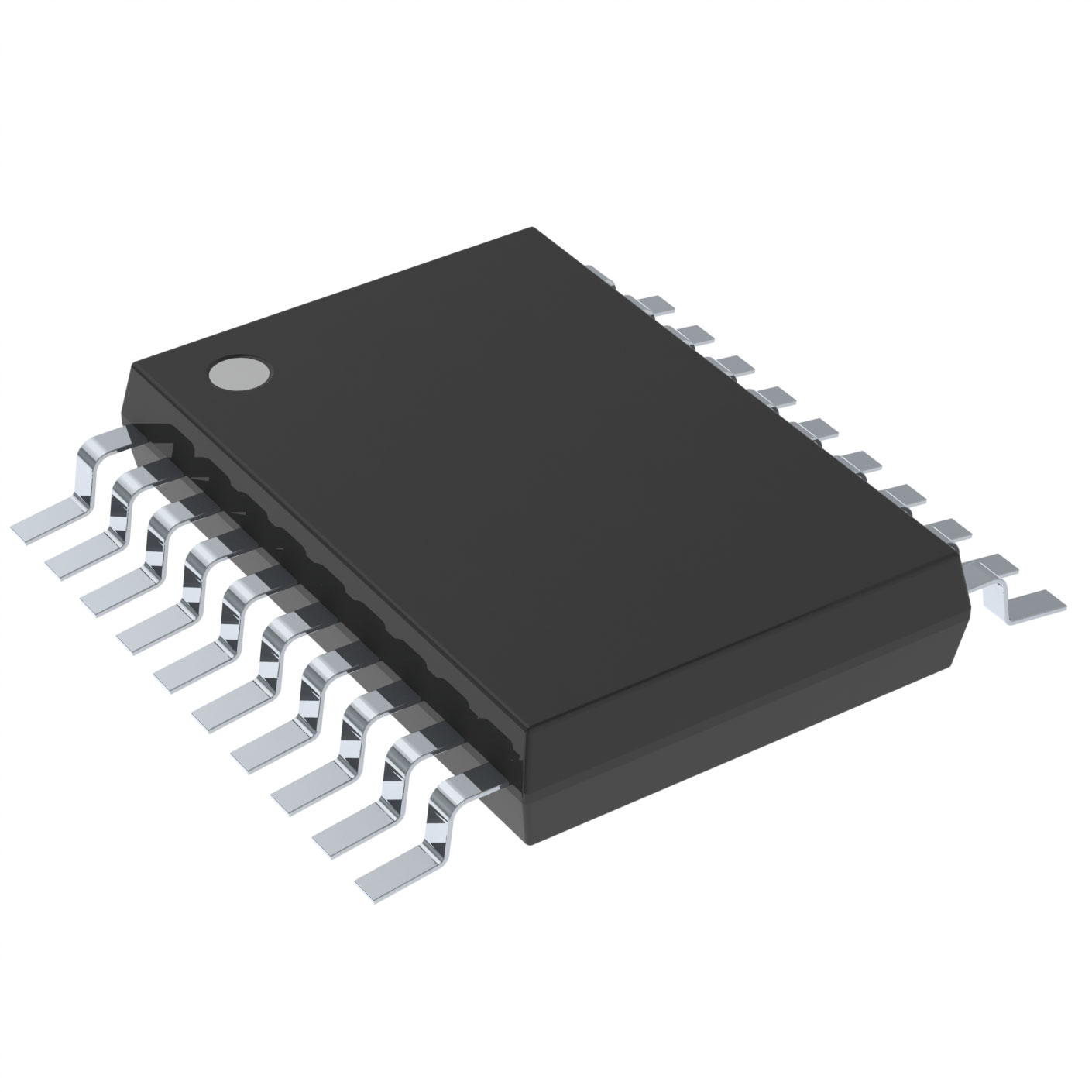
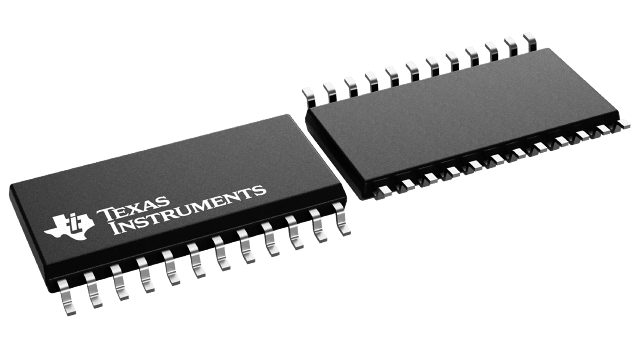
| Package / Case | 24-SOIC |
| Package / Case [custom] | 7.5 mm |
| Package / Case [custom] | 0.295 in |
| Supplier Device Package | 24-SOIC |
| Supply Voltage [Max] | 3.6 V |
| Supply Voltage [Min] | 2.7 VDC |
Pricing
Prices provided here are for design reference only. For realtime values and availability, please visit the distributors directly
| Distributor | Package | Quantity | $ | |
|---|---|---|---|---|
| Digikey | Tube | 75 | $ 13.70 | |
| Texas Instruments | TUBE | 1 | $ 13.99 | |
| 100 | $ 12.22 | |||
| 250 | $ 9.43 | |||
| 1000 | $ 8.43 | |||
Description
General part information
SN74LVT8980A Series
The ’LVT8980A embedded test-bus controllers (eTBCs) are members of the TI broad family of testability integrated circuits. This family of devices supports IEEE Std 1149.1-1990 boundary scan to facilitate testing of complex circuit assemblies. Unlike most other devices of this family, the eTBCs are not boundary-scannable devices; rather, their function is to master an IEEE Std 1149.1 (JTAG) test access port (TAP) under the command of an embedded host microprocessor/microcontroller. Thus, the eTBCs enable the practical and effective use of the IEEE Std 1149.1 test-access infrastructure to support embedded/built-in test, emulation, and configuration/maintenance facilities at board and system levels.
The eTBCs master all TAP signals required to support one 4- or 5-wire IEEE Std 1149.1 serial test bus: test clock (TCK), test mode select (TMS), test data input (TDI), test data output (TDO), and test reset (TRST)\. All such signals can be connected directly to the associated target IEEE Std 1149.1 devices without need for additional logic or buffering. However, as well as being directly connected, the TMS, TDI, and TDO signals can be connected to distant target IEEE Std 1149.1 devices via a pipeline, with a retiming delay of up to 15 TCK cycles; the eTBCs automatically handle all associated serial-data justification.
Conceptually, the eTBCs operate as simple 8-bit memory- or I/O-mapped peripherals to a microprocessor/microcontroller (host). High-level commands and parallel data are passed to/from the eTBCs via their generic host interface, which includes an 8-bit data bus (D7–D0) and a 3-bit address bus (A2–A0). Read/write select (R/W\) and strobe (STRB)\ signals are implemented so that the critical host-interface timing is independent of the CLKIN period. An asynchronous ready (RDY) indicator is provided to hold off, or insert wait states into, a host read/write cycle when the eTBCs cannot respond immediately to the requested read/write operation.
Documents
Technical documentation and resources