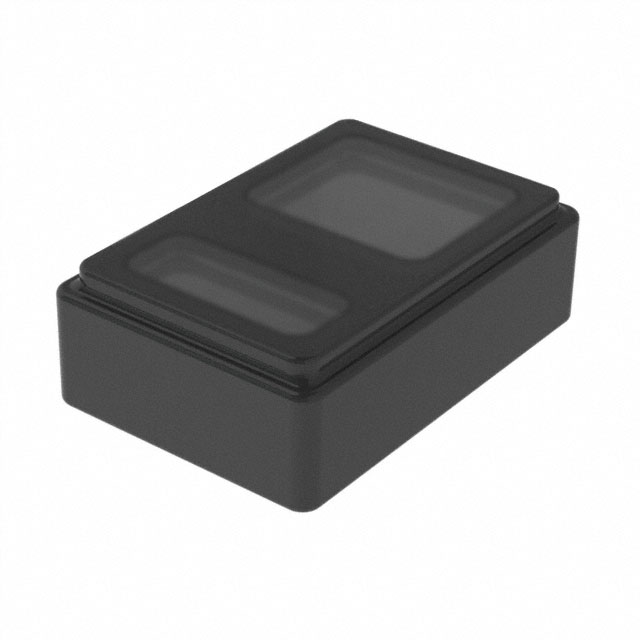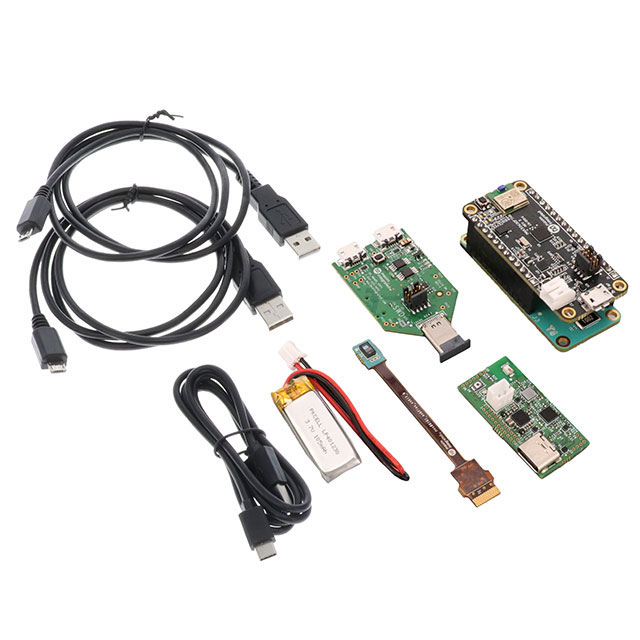
MAXM86161EVSYS#
ActiveINTEGRATED PPG MODULE FOR IN EAR
Deep-Dive with AI
Search across all available documentation for this part.
MAXM86161EVSYS#
ActiveINTEGRATED PPG MODULE FOR IN EAR
Deep-Dive with AI
Technical Specifications
Parameters and characteristics for this part
| Specification | MAXM86161EVSYS# |
|---|---|
| Contents | Board, Cable |
| Embedded | True |
| Function | Sensor Signal Conditioner |
| Secondary Attributes | I2C Interface(s), Graphical User Interface (GUI) |
| Supplied Contents | Board(s), Cable(s) |
| Type | Interface |
| Utilized IC / Part | MAXM86161 |
Pricing
Prices provided here are for design reference only. For realtime values and availability, please visit the distributors directly
| Distributor | Package | Quantity | $ | |
|---|---|---|---|---|
| Digikey | Box | 1 | $ 183.75 | |
| 10 | $ 183.33 | |||
| N/A | 23 | $ 184.27 | ||
| 30 | $ 184.27 | |||
Description
General part information
MAXM86161 Series
The MAXM86161 is an ultra-low-power, completely integrated, optical data-acquisition system. On the transmitter side, the MAXM86161 has three programmable high-current LED drivers. On the receiver side, MAXM86161 consists of a high efficiency PIN photo-diode and an optical readout channel. The optical readout has a low-noise signal conditioning analog front-end (AFE), including 19-bit ADC, an industry-lead ambient light cancellation (ALC) circuit, and a picket fence detect and replace algorithm. Due to the low power consumption, compact size, easy, flexible-to-use, and industry lead ambient light rejection capability of the MAXM86161, the device is ideal for a wide variety of optical sensing applications such as heart rate detection and pulse oximetry.The MAXM86161 operates on a 3.0V to 5.5V VLEDsingle supply voltage. It supports a standard compatible interface and fully autonomous operation. Each device has a large 128-word built-in FIFO. The MAXM86161 is available in compact 2.9mm x 4.3mm x 1.4mm, 14-pin OLGA package.ApplicationsOptimized for In-Ear ApplicationsMiniature Package for Mobile ApplicationsOptimized Performance to Detect:Continuous Monitoring for HRVOptical Heart RateOxygen Saturation (SpO2)
Documents
Technical documentation and resources