Discrete Semiconductor Products
UMH25NFHATN
ActiveRohm Semiconductor
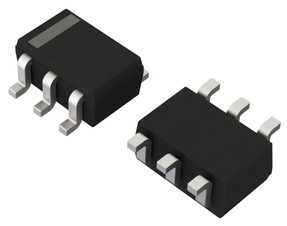
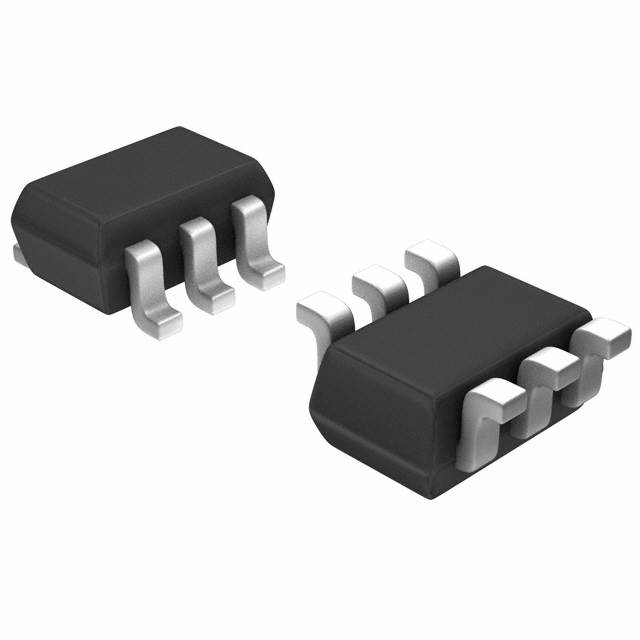
DIGITAL TRANSISTORS NPN 100MA 50V DIGITAL TRANSISTOR. BUILT-IN BIAS RESISTORS ENABLE THE CONFIGURATION OF AN INVERTER CIRCUIT WITHOUT EXTERNAL INPUT RESISTORS.
Deep-Dive with AI
Search across all available documentation for this part.
Discrete Semiconductor Products
UMH25NFHATN
ActiveRohm Semiconductor
DIGITAL TRANSISTORS NPN 100MA 50V DIGITAL TRANSISTOR. BUILT-IN BIAS RESISTORS ENABLE THE CONFIGURATION OF AN INVERTER CIRCUIT WITHOUT EXTERNAL INPUT RESISTORS.
Deep-Dive with AI
Technical Specifications
Parameters and characteristics for this part
| Specification | UMH25NFHATN |
|---|---|
| Current - Collector (Ic) (Max) [Max] | 100 mA |
| Current - Collector Cutoff (Max) [Max] | 500 nA |
| DC Current Gain (hFE) (Min) @ Ic, Vce [Min] | 80 |
| Frequency - Transition | 250 MHz |
| Grade | Automotive |
| Mounting Type | Surface Mount |
| Package / Case | SOT-363, SC-88, 6-TSSOP |
| Qualification | AEC-Q101 |
| Resistor - Base (R1) | 4.7 kOhms |
| Resistor - Emitter Base (R2) | 47 kOhms |
| Supplier Device Package | UMT6 |
| Transistor Type | 2 NPN - Pre-Biased (Dual) |
| Vce Saturation (Max) @ Ib, Ic | 300 mV |
| Voltage - Collector Emitter Breakdown (Max) [Max] | 50 V |
Pricing
Prices provided here are for design reference only. For realtime values and availability, please visit the distributors directly
| Distributor | Package | Quantity | $ | |
|---|---|---|---|---|
| Digikey | Cut Tape (CT) | 1 | $ 0.48 | |
| 10 | $ 0.30 | |||
| 100 | $ 0.19 | |||
| 500 | $ 0.14 | |||
| 1000 | $ 0.13 | |||
| Digi-Reel® | 1 | $ 0.48 | ||
| 10 | $ 0.30 | |||
| 100 | $ 0.19 | |||
| 500 | $ 0.14 | |||
| 1000 | $ 0.13 | |||
| Tape & Reel (TR) | 3000 | $ 0.07 | ||
| 6000 | $ 0.07 | |||
| Mouser | N/A | 1 | $ 0.45 | |
| 10 | $ 0.28 | |||
| 100 | $ 0.14 | |||
| 1000 | $ 0.12 | |||
| 3000 | $ 0.09 | |||
| 9000 | $ 0.08 | |||
| 24000 | $ 0.08 | |||
| 45000 | $ 0.07 | |||
| Newark | Each (Supplied on Cut Tape) | 1 | $ 0.43 | |
| 10 | $ 0.27 | |||
| 25 | $ 0.23 | |||
| 50 | $ 0.18 | |||
| 100 | $ 0.14 | |||
| 250 | $ 0.13 | |||
| 500 | $ 0.13 | |||
| 1000 | $ 0.12 | |||
Description
General part information
UMH25 Series
NPN 100mA 50V digital transistor. Built-in bias resistors enable the configuration of an inverter circuit without external input resistors.
Documents
Technical documentation and resources