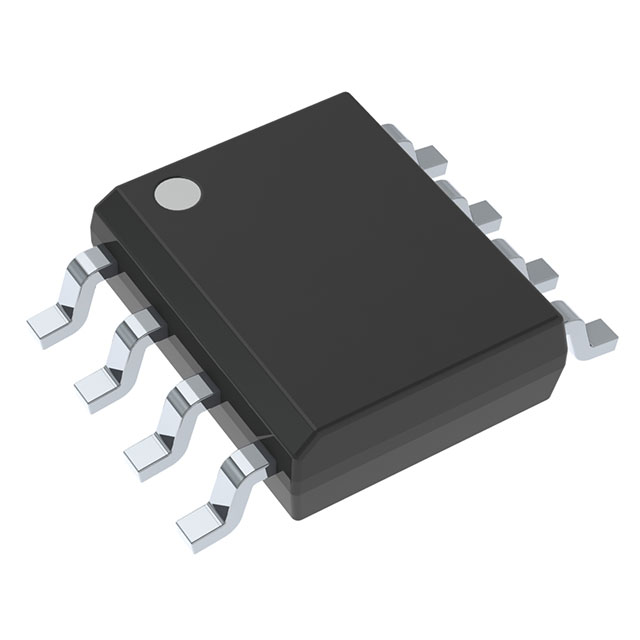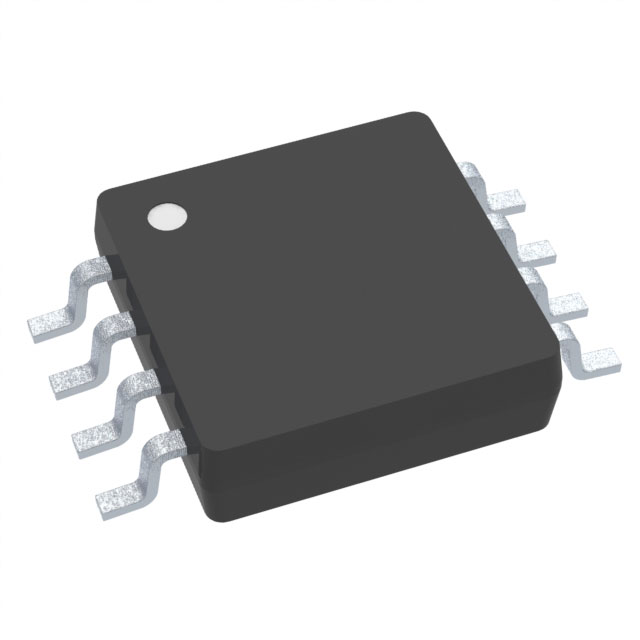
OPA2328DGKT
ActiveDUAL-CHANNEL, PRECISION, 50-ΜV OFFSET VOLTAGE, 40-MHZ WIDE-BANDWIDTH RRIO CMOS OP AMP
Deep-Dive with AI
Search across all available documentation for this part.
OPA2328DGKT
ActiveDUAL-CHANNEL, PRECISION, 50-ΜV OFFSET VOLTAGE, 40-MHZ WIDE-BANDWIDTH RRIO CMOS OP AMP
Deep-Dive with AI
Technical Specifications
Parameters and characteristics for this part
| Specification | OPA2328DGKT |
|---|---|
| Amplifier Type | CMOS |
| Current - Input Bias | 0.2 pA |
| Current - Output / Channel | 65 mA |
| Current - Supply | 3.8 mA |
| Gain Bandwidth Product | 40 MHz |
| Mounting Type | Surface Mount |
| Number of Circuits | 2 |
| Operating Temperature [Max] | 125 °C |
| Operating Temperature [Min] | -40 °C |
| Output Type | Rail-to-Rail |
| Package / Case | 8-MSOP, 8-TSSOP |
| Package / Case | 3 mm |
| Package / Case [custom] | 0.118 in |
| Slew Rate | 30 V/µs |
| Voltage - Input Offset | 3 µV |
| Voltage - Supply Span (Max) [Max] | 5.5 V |
| Voltage - Supply Span (Min) [Min] | 2.2 V |
Pricing
Prices provided here are for design reference only. For realtime values and availability, please visit the distributors directly
| Distributor | Package | Quantity | $ | |
|---|---|---|---|---|
| Digikey | Cut Tape (CT) | 1 | $ 4.50 | |
| 10 | $ 4.04 | |||
| 25 | $ 3.82 | |||
| 100 | $ 3.31 | |||
| Digi-Reel® | 1 | $ 4.50 | ||
| 10 | $ 4.04 | |||
| 25 | $ 3.82 | |||
| 100 | $ 3.31 | |||
| Tape & Reel (TR) | 250 | $ 3.14 | ||
| 500 | $ 2.82 | |||
| 1250 | $ 2.38 | |||
| 2500 | $ 2.26 | |||
| Texas Instruments | SMALL T&R | 1 | $ 3.39 | |
| 100 | $ 2.97 | |||
| 250 | $ 2.08 | |||
| 1000 | $ 1.68 | |||
Description
General part information
OPA2328 Series
The single-channel OPA328 and dual-channel OPA2328 (OPAx328) are a new generation family of precision, low-voltage CMOS operational amplifiers optimized for very low noise and wide bandwidth.
The OPAx328 have a linear input stage with zero-crossover distortion that delivers excellent common-mode rejection ratio (CMRR) of 120dB (typical) over the full input range. The input common-mode voltage range extends 100mV beyond the negative and positive supply rails. The output voltage typically swings within 10mV of the rails.
The OPAx328 also use Texas Instrument’s proprietary e‑trim™ operational amplifier technology, enabling a unique combination of ultra-low offset and low input offset drift without the need for any input switching or auto-zero techniques.
Documents
Technical documentation and resources