ISO7730FDBQ
LTBROBUST EMC, TRIPLE-CHANNEL, 3/0, REINFORCED DIGITAL ISOLATOR
Deep-Dive with AI
Search across all available documentation for this part.
ISO7730FDBQ
LTBROBUST EMC, TRIPLE-CHANNEL, 3/0, REINFORCED DIGITAL ISOLATOR
Technical Specifications
Parameters and characteristics for this part
| Specification | ISO7730FDBQ |
|---|---|
| Channel Type | Unidirectional |
| Common Mode Transient Immunity (Min) [Min] | 85 kV/Ás |
| Data Rate | 100 Mbps |
| Inputs - Side 1/Side 2 | 0, 3 |
| Isolated Power | False |
| Mounting Type | Surface Mount |
| Number of Channels [custom] | 3 |
| Operating Temperature [Max] | 125 °C |
| Operating Temperature [Min] | -55 °C |
| Package / Case | 0.154 in |
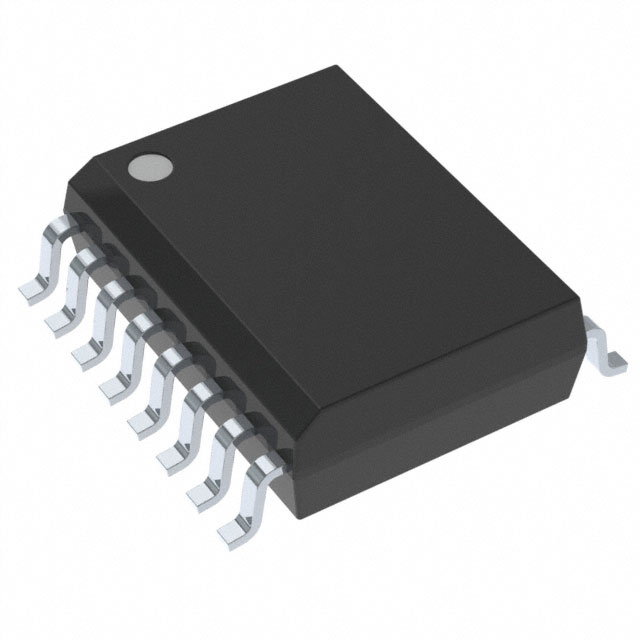
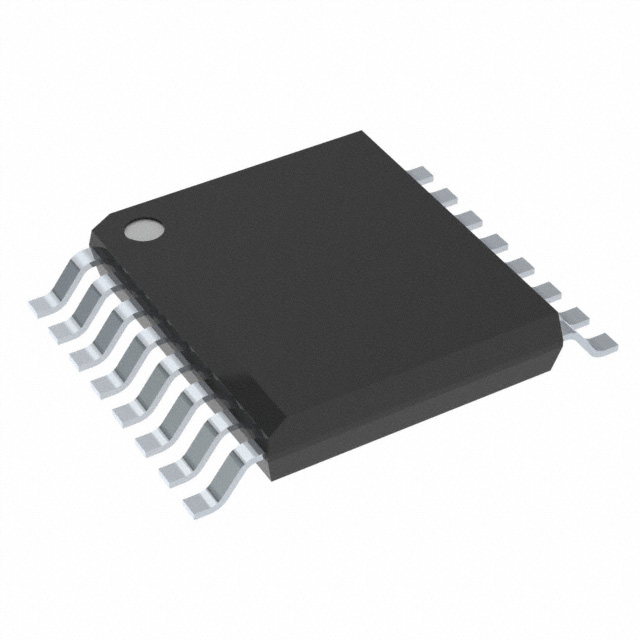
| Package / Case | 16-SSOP |
| Package / Case | 3.9 mm |
| Propagation Delay tpLH / tpHL (Max) [Max] [custom] | 16 ns |
| Propagation Delay tpLH / tpHL (Max) [Max] [custom] | 16 ns |
| Pulse Width Distortion (Max) [Max] | 4.9 ns |
| Rise / Fall Time (Typ) [custom] | 1.3 ns |
| Rise / Fall Time (Typ) [custom] | 1.4 ns |
| Supplier Device Package | 16-SSOP |
| Technology | Capacitive Coupling |
| Type | General Purpose |
| Voltage - Isolation | 3000 VAC |
| Voltage - Supply [Max] | 5.5 V |
| Voltage - Supply [Min] | 2.25 V |
Pricing
Prices provided here are for design reference only. For realtime values and availability, please visit the distributors directly
| Distributor | Package | Quantity | $ | |
|---|---|---|---|---|
| Digikey | Tube | 1 | $ 2.03 | |
| 10 | $ 1.82 | |||
| 75 | $ 1.73 | |||
| 150 | $ 1.50 | |||
| 300 | $ 1.42 | |||
| 525 | $ 1.35 | |||
| Texas Instruments | TUBE | 1 | $ 2.67 | |
| 100 | $ 2.21 | |||
| 250 | $ 1.58 | |||
| 1000 | $ 1.19 | |||
Description
General part information
ISO7730-Q1 Series
The ISO773x devices are high-performance, triple-channel digital isolators with 5000VRMS (DW package) and 3000VRMS (DBQ package) isolation ratings per UL 1577.
This family includes devices with reinforced insulation ratings according to VDE, CSA, TUV and CQC. The ISO7731B device is designed for applications that require basic insulation ratings only.
The ISO773x family of devices provides high electromagnetic immunity and low emissions at low power consumption, while isolating CMOS or LVCMOS digital I/Os. Each isolation channel has a logic input and output buffer separated by a double capacitive silicon dioxide (SiO2) insulation barrier. This device comes with enable pins which can be used to put the respective outputs in high impedance for multi-controller driving applications and to reduce power consumption.
Documents
Technical documentation and resources