


Deep-Dive with AI
Search across all available documentation for this part.
Deep-Dive with AI
Technical Specifications
Parameters and characteristics for this part
| Specification | NCV7702BDWR2G |
|---|---|
| Function | Driver - Fully Integrated, Control and Power Stage |
| Grade | Automotive |
| Interface | Parallel |
| Motor Type - AC, DC | Brushed DC |
| Motor Type - Stepper | Bipolar |
| Mounting Type | Surface Mount |
| Operating Temperature [Max] | 125 ¯C |
| Operating Temperature [Min] | -40 °C |
| Output Configuration | Half Bridge (4) |
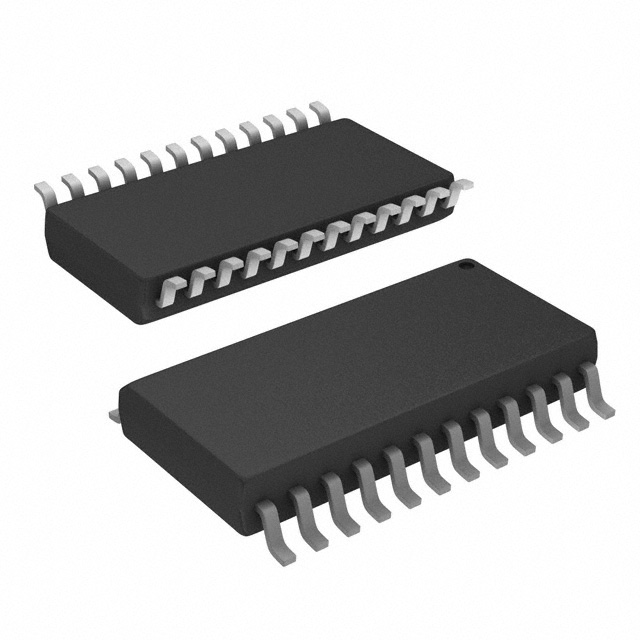
| Package / Case | 24-SOIC |
| Package / Case [custom] | 7.5 mm |
| Package / Case [custom] | 0.295 in |
| Supplier Device Package | 24-SOIC |
| Technology | Bipolar |
| Voltage - Supply [Max] | 16 V |
| Voltage - Supply [Min] | 7 V |
Pricing
Prices provided here are for design reference only. For realtime values and availability, please visit the distributors directly
| Distributor | Package | Quantity | $ | |
|---|---|---|---|---|
Description
General part information
NCV7702B Series
This dual full−bridge driver IC is intended for 14 V automotive stepper and DC motor applications. Its four half−bridge outputs are configured as two channels and are programmed by six TTL compatible inputs, allowing flexible control of bridge operation. The device operates in standby mode, run mode, or brake mode and typically consumes less than 1 uA while in standby. In run mode, each half−bridge output can deliver load current in either direction. Brake mode activates the low side transistors or high side transistors at the selected outputs. On−chip recirculation diodes are provided, and the IC has multiple fault protection modes.Overcurrent detection protects against shorted loads between outputs and shorts to supply or ground at each output. An overcurrent fault condition activates an internal timer, which modulates faulted outputs at low duty cycle. An overcurrent condition in one channel does not affect operation in the other. Overvoltage and overtemperature detection are also provided, and turn off all bridge outputs during these fault conditions. Recovery from all fault conditions is automatic; the IC will resume normal operation in its previously selected mode upon fault resolution. Diagnostic ability is provided by two open−collector STATUS outputs which report the fault status of each channel independently during overcurrent faults, and together during overvoltage or overtemperature faults.
Documents
Technical documentation and resources