


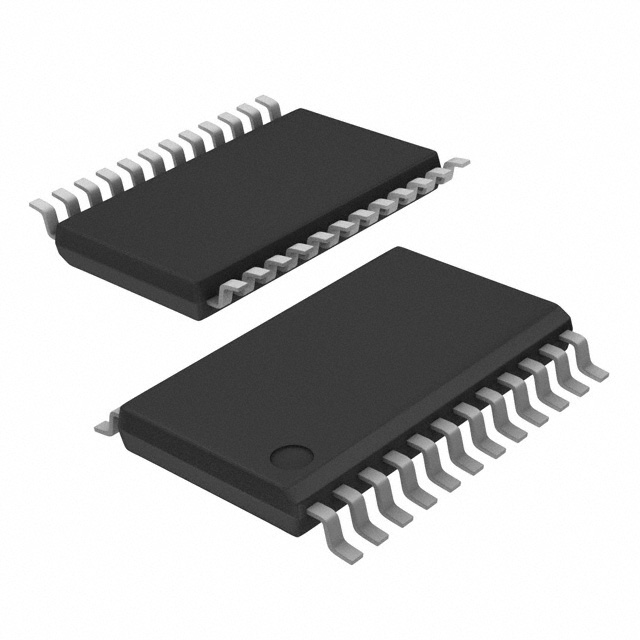
87004AGILF
Obsolete1:4, DIFFERENTIAL-TO-LVCMOS / LVTTL ZERO DELAY CLOCK GENERATOR
Deep-Dive with AI
Search across all available documentation for this part.
87004AGILF
Obsolete1:4, DIFFERENTIAL-TO-LVCMOS / LVTTL ZERO DELAY CLOCK GENERATOR
Deep-Dive with AI
Technical Specifications
Parameters and characteristics for this part
| Specification | 87004AGILF |
|---|---|
| Differential - Input:Output | Yes/No |
| Frequency - Max [Max] | 250 MHz |
| Input | HCSL, LVPECL, SSTL, LVDS, LVHSTL |
| Mounting Type | Surface Mount |
| Number of Circuits | 1 |
| Operating Temperature [Max] | 85 °C |
| Operating Temperature [Min] | -40 °C |
| Output | LVCMOS, LVTTL |
| Package / Case | 24-TSSOP |
| Package / Case | 0.173 in, 4.4 mm |
| PLL | Yes with Bypass |
| Ratio - Input:Output [custom] | 2:4 |
| Supplier Device Package | 24-TSSOP |
| Type | Fanout Distribution, Multiplexer, Clock Generator, Zero Delay Buffer |
| Voltage - Supply [Max] | 3.465 V |
| Voltage - Supply [Min] | 2.375 V |
Pricing
Prices provided here are for design reference only. For realtime values and availability, please visit the distributors directly
| Distributor | Package | Quantity | $ | |
|---|---|---|---|---|
Description
General part information
87004A Series
The 87004I is a highly versatile 1:4 Differential-to-LVCMOS/LVTTL Clock Generator. The 87004I has two selectable clock inputs. The CLK0, nCLK0 and CLK1, nCLK1 pairs can accept most standard differential input levels. Internal bias on the nCLK0 and nCLK1 inputs allows the CLK0 and CLK1 inputs to accept LVCMOS / LVTTL. The 87004I has a fully integrated PLL and can be configured as a zero delay buffer, multiplier or divider and has an input and output frequency range of 15.625 MHz to 250 MHz. The reference divider, feedback divider and output divider are each programmable, thereby allowing for the following output-to-input frequency ratios: 8:1, 4:1, 2:1, 1:1, 1:2, 1:4, 1:8. The external feedback allows the device to achieve "zero delay" between the input clock and the output clocks. The PLL_SEL pin can be used to bypass the PLL for system test and debug purposes. In bypass mode, the reference clock is routed around the PLL and into the internal output dividers.
Documents
Technical documentation and resources