


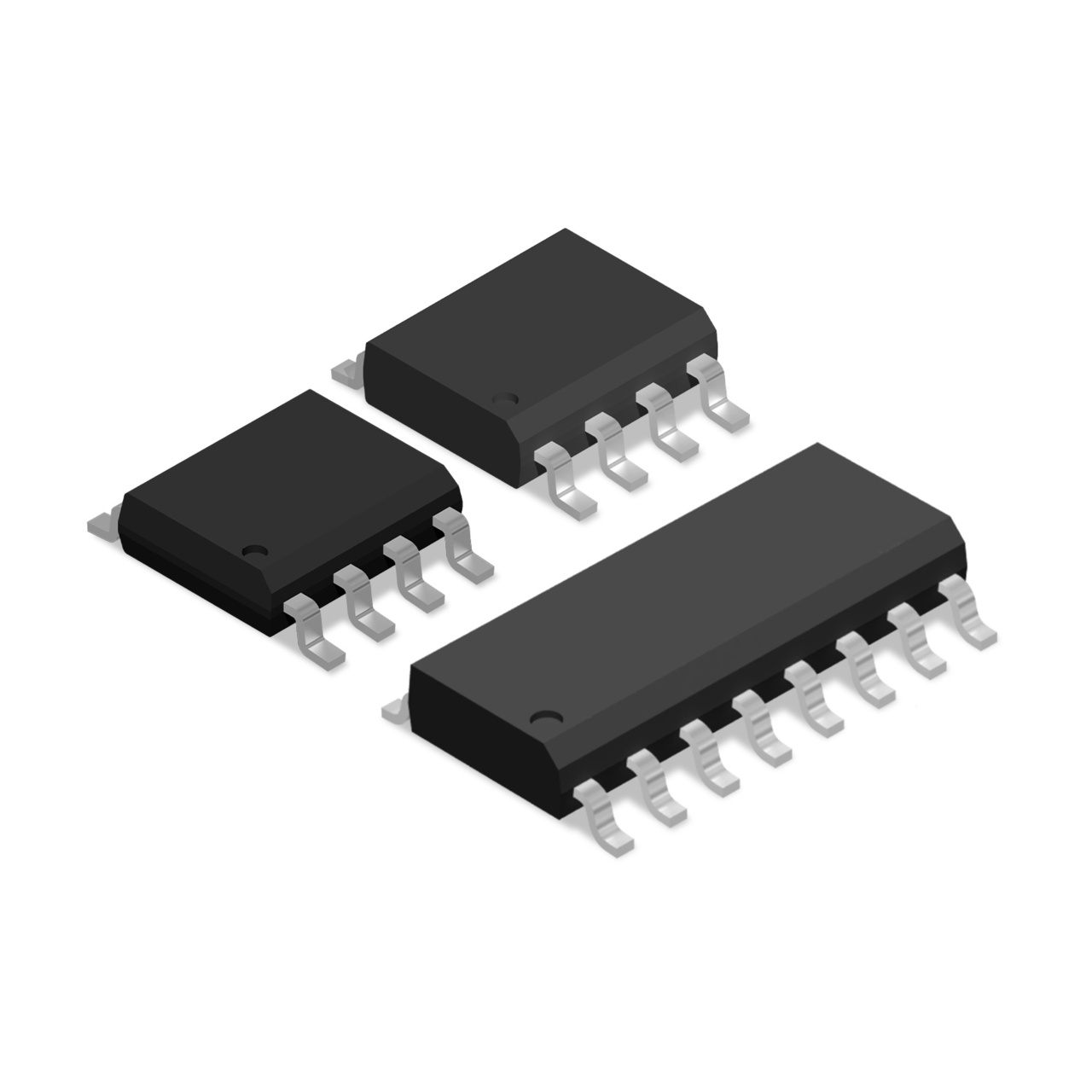
CPC9909N
ActiveOFF-LINE HIGH BRIGHTNESS LED DRIVER/ TUBE
Deep-Dive with AI
Search across all available documentation for this part.
CPC9909N
ActiveOFF-LINE HIGH BRIGHTNESS LED DRIVER/ TUBE
Technical Specifications
Parameters and characteristics for this part
| Specification | CPC9909N |
|---|---|
| Applications | Signage |
| Dimming | PWM |
| Frequency [Max] | 120 kHz |
| Frequency [Min] | 30 kHz |
| Internal Switch(s) | False |
| Mounting Type | Surface Mount |
| Number of Outputs | 1 |
| Operating Temperature [Max] | 85 °C |
| Operating Temperature [Min] | -40 °C |
| Package / Case | 8-SOIC |
| Package / Case [x] | 0.154 in |
| Package / Case [y] | 3.9 mm |
| Supplier Device Package | 8-SOIC |
| Topology | Step-Down (Buck), Step-Up (Boost) |
| Type | AC DC Offline Switcher |
| Voltage - Supply (Max) [Max] | 550 V |
| Voltage - Supply (Min) [Min] | 8 V |
Pricing
Prices provided here are for design reference only. For realtime values and availability, please visit the distributors directly
Description
General part information
CPC9909 Series
CPC9909 is a low cost, high-efficiency, mains powered, high-brightness (HB) LED driver manufactured using our high voltage BCDMOS on SOI process. This driver has an internal regulator that allows it to operate from 8VDC to 550VDC. This wide input operating voltage range enables the driver to be used in a broad range of HB LED applications. CPC9909 features pulse frequency modulation (PFM) with a constant peak-current control scheme. This regulation scheme is inherently stable, allowing the driver to be operated above 50% duty cycle without open loop instability or sub-harmonic oscillations. LED dimming can be implemented by applying a small DC voltage to the LD pin, or by applying a low frequency PWM signal to the PWMD pin.
Documents
Technical documentation and resources