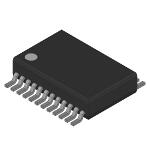
LTC4100EG#PBF
ActiveSMART BATTERY CHARGER CONTROLLER
Deep-Dive with AI
Search across all available documentation for this part.
LTC4100EG#PBF
ActiveSMART BATTERY CHARGER CONTROLLER
Deep-Dive with AI
Technical Specifications
Parameters and characteristics for this part
| Specification | LTC4100EG#PBF |
|---|---|
| Battery Chemistry | Smart Batteries |
| Current - Charging | Constant - Programmable |
| Fault Protection | Over Voltage, Over Current |
| Interface | I2C |
| Mounting Type | Surface Mount |
| Number of Cells | 1 |
| Operating Temperature [Max] | 85 C |
| Operating Temperature [Min] | -40 ¯C |
| Package / Case | 24-SSOP |
| Package / Case | 5.3 mm |
| Package / Case | 0.209 in |
| Supplier Device Package | 24-SSOP |
| Voltage - Supply (Max) [Max] | 28 V |
Pricing
Prices provided here are for design reference only. For realtime values and availability, please visit the distributors directly
| Distributor | Package | Quantity | $ | Updated |
|---|---|---|---|---|
| Digikey | N/A | 3626 | $ 15.56 | 1m+ |
Description
General part information
LTC4100 Series
The LTC4100 Smart Battery Charger is a single chip charging solution that dramatically simplifies construction of an SBS compliant system. The LTC4100 implements a Level 2 charger function whereby the charger can be programmed by the battery or by the host. A SafetySignal on the battery being charged is monitored for temperature, connectivity and battery type information. The SMBus interface remains alive when the AC power adapter is removed and responds to all SMBus activity directed to it, including SafetySignal status (via the ChargerStatus command). The charger also provides an interrupt to the host whenever a status change is detected (e.g., battery removal, AC adapter connection).Charging current and voltage are restricted to chemistry specific limits for improved system safety and reliability. Limits are programmable by two external resistors. Additionally, the maximum average current from the AC adapter is programmable to avoid overloading the adapter when simultaneously supplying load current and charging current. When supplying system load current, charging current is automatically reduced to prevent adapter overload.ApplicationsPortable Instruments and ComputersData Storage Systems and Battery Backup Servers
Documents
Technical documentation and resources