


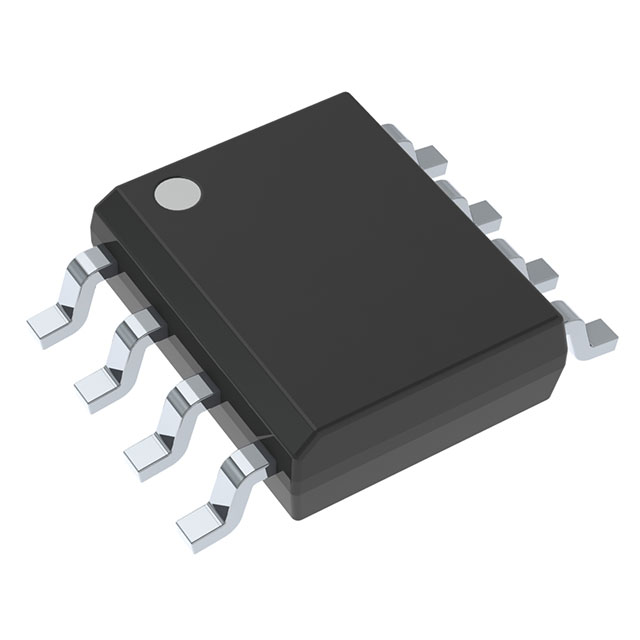
SN65HVD179DR
Active5 V FULL-DUPLEX RS-485/RS-422 DRIVERS AND BALANCED RECEIVERS
Deep-Dive with AI
Search across all available documentation for this part.
SN65HVD179DR
Active5 V FULL-DUPLEX RS-485/RS-422 DRIVERS AND BALANCED RECEIVERS
Deep-Dive with AI
Technical Specifications
Parameters and characteristics for this part
| Specification | SN65HVD179DR |
|---|---|
| Data Rate | 25 MBd |
| Duplex | Full |
| Mounting Type | Surface Mount |
| Operating Temperature [Max] | 85 °C |
| Operating Temperature [Min] | -40 °C |
| Package / Case | 8-SOIC |
| Package / Case [x] | 0.154 in |
| Package / Case [y] | 3.9 mm |
| Protocol | RS422, RS485 |
| Receiver Hysteresis | 50 mV |
| Supplier Device Package | 8-SOIC |
| Type | Transceiver |
| Voltage - Supply [Max] | 5.5 V |
| Voltage - Supply [Min] | 4.5 V |
Pricing
Prices provided here are for design reference only. For realtime values and availability, please visit the distributors directly
| Distributor | Package | Quantity | $ | |
|---|---|---|---|---|
| Digikey | Cut Tape (CT) | 1 | $ 5.42 | |
| 10 | $ 4.87 | |||
| 25 | $ 4.60 | |||
| 100 | $ 3.99 | |||
| 250 | $ 3.78 | |||
| 500 | $ 3.39 | |||
| 1000 | $ 2.86 | |||
| Digi-Reel® | 1 | $ 5.42 | ||
| 10 | $ 4.87 | |||
| 25 | $ 4.60 | |||
| 100 | $ 3.99 | |||
| 250 | $ 3.78 | |||
| 500 | $ 3.39 | |||
| 1000 | $ 2.86 | |||
| Tape & Reel (TR) | 2500 | $ 2.72 | ||
| Texas Instruments | LARGE T&R | 1 | $ 3.72 | |
| 100 | $ 3.04 | |||
| 250 | $ 2.39 | |||
| 1000 | $ 2.02 | |||
Description
General part information
SN65HVD179 Series
The SN65HVD179 is a differential line driver and differential-input line receiver that operates with a 5-V power supply. Each driver and receiver has separate input and output pins for full-duplex bus communication designs. They are designed for balanced transmission lines and interoperation with ANSI TIA/EIA-485A, TIA/EIA-422-B, ITU-T v.11, and ISO 8482:1993 standard-compliant devices.
The differential bus driver and receiver are monolithic, integrated circuits designed for full-duplex bi-directional data communication on multipoint bus-transmission lines at signaling rates(1)up to 25 Mbps. The SN65HVD179 is fully enabled with no external enabling pins.
The 1/2 unit load receiver has a high receiver input resistance. This results in lower bus leakage currents over the common-mode voltage range, and reduces the total amount of current that a 485 driver is forced to source or sink when transmitting.
Documents
Technical documentation and resources