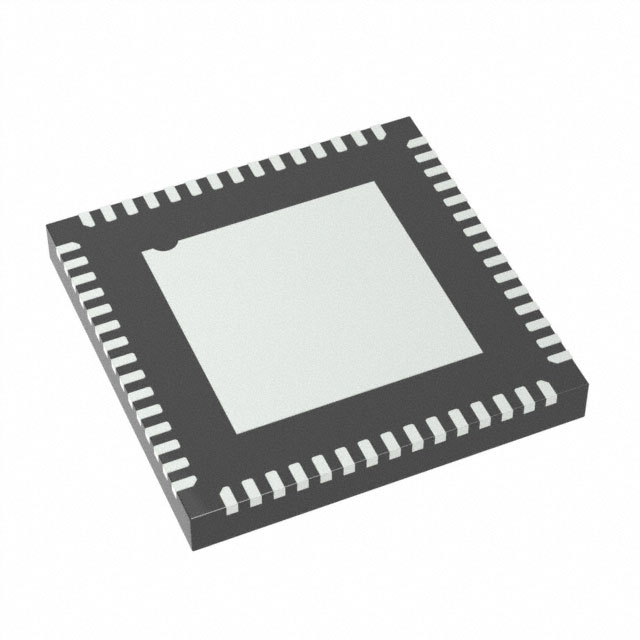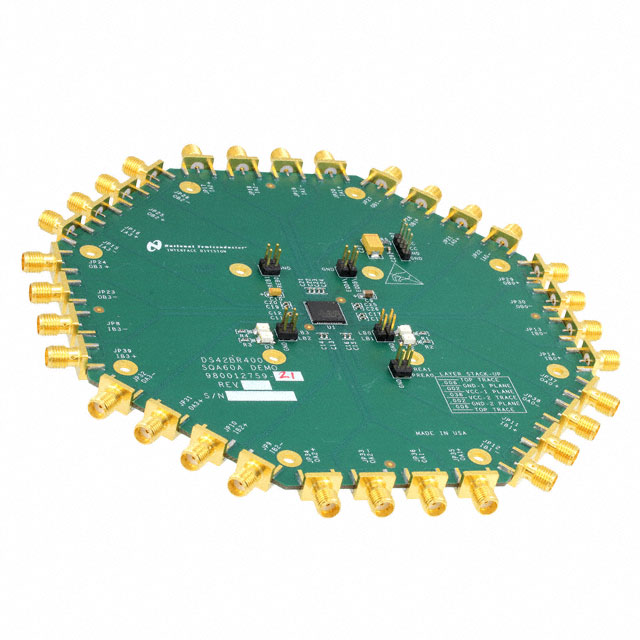
DS42BR400-EVK
ObsoleteBOARD EVALUATION DS42BR400
Deep-Dive with AI
Search across all available documentation for this part.
DS42BR400-EVK
ObsoleteBOARD EVALUATION DS42BR400
Deep-Dive with AI
Technical Specifications
Parameters and characteristics for this part
| Specification | DS42BR400-EVK |
|---|---|
| Function | Transceiver, CML |
| Supplied Contents | Board(s) |
| Type | Interface |
| Utilized IC / Part | DS42BR400 |
Pricing
Prices provided here are for design reference only. For realtime values and availability, please visit the distributors directly
| Distributor | Package | Quantity | $ | |
|---|---|---|---|---|
| Digikey | Box | 1 | $ 315.74 | |
Description
General part information
DS42BR400 Series
The DS42BR400 is a quad 250 Mbps – 4.25 Gbps CML transceiver, or 8-channel buffer, for use in backplane and cable applications. With operation down to 250 Mbps, the DS42BR400 can be used in applications requiring both low and high frequency data rates. Each input stage has a fixed equalizer to reduce ISI distortion from board traces. The equalizers are grouped in fours and are enabled through two control pins. These control pins provide customers flexibility where ISI distortion may vary from one direction to another.
All output drivers have four selectable steps of de-emphasis to compensate against transmission loss across long FR4 backplanes. The de-emphasis blocks are also grouped in fours. In addition, the DS42BR400 also has loopback control capability on four channels. All CML drivers have 50Ω termination to VCC. All receivers are internally terminated with differential 100Ω.
The DS42BR400 is a quad 250 Mbps – 4.25 Gbps CML transceiver, or 8-channel buffer, for use in backplane and cable applications. With operation down to 250 Mbps, the DS42BR400 can be used in applications requiring both low and high frequency data rates. Each input stage has a fixed equalizer to reduce ISI distortion from board traces. The equalizers are grouped in fours and are enabled through two control pins. These control pins provide customers flexibility where ISI distortion may vary from one direction to another.
Documents
Technical documentation and resources
No documents available