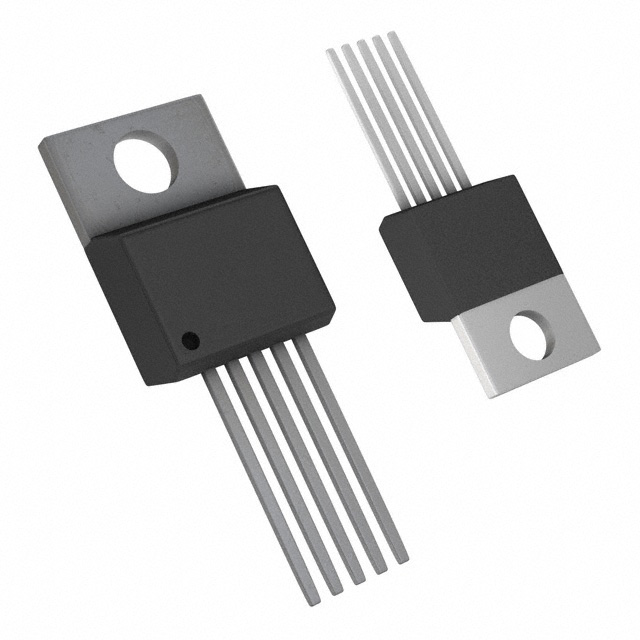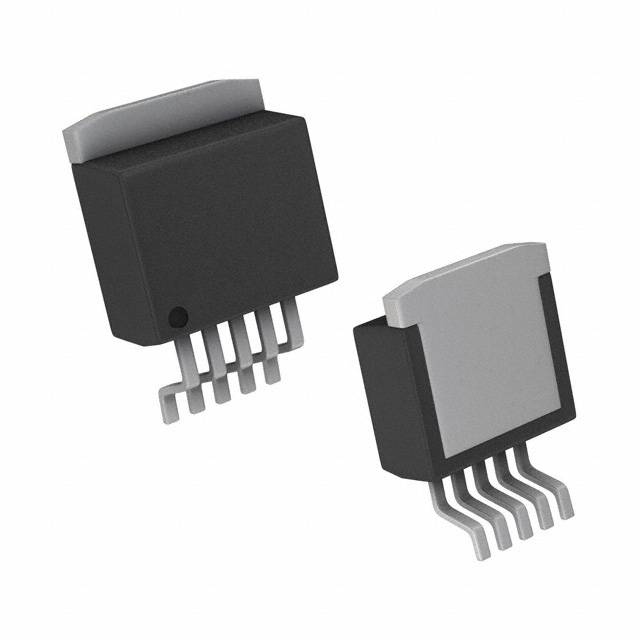
LM9071S/NOPB
Active250-MA, 26-V, LOW-DROPOUT VOLTAGE REGULATOR WITH RESET WITH DELAY
Deep-Dive with AI
Search across all available documentation for this part.
LM9071S/NOPB
Active250-MA, 26-V, LOW-DROPOUT VOLTAGE REGULATOR WITH RESET WITH DELAY
Deep-Dive with AI
Technical Specifications
Parameters and characteristics for this part
| Specification | LM9071S/NOPB |
|---|---|
| Current - Output | 250 mA |
| Current - Quiescent (Iq) | 4 mA |
| Current - Supply (Max) [Max] | 50 mA |
| Mounting Type | Surface Mount |
| Number of Regulators | 1 |
| Operating Temperature [Max] | 125 °C |
| Operating Temperature [Min] | -40 °C |
| Output Configuration | Positive |
| Output Type | 1.81 mOhm |
| Package / Case | TO-263-6, TO-263BA, D2PAK (5 Leads + Tab) |
| Protection Features | Reverse Polarity, Over Voltage, Short Circuit, Over Temperature |
| PSRR | 60 dB |
| Supplier Device Package | TO-263 (DDPAK-5) |
| Voltage - Input (Max) [Max] | 26 V |
| Voltage - Output (Min/Fixed) | 5 V |
| Voltage Dropout (Max) [Max] | 0.8 V |
Pricing
Prices provided here are for design reference only. For realtime values and availability, please visit the distributors directly
| Distributor | Package | Quantity | $ | |
|---|---|---|---|---|
| Digikey | Tube | 1 | $ 3.45 | |
| 10 | $ 3.10 | |||
| 45 | $ 2.93 | |||
| 135 | $ 2.54 | |||
| 270 | $ 2.41 | |||
| 540 | $ 2.16 | |||
| 1035 | $ 1.82 | |||
| 2520 | $ 1.73 | |||
| 5040 | $ 1.67 | |||
| Texas Instruments | TUBE | 1 | $ 2.61 | |
| 100 | $ 2.28 | |||
| 250 | $ 1.60 | |||
| 1000 | $ 1.29 | |||
Description
General part information
LM9071 Series
The LM9071 is a 5V, 250 mA low-dropout voltage regulator. The regulator features an active low delayed reset output flag which can be used to reset a microprocessor system on turn-ON and in the event that the regulator output falls out of regulation for any reason. An external capacitor programs a delay time interval before the reset output can return high.
Designed for automotive application the LM9071 contains a variety of protection features such as reverse battery, over-voltage shutdown, thermal shutdown, input transient protection and a wide operating temperature range.
Design techniques have been employed to allow the regulator to remain operational and not generate false reset signals when subjected to high levels of RF energy (300V/m from 2 MHz to 400 MHz).
Documents
Technical documentation and resources