NLV74LCX373DTR2G
ObsoleteLOG CMOS LATCH / REEL ROHS COMPLIANT: YES
Deep-Dive with AI
Search across all available documentation for this part.
NLV74LCX373DTR2G
ObsoleteLOG CMOS LATCH / REEL ROHS COMPLIANT: YES
Deep-Dive with AI
Technical Specifications
Parameters and characteristics for this part
| Specification | NLV74LCX373DTR2G |
|---|---|
| Circuit [custom] | 8 |
| Circuit [custom] | 8 |
| Current - Output High, Low | 24 mA |
| Grade | Automotive |
| Independent Circuits | 1 |
| Logic Type | D-Type Transparent Latch |
| Mounting Type | Surface Mount |
| Operating Temperature [Max] | 85 °C |
| Operating Temperature [Min] | -40 °C |
| Output Type | Tri-State |
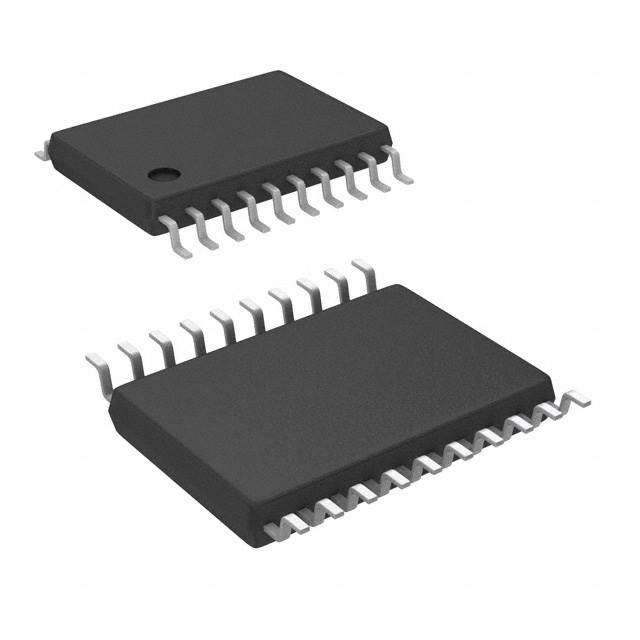
| Package / Case | 20-TSSOP |
| Package / Case [x] | 0.173 in |
| Package / Case [y] | 4.4 mm |
| Qualification | AEC-Q100 |
| Supplier Device Package | 20-TSSOP |
| Voltage - Supply [Max] | 3.6 V |
| Voltage - Supply [Min] | 2 V |
Pricing
Prices provided here are for design reference only. For realtime values and availability, please visit the distributors directly
| Distributor | Package | Quantity | $ | |
|---|---|---|---|---|
| Newark | Each (Supplied on Full Reel) | 1 | $ 0.41 | |
| 3000 | $ 0.40 | |||
| 6000 | $ 0.36 | |||
| 12000 | $ 0.34 | |||
| 18000 | $ 0.32 | |||
| 30000 | $ 0.30 | |||
Description
General part information
MC74LCX373 Series
The MC74LCX373 is a high performance, non-inverting octal transparent latch operating from a 2.3 to 3.6 V supply. High impedance TTL compatible inputs significantly reduce current loading to input drivers while TTL compatible outputs offer improved switching noise performance. A VIspecification of 5.5 V allows MC74LCX373 inputs to be safely driven from 5 V devices. The MC74LCX373 contains 8 D-type latches with 3-state outputs. When the Latch Enable (LE) input is HIGH, data on the Dn inputs enters the latches. In this condition, the latches are transparent, i.e., a latch output will change state each time its D input changes. When LE is LOW, the latches store the information that was present on the D inputs a setup time preceding the HIGH-to-LOW transition of LE. The 3-state standard outputs are controlled by the Output Enable (OEbar) input. When OEbar is LOW, the standard outputs are enabled. When OEbar is HIGH, the standard outputs are in the high impedance state, but this does not interfere with new data entering into the latches.
Documents
Technical documentation and resources