


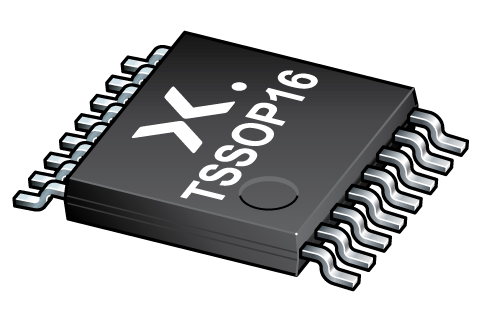
74HCT4538PW-Q100,1
ActiveDUAL RETRIGGERABLE PRECISION MONOSTABLE MULTIVIBRATOR
Deep-Dive with AI
Search across all available documentation for this part.
74HCT4538PW-Q100,1
ActiveDUAL RETRIGGERABLE PRECISION MONOSTABLE MULTIVIBRATOR
Deep-Dive with AI
Technical Specifications
Parameters and characteristics for this part
| Specification | 74HCT4538PW-Q100,1 |
|---|---|
| Current - Output High, Low [custom] | 4 mA |
| Current - Output High, Low [custom] | 4 mA |
| Grade | Automotive |
| Independent Circuits | 2 |
| Logic Type | Monostable |
| Mounting Type | Surface Mount |
| Operating Temperature [Max] | 125 °C |
| Operating Temperature [Min] | -40 C |
| Package / Case | 16-TSSOP |
| Package / Case [y] | 4.4 mm |
| Package / Case [y] | 0.173 in |
| Propagation Delay | 35 ns |
| Qualification | AEC-Q100 |
| Schmitt Trigger Input | False |
| Supplier Device Package | 16-TSSOP |
| Voltage - Supply [Max] | 5.5 V |
| Voltage - Supply [Min] | 4.5 V |
Pricing
Prices provided here are for design reference only. For realtime values and availability, please visit the distributors directly
| Distributor | Package | Quantity | $ | |
|---|---|---|---|---|
| Digikey | N/A | 0 | $ 0.44 | |
| 8863 | $ 0.44 | |||
Description
General part information
74HCT4538PW-Q100 Series
The 74HCT4538-Q100 is a dual retriggerable-resettable monostable multivibrator. Each multivibrator has two trigger/retrigger inputs (nAand nB), a direct reset input (nCD), two complementary outputs (nQ and nQ), and two pins (nREXT/CEXT and nCEXT) for connecting the external timing components CEXTand REXT. Typical pulse width variation over temperature range is ± 0.2 %. The device may be triggered by either the positive or the negative edges of the input pulse. The duration and accuracy of the output pulse are determined by the external timing components CEXTand REXT. The output pulse width (TW) is equal to 0.7 × REXT× CEXT. The linear design techniques guarantee precise control of the output pulse width. A LOW level at nCDterminates the output pulse immediately. Schmitt-trigger action in the trigger inputs makes the circuit highly tolerant to slower rise and fall times. Inputs include clamp diodes. This enables the use of current limiting resistors to interface inputs to voltages in excess of VCC.
Documents
Technical documentation and resources