


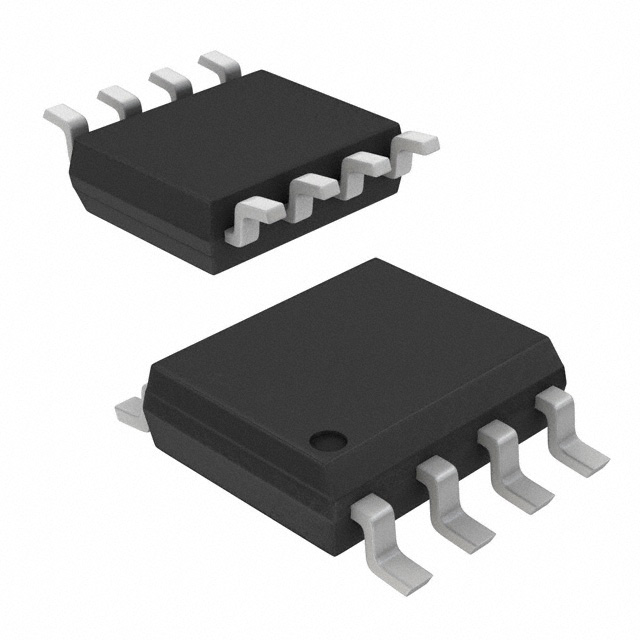
FL7930BM
ObsoleteBALLAST CONTROLLER SOIC-8 LIGHTING DRIVERS & CONTROLLERS ROHS
Deep-Dive with AI
Search across all available documentation for this part.
FL7930BM
ObsoleteBALLAST CONTROLLER SOIC-8 LIGHTING DRIVERS & CONTROLLERS ROHS
Deep-Dive with AI
Technical Specifications
Parameters and characteristics for this part
| Specification | FL7930BM |
|---|---|
| Current - Supply | 2.5 mA |
| Dimming | False |
| Frequency [Max] | 350 kHz |
| Frequency [Min] | 250 kHz |
| Mounting Type | Surface Mount |
| Operating Temperature [Max] | 125 °C |
| Operating Temperature [Min] | -40 °C |
| Package / Case | 8-SOIC |
| Package / Case [x] | 0.154 in |
| Package / Case [y] | 3.9 mm |
| Supplier Device Package | 8-SOIC |
| Type | Ballast Controller |
| Voltage - Supply [Max] | 20 V |
| Voltage - Supply [Min] | 13 V |
Pricing
Prices provided here are for design reference only. For realtime values and availability, please visit the distributors directly
| Distributor | Package | Quantity | $ | |
|---|---|---|---|---|
| LCSC | N/A | 1 | $ 0.00 | |
Description
General part information
FL7930B Series
The FL7930B is an active power factor correction (PFC) controller for boost PFC applications that operate in critical conduction mode (CRM). It uses a voltage-mode PWM that compares an internal ramp signal with the error amplifier output to generate a MOSFET turn-off signal. Because the voltage-mode CRM PFC controller does not need rectified AC line voltage information, it saves the power loss of an input voltage sensing network necessary for a current-mode CRM PFC controller.FL7930B provides over-voltage protection (OVP), open-feedback protection, over-current protection (OCP), input-voltage-absent detection, and under-voltage lockout protection (UVLO). The additional OVP pin can be used to shut down the boost power stage when output voltage exceeds OVP level due to the resistors that are connected at INV pin are damaged. The FL7930B can be disabled if the INV pin voltage is lower than 0.45 V and the operating current decreases to a very low level. Using a new variable on-time control method, total harmonic distortion (THD) is lower than in conventional CRM boost PFC ICs.
Documents
Technical documentation and resources
