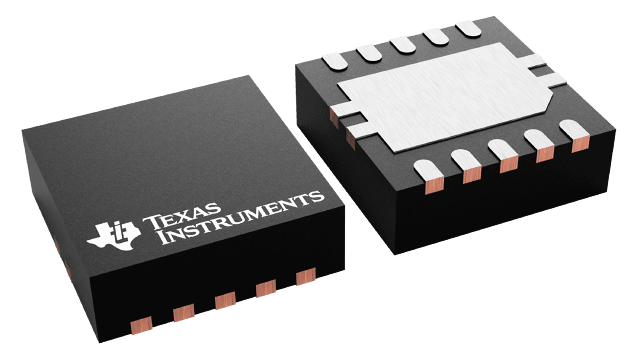
TPS62420DRCRG4
UnknownSWITCHING VOLTAGE REGULATORS DUAL ADJ 600MA & 100 0MA 2.25MHZ ALT 595-TPS62420DRCR
Deep-Dive with AI
Search across all available documentation for this part.
TPS62420DRCRG4
UnknownSWITCHING VOLTAGE REGULATORS DUAL ADJ 600MA & 100 0MA 2.25MHZ ALT 595-TPS62420DRCR
Deep-Dive with AI
Technical Specifications
Parameters and characteristics for this part
| Specification | TPS62420DRCRG4 |
|---|---|
| Current - Output | 1 A, 600 mA |
| Frequency - Switching | 2.25 MHz |
| Function | Step-Down |
| Mounting Type | Surface Mount |
| Number of Outputs | 2 |
| Operating Temperature [Max] | 85 C |
| Operating Temperature [Min] | -40 ¯C |
| Output Configuration | Positive |
| Output Type | Adjustable |
| Package / Case | 10-VFDFN Exposed Pad |
| Supplier Device Package | 10-VSON (3x3) |
| Synchronous Rectifier | True |
| Topology | Buck |
| Voltage - Input (Max) [Max] | 6 V |
| Voltage - Input (Min) [Min] | 2.5 V |
| Voltage - Output (Min/Fixed) | 0.6 V |
Pricing
Prices provided here are for design reference only. For realtime values and availability, please visit the distributors directly
Description
General part information
TPS62420 Series
The TPS6242x device is a synchronous dual step-down DC–DC converter. It provides two independent output voltage rails powered by 1-cell Li-Ion or 3-cell NiMH/NiCD batteries. The device is also suitable to operate from a standard 3.3-V or 5-V voltage rail.
With an input voltage range of 2.5 V to 6 V, the TPS6242x is ideal for battery-powered portable applications like smart phones, PDAs, and other portable equipment.
With the EasyScale™ serial interface the output voltages can be modified during operation. It therefore supports dynamic voltage scaling for low power DSP and processors.
Documents
Technical documentation and resources
No documents available