LM3642TLE-LT/NOPB
Active1.5A SYNCHRONOUS BOOST LED FLASH DRIVER W/ HIGH-SIDE CURRENT
Deep-Dive with AI
Search across all available documentation for this part.
LM3642TLE-LT/NOPB
Active1.5A SYNCHRONOUS BOOST LED FLASH DRIVER W/ HIGH-SIDE CURRENT
Technical Specifications
Parameters and characteristics for this part
| Specification | LM3642TLE-LT/NOPB |
|---|---|
| Applications | Camera Flash |
| Current - Output / Channel | 1.5 A |
| Dimming | I2C |
| Frequency | 4 MHz |
| Internal Switch(s) | True |
| Mounting Type | Surface Mount |
| Number of Outputs | 1 |
| Operating Temperature [Max] | 85 °C |
| Operating Temperature [Min] | -40 °C |
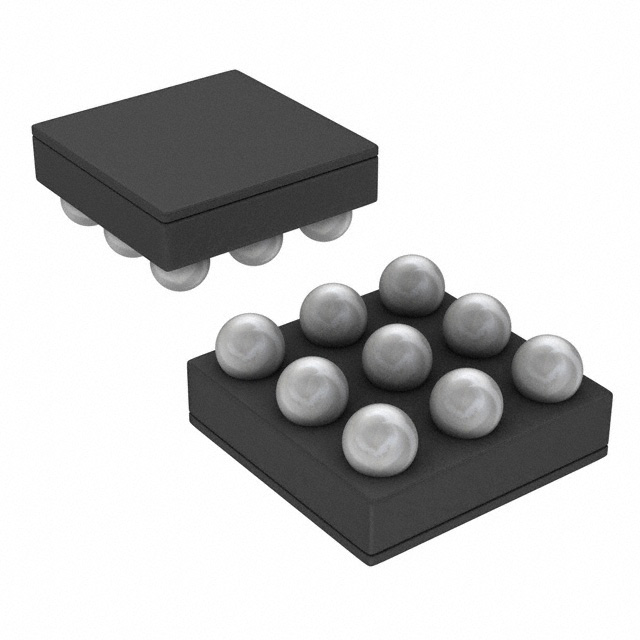
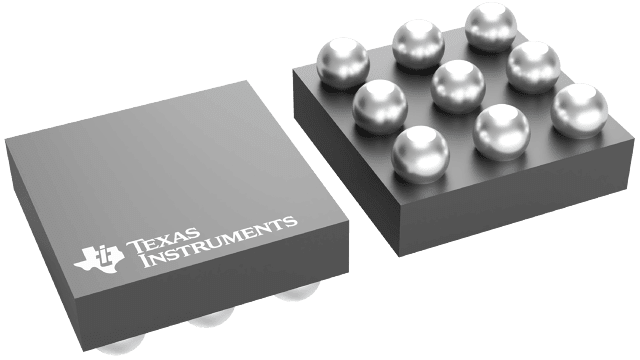
| Package / Case | DSBGA, 9-WFBGA |
| Supplier Device Package | 9-DSBGA (1.6x1.6) |
| Topology | Step-Up (Boost) |
| Type | DC DC Regulator |
| Voltage - Output | 5 V |
| Voltage - Supply (Max) | 5.5 V |
| Voltage - Supply (Min) [Min] | 2.5 V |
Pricing
Prices provided here are for design reference only. For realtime values and availability, please visit the distributors directly
| Distributor | Package | Quantity | $ | |
|---|---|---|---|---|
| Digikey | Cut Tape (CT) | 1 | $ 1.20 | |
| 10 | $ 1.07 | |||
| 25 | $ 1.02 | |||
| 100 | $ 0.84 | |||
| Digi-Reel® | 1 | $ 1.20 | ||
| 10 | $ 1.07 | |||
| 25 | $ 1.02 | |||
| 100 | $ 0.84 | |||
| Tape & Reel (TR) | 250 | $ 0.55 | ||
| 500 | $ 0.49 | |||
| 1250 | $ 0.45 | |||
| Texas Instruments | SMALL T&R | 1 | $ 0.89 | |
| 100 | $ 0.68 | |||
| 250 | $ 0.50 | |||
| 1000 | $ 0.36 | |||
Description
General part information
LM3642 Series
The LM3642 is a 4-MHz fixed-frequency synchronous boost converter plus 1.5-A constant current driver for a high-current white LED. The high-side current source allows for grounded cathode LED operation providing Flash current up to 1.5 A. An adaptive regulation method ensures the current source remains in regulation and maximizes efficiency.
The LM3642 is controlled via an I2C-compatible interface. Features include a hardware flash enable (STROBE) allowing a logic input to trigger the flash pulse as well as a TX input which forces the flash pulse into a low-current Torch Mode, allowing for synchronization to RF power amplifier events or other high-current conditions.
The 4-MHz switching frequency, overvoltage protection and adjustable current limit settings allow the use of tiny, low-profile inductors and (10-µF) ceramic capacitors. The device is available in a small 9-bump DSBGA package and operates over the −40°C to 85°C temperature range.
Documents
Technical documentation and resources