Deep-Dive with AI
Search across all available documentation for this part.
Deep-Dive with AI
Technical Specifications
Parameters and characteristics for this part
| Specification | TL852CNG4 |
|---|---|
| Frequency [Max] | 90 kHz |
| Frequency [Min] | 20 kHz |
| Function | Sonar Ranging Receiver |
| Mounting Type | Through Hole |
| Package / Case | 0.3 in |
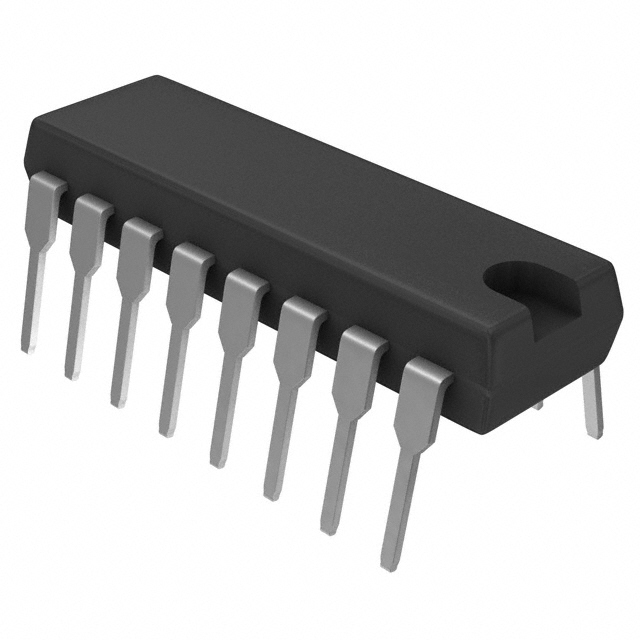
| Package / Case | 16-DIP |
| Package / Case | 7.62 mm |
| RF Type | Sonar Control |
| Supplier Device Package | 16-PDIP |
Pricing
Prices provided here are for design reference only. For realtime values and availability, please visit the distributors directly
| Distributor | Package | Quantity | $ | |
|---|---|---|---|---|
| Digikey | Tube | 100 | $ 5.95 | |
Description
General part information
TL852 Series
The TL852 is an economical sonar ranging receiver integrated circuit for use with the TL851 control integrated circuit. A minimum of external components is required for operation, and this amplifier easily interfaces to Polaroid's 50-kHz electrostatic transducer. An external 68-k.
Digital control of amplifier gain is provided with gain control inputs GCA, GCB, GCC, and GCD. These inputs must be driven synchronously (all inputs stable within 0.1 us) to avoid false receive output signals due to invalid logic counts. This can be done easily with the TL851 control integrated circuit. A plot showing relative gain for the various gain steps versus time can be seen in Figure 2. To dampen ringing of the 50-kHz electrostatic transducer, a 5-kresistor from G1IN to XIN is recommended.
An external parallel combination of inductance and capacitance between LC and VCCprovides an amplifier with an externally controlled gain and Q. This not only allows control of gain to compensate for attenuation of signal with distance, but also maximizes noise and sidelobe rejection. Care must be taken to accurately tune the L-C combination at operating frequency or gain and Q will be greatly reduced at higher gain steps.
Documents
Technical documentation and resources
No documents available