


Deep-Dive with AI
Search across all available documentation for this part.
Deep-Dive with AI
Technical Specifications
Parameters and characteristics for this part
| Specification | MSP430FR5988IPMR |
|---|---|
| Connectivity | IrDA, UART/USART, I2C, SPI |
| Core Processor | MSP430 CPUXV2 |
| Core Size | 16-Bit |
| Data Converters | 12x12b |
| Mounting Type | Surface Mount |
| Number of I/O | 48 |
| Operating Temperature [Max] | 85 °C |
| Operating Temperature [Min] | -40 °C |
| Oscillator Type | Internal |
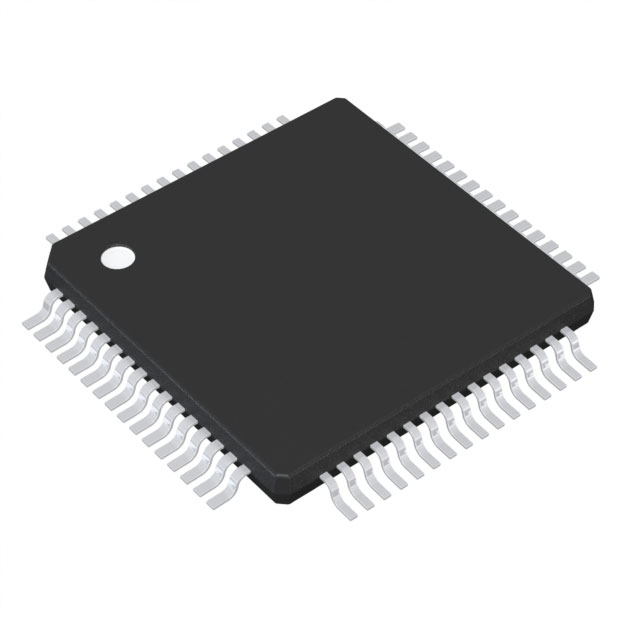
| Package / Case | 64-LQFP |
| Peripherals | Brown-out Detect/Reset, DMA, POR, WDT, PWM |
| Program Memory Size | 96 KB |
| Program Memory Type | FRAM |
| RAM Size | 2K x 8 |
| Speed | 16 MHz |
| Supplier Device Package | 64-LQFP (10x10) |
| Voltage - Supply (Vcc/Vdd) [Max] | 3.6 V |
| Voltage - Supply (Vcc/Vdd) [Min] | 1.8 V |
Pricing
Prices provided here are for design reference only. For realtime values and availability, please visit the distributors directly
| Distributor | Package | Quantity | $ | |
|---|---|---|---|---|
Description
General part information
MSP430FR5988 Series
The MSP430™ ultra-low-power (ULP) FRAM platform combines uniquely embedded FRAM and a holistic ultra-low-power system architecture, allowing innovators to increase performance at lowered energy budgets. FRAM technology combines the speed, flexibility, and endurance of SRAM with the stability and reliability of flash at much lower power.
The MSP430 ULP FRAM portfolio consists of a diverse set of devices that feature FRAM, the ULP 16-bit MSP430 CPU, and intelligent peripherals targeted for various applications. The ULP architecture showcases seven low-power modes, which are optimized to achieve extended battery life in energy-challenged applications.
The MSP430™ ultra-low-power (ULP) FRAM platform combines uniquely embedded FRAM and a holistic ultra-low-power system architecture, allowing innovators to increase performance at lowered energy budgets. FRAM technology combines the speed, flexibility, and endurance of SRAM with the stability and reliability of flash at much lower power.
Documents
Technical documentation and resources
