


Deep-Dive with AI
Search across all available documentation for this part.
Deep-Dive with AI
Technical Specifications
Parameters and characteristics for this part
| Specification | 74HC390D,653 |
|---|---|
| Count Rate | 71 MHz |
| Direction | Up |
| Logic Type | Decade, Counter |
| Mounting Type | Surface Mount |
| Number of Bits per Element | 4 |
| Number of Elements | 2 |
| Operating Temperature [Max] | 125 °C |
| Operating Temperature [Min] | -40 C |
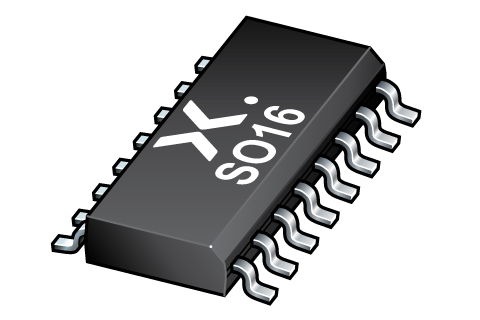
| Package / Case | 16-SOIC |
| Package / Case | 0.154 in, 3.9 mm |
| Reset | Asynchronous |
| Supplier Device Package | 16-SO |
| Trigger Type | Negative Edge |
| Voltage - Supply [Max] | 6 V |
| Voltage - Supply [Min] | 2 V |
Pricing
Prices provided here are for design reference only. For realtime values and availability, please visit the distributors directly
| Distributor | Package | Quantity | $ | |
|---|---|---|---|---|
| Digikey | N/A | 31522 | $ 0.75 | |
Description
General part information
74HC390D Series
The 74HC390; 74HCT390 is a dual 4-bit decade ripple counter divided into four separately clocked sections. The counters have two divide-by-2 sections and two divide-by-5 sections. These sections share an asynchronous master reset input (nMR) and can be used in a BCD decade or bi-quinary configuration. If master reset inputs (1MR and 2MR) are used to simultaneously clear all 8 bits of the counter, a number of counting configurations are possible within one package. The separate clocks (nCP0 and nCP1) of each section allow ripple counter or frequency division applications of divide-by-2, 4, 5, 10, 20, 25, 50 or 100. Each section is triggered by the HIGH-to-LOW transition of the clock inputs (nCP0 and nCP1). For BCD decade operation, the nQ0 output is connected to the nCP1 input of the divide-by-5 section. For bi-quinary decade operation, the nQ3 output is connected to the nCP0 input and nQ0 becomes the decade output. A HIGH on the nMR input overrides the clocks and sets the four outputs LOW. This device features reduced input threshold levels to allow interfacing to TTL logic levels. Inputs also include clamp diodes, this enables the use of current limiting resistors to interface inputs to voltages in excess of VCC.
Documents
Technical documentation and resources