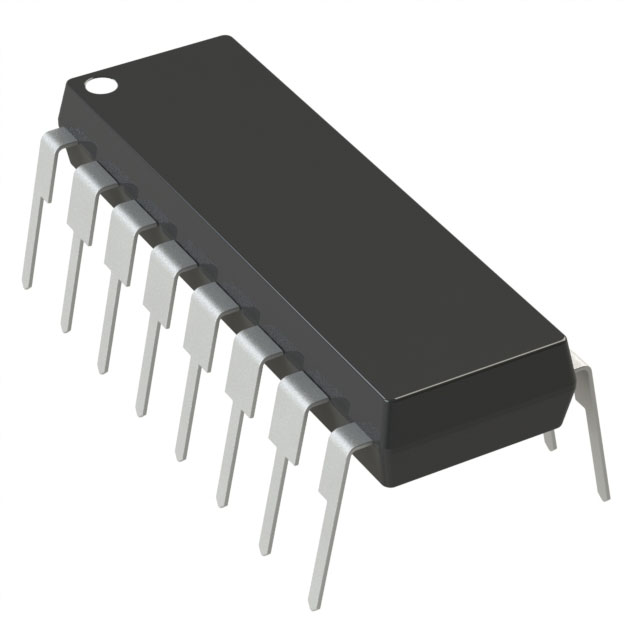
AD7715ANZ-5
ActiveANALOG TO DIGITAL CONVERTER, 16 BIT, DIFFERENTIAL, 3 WIRE, MICROWIRE, QSPI, SERIAL, SPI, SINGLE
Deep-Dive with AI
Search across all available documentation for this part.
AD7715ANZ-5
ActiveANALOG TO DIGITAL CONVERTER, 16 BIT, DIFFERENTIAL, 3 WIRE, MICROWIRE, QSPI, SERIAL, SPI, SINGLE
Deep-Dive with AI
Technical Specifications
Parameters and characteristics for this part
| Specification | AD7715ANZ-5 |
|---|---|
| Architecture | Sigma-Delta |
| Configuration | PGA-ADC |
| Data Interface | DSP, SPI |
| Features | PGA |
| Input Type | Differential |
| Mounting Type | Through Hole |
| Number of A/D Converters | 1 count |
| Number of Bits | 16 bits |
| Number of Inputs | 1 |
| Operating Temperature (Max) | 85 °C |
| Operating Temperature (Min) | -40 °C |
| Package Length | 0.3 in |
| Package Name | 16-PDIP, 16-DIP |
| Package Width | 7.62 mm |
| Reference Type | External |
| Sampling Rate (Per Second) | 500 Hz |
| Voltage - Supply, Analog | 5 V |
| Voltage - Supply, Digital (Max) | 5.25 V |
| Voltage - Supply, Digital (Min) | 3 V |
Pricing
Prices provided here are for design reference only. For realtime values and availability, please visit the distributors directly
CAD
3D models and CAD resources for this part
Description
General part information
AD7715 Series
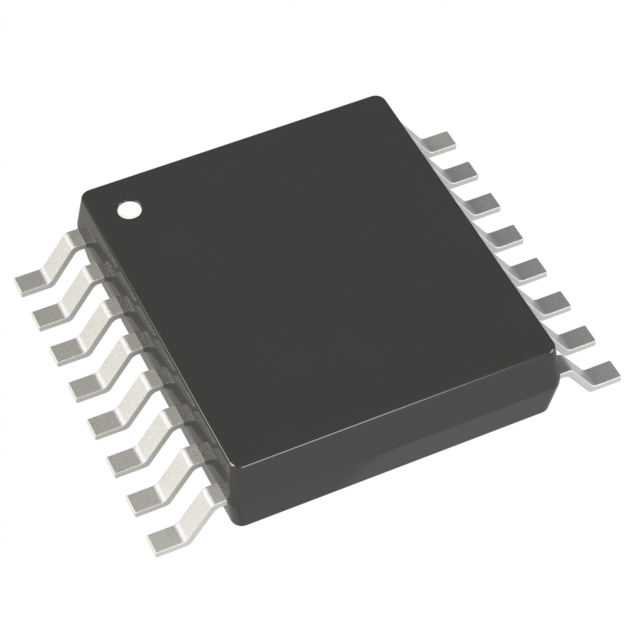
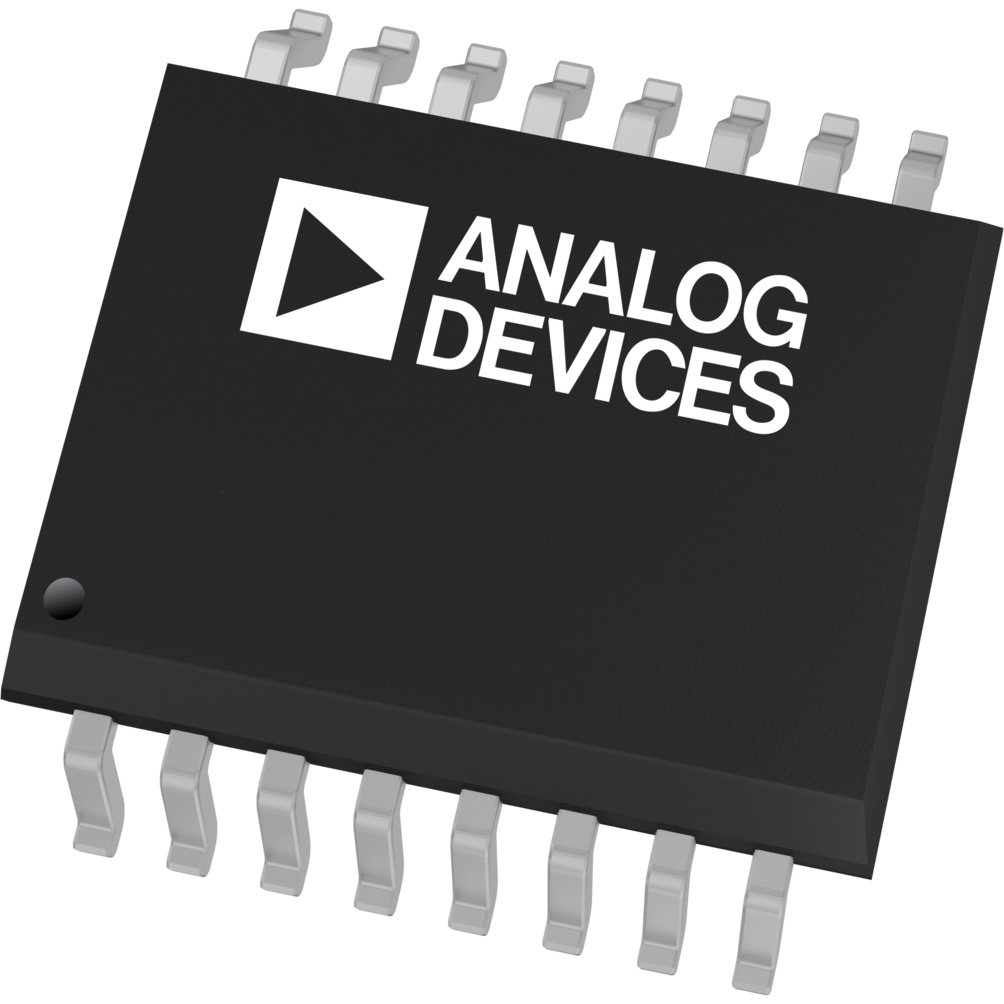
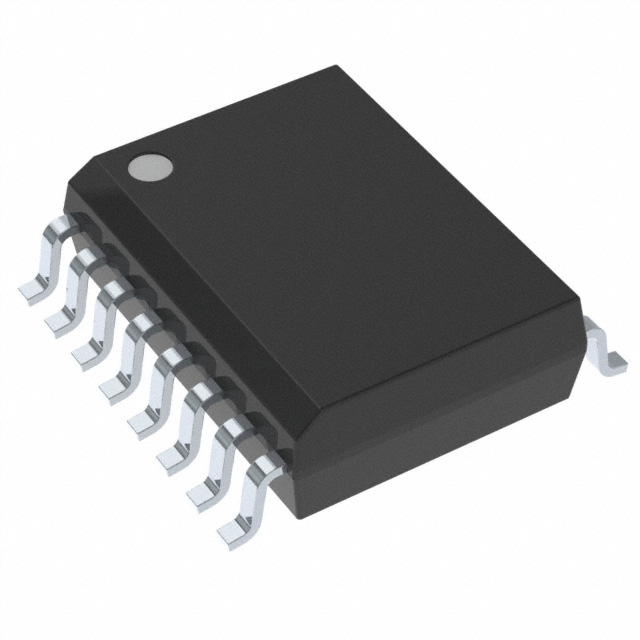
The AD7715 is a complete analog front end for low frequency measurement applications. The part can accept low level input signals directly from a transducer and outputs a serial digital word. It employs a Σ-Δ conversion technique to realize up to 16 bits of no missing codes performance. The input signal is applied to a proprietary programmable gain front end based around an analog modulator. The modulator output is processed by an on-chip digital filter. The first notch of this digital filter can be programmed via the on-chip control register allowing adjustment of the filter cutoff and output update rate.The AD7715 features a differential analog input as well as a differential reference input. It operates from a single supply (3 V or 5 V). It can handle unipolar input signal ranges of 0 mV to 20 mV, 0 mV to 80 mV, 0 V to 1.25 V and 0 V to 2.5 V. It can also handle bipolar input signal ranges of ±20 mV, ±80 mV, ±1.25 V and ±2.5 V. These bipolar ranges are referenced to the negative input of the differential analog input. The AD7715 thus performs all signal conditioning and conversion for a single channel system.The AD7715 is ideal for use in smart, microcontroller, or DSP-based systems. It features a serial interface that can be configured for three-wire operation. Gain settings, signal polarity, and update rate selection can be configured in software using the input serial port. The part contains self-calibration and system calibration options to eliminate gain and offset errors on the part itself or in the system.CMOS construction ensures very low power dissipation, and power-down mode reduces the standby power consumption to 50 μW typical. The part is available in a 16-lead, 0.3 inch-wide, plastic dual-in-line package (PDIP) as well as a 16-lead 0.3 inch wide small outline (SOIC_W) package and a 16-lead TSSOP package.PRODUCT HIGHLIGHTSThe AD7715 consumes less than 450 μA in total supply current at 3 V supplies and 1 MHz master clock, making it ideal for use in low-power systems. Standby current is less than 10 μA.The programmable gain input allows the AD7715 to accept input signals directly from a strain gage or transducer removing a considerable amount of signal conditioning.The AD7715 is ideal for microcontroller or DSP processor applications with a three-wire serial interface reducing the number of interconnect lines and reducing the number of optocouplers required in isolated systems. The part contains on-chip registers which allow software control over output update rate, input gain, signal polarity, and calibration modes.The part features excellent static performance specifications with 16-bits no missing codes, ±0.0015% accuracy, and low rms noise (<550 nV). Endpoint errors and the effects of temperature drift are eliminated by on-chip calibration options, which remove zero-scale and full-scale errors.
Documents
Technical documentation and resources