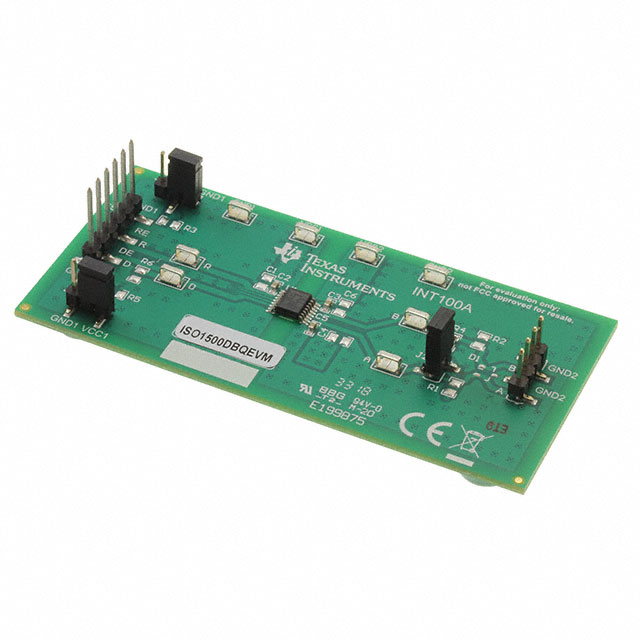
ISO1500DBQEVM
ActiveEVALUATION BOARD FOR ISO1500
Deep-Dive with AI
Search across all available documentation for this part.
ISO1500DBQEVM
ActiveEVALUATION BOARD FOR ISO1500
Deep-Dive with AI
Technical Specifications
Parameters and characteristics for this part
| Specification | ISO1500DBQEVM |
|---|---|
| Function | RS485 |
| Supplied Contents | Board(s) |
| Type | Interface |
| Utilized IC / Part | ISO1500 |
Pricing
Prices provided here are for design reference only. For realtime values and availability, please visit the distributors directly
| Distributor | Package | Quantity | $ | |
|---|---|---|---|---|
| Digikey | Bulk | 1 | $ 58.80 | |
Description
General part information
ISO1500 Series
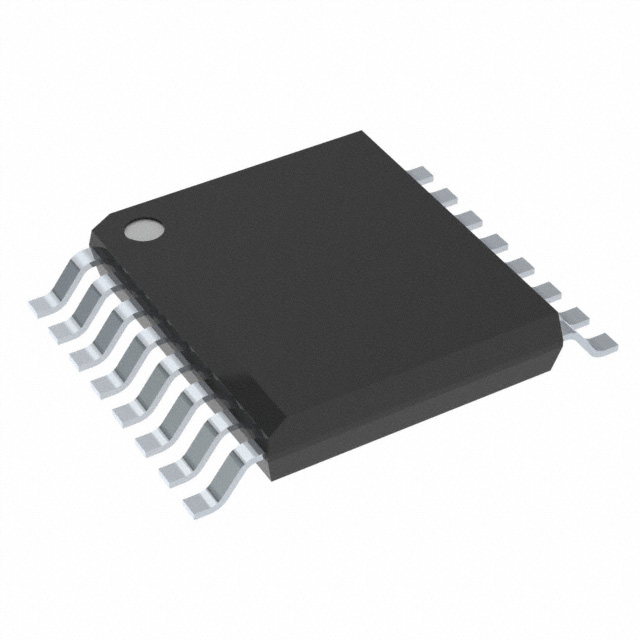
The ISO1500 device is a galvanically-isolated differential line transceiver for TIA/EIA RS-485 and RS-422 applications. This device has a 3-channel digital isolator and an RS-485 transceiver in an ultra-small 16-pin SSOP package. The bus pins of this transceiver are protected against IEC ESD contact discharge and IEC EFT events. The receiver output has a failsafe for bus open, short, and idle conditions. The small solution size of ISO1500 greatly reduces the board space required compared to other integrated isolated RS-485 solutions or discrete implementation with optocouplers and non-isolated RS-485 transceiver.
The device is used for long distance communications. Isolation breaks the ground loop between the communicating nodes, allowing for a much larger common mode voltage range. The symmetrical isolation barrier of each device is tested to provide 3000 VRMSof isolation for 1 minute per UL 1577 between the bus-line transceiver and the logic-level interface.
The ISO1500 device can operate from 1.71 V to 5.5 V on side 1 which lets the devices interface with low-voltage FPGAs and ASICs. The supply voltage on side 2 is from 4.5 V to 5.5 V. This device supports a wide operating ambient temperature range from –40°C to +125°C.
Documents
Technical documentation and resources