


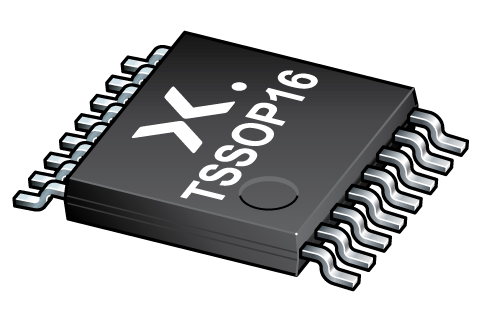
74HCS595PWJ
Active8-BIT SHIFT REGISTER WITH SCHMITT-TRIGGER INPUTS AND 3-STATE OUTPUT REGISTERS
Deep-Dive with AI
Search across all available documentation for this part.
74HCS595PWJ
Active8-BIT SHIFT REGISTER WITH SCHMITT-TRIGGER INPUTS AND 3-STATE OUTPUT REGISTERS
Technical Specifications
Parameters and characteristics for this part
| Specification | 74HCS595PWJ |
|---|---|
| Function | Serial to Parallel, Serial |
| Logic Type | Shift Register |
| Mounting Type | Surface Mount |
| Number of Bits per Element [custom] | 8 |
| Number of Elements | 1 |
| Operating Temperature [Max] | 125 °C |
| Operating Temperature [Min] | -40 C |
| Output Type | Tri-State |
| Package / Case | 16-TSSOP |
| Package / Case [y] | 4.4 mm |
| Package / Case [y] | 0.173 in |
| Supplier Device Package | 16-TSSOP |
| Voltage - Supply [Max] | 6 V |
| Voltage - Supply [Min] | 2 V |
Pricing
Prices provided here are for design reference only. For realtime values and availability, please visit the distributors directly
| Distributor | Package | Quantity | $ | |
|---|---|---|---|---|
| Digikey | N/A | 0 | $ 0.37 | |
Description
General part information
74HCS595PW Series
The 74HCS595 is an 8-bit serial-in/serial or parallel-out shift register with a storage register and 3-state outputs. Both the shift and storage register have separate clocks. The device features a serial input (DS) and a serial output (Q7S) to enable cascading and an asynchronous resetMRinput. A LOW onMRwill reset the shift register. Data is shifted on the LOW-to-HIGH transitions of the SHCP input. The data in the shift register is transferred to the storage register on a LOW-to-HIGH transition of the STCP input. If both clocks are connected together, the shift register will always be one clock pulse ahead of the storage register. Data in the storage register appears at the output whenever the output enable input (OE) is LOW. A HIGH onOEcauses the outputs to assume a high-impedance OFF-state. Operation of theOEinput does not affect the state of the registers. Inputs include clamp diodes. This enables the use of current limiting resistors to interface inputs to voltages in excess of VCC.
Documents
Technical documentation and resources