


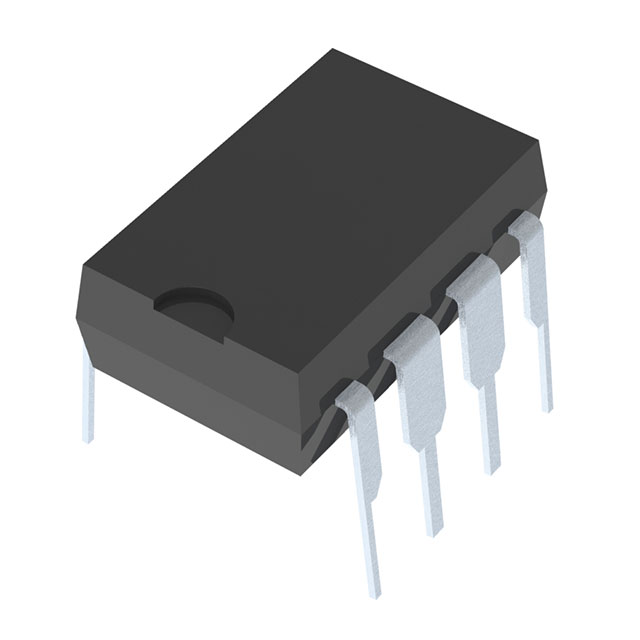
LTC1042CN8#PBF
ActiveANALOG COMPARATOR, CMOS, 1 CHANNELS, 80 ΜS, 2.8V TO 16V, DIP, 8 PINS
Deep-Dive with AI
Search across all available documentation for this part.
LTC1042CN8#PBF
ActiveANALOG COMPARATOR, CMOS, 1 CHANNELS, 80 ΜS, 2.8V TO 16V, DIP, 8 PINS
Deep-Dive with AI
Technical Specifications
Parameters and characteristics for this part
| Specification | LTC1042CN8#PBF |
|---|---|
| Current - Input Bias (Max) [Max] | 300 pA |
| Current - Quiescent (Max) [Max] | 3 mA |
| Mounting Type | Through Hole |
| Number of Elements | 1 |
| Operating Temperature [Max] | 85 °C |
| Operating Temperature [Min] | -40 C |
| Output Type | TTL |
| Package / Case | 8-DIP (0.300", 7.62mm) |
| Supplier Device Package | 8-PDIP |
| Type | Window |
| Voltage - Supply, Single/Dual (±) [Max] | 16 V |
| Voltage - Supply, Single/Dual (±) [Min] | 2.8 V |
Pricing
Prices provided here are for design reference only. For realtime values and availability, please visit the distributors directly
Description
General part information
LTC1042 Series
The LTC1042 is a monolithic CMOS window comparator manufactured using Linear Technology’s enhanced LTCMOS™silicon gate process. Two high impedance voltage inputs, CENTER and WIDTH/2, define the middle and width of the comparison window. Whenever the input voltage, VIN, is inside the window the WITHIN WINDOW output is high. The ABOVE WINDOW output is high whenever VINis above the window. By interchanging VINand CENTER, the ABOVE WINDOW output becomes BELOW WINDOW and is high if VINis below the window.Sampling techniques provide high impedance voltage inputs that can common mode to both supply rails (V+and GND). An important feature of the inputs is their non-interaction. Also the device is effectively "chopper stabilized," giving it extremely high accuracy over all conditions of temperature, power supply and input voltage range.Another benefit of the sampling techniques used to design the LTC1042 is the extremely low power consumption. When the device is strobed, it internally turns on the power to the comparators, samples the inputs, stores the outputs in CMOS latches and then turns off power to the comparators. This all happens in about 80µs. Average power can be made small, almost arbitrarily, by lowering the strobe rate. The device can be self-strobed using an external RC network or strobed externally by driving the OSC pin with a CMOS gate.ApplicationsFault DetectorsGo/No-Go TestingMicroprocessor Power Supply Monitor
Documents
Technical documentation and resources