REFICL8810LED43WBMTOBO1
ActiveTHE REF_ICL8810_LED_43W_BM IS A 43W REFERENCE DESIGN FEATURING INFINEON’S HIGH POWER FACTOR FLYBACK CONTROLLER ICL8810.
Deep-Dive with AI
Search across all available documentation for this part.
REFICL8810LED43WBMTOBO1
ActiveTHE REF_ICL8810_LED_43W_BM IS A 43W REFERENCE DESIGN FEATURING INFINEON’S HIGH POWER FACTOR FLYBACK CONTROLLER ICL8810.
Deep-Dive with AI
Technical Specifications
Parameters and characteristics for this part
| Specification | REFICL8810LED43WBMTOBO1 |
|---|---|
| Contents | Board(s) |
| Features | Dimmable |
| Outputs and Type | 1 Isolated Output |
| Supplied Contents | Board(s) |
| Utilized IC / Part | ICL8810 |
| Voltage - Input [Max] | 305 VAC |
| Voltage - Input [Min] | 90 VAC |
| Voltage - Output | 52 V |
Pricing
Prices provided here are for design reference only. For realtime values and availability, please visit the distributors directly
Description
General part information
ICL8810 Series
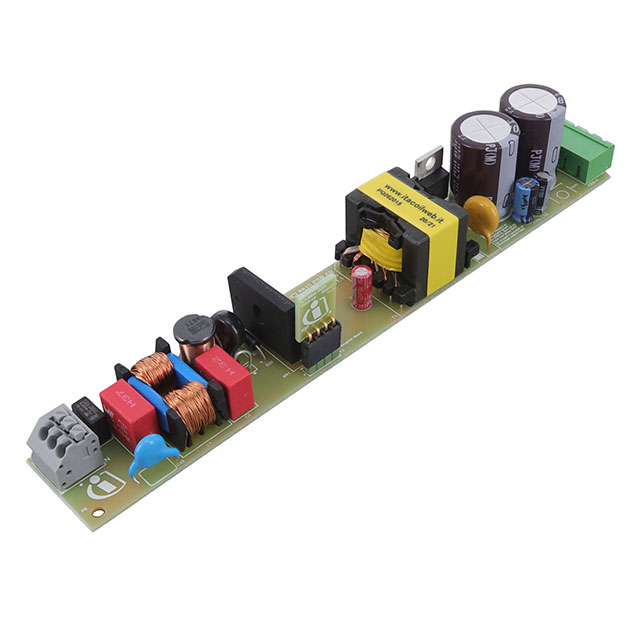
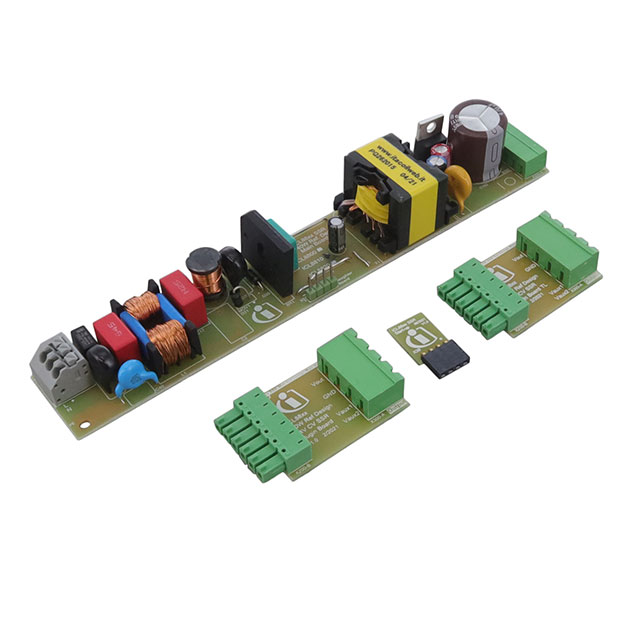
The REF_ICL8810_LED_43W_BM is a 43W reference design featuring Infineon’s high power factor flyback controllerICL8810. The board is a constant voltage (CV) secondary-side regulated (SSR) system and is intended to be used with a constant current (CC) converter forLED lighting applications. Two-stage topologies are growing because of the convenient scalability of power on the primary side as and the features on the secondary side. REF_ICL8810_LED_43W_BM is designed as plug-and- play solution and can be combined withsecondary side DC/DC boards. As a default setup, the reference design board is assembled with a start-up circuit based on a depletion-mode MOSFETBSS126Ion a very small adapter board. This setup offers the lowest standby losses. If low standby consumption is not necessary, the start-up circuit can be changed to a resistive start-up. This reference design is provided with two regulation circuits. Both circuits are designed as plug and play solutions, but at least one has to be connected to the main board. The two boards shall show the trade-off between cost; here the TL431 board offers a low-cost solution, and standby performance, while the op-amp board shows an overall 30mW better performance.
Documents
Technical documentation and resources