


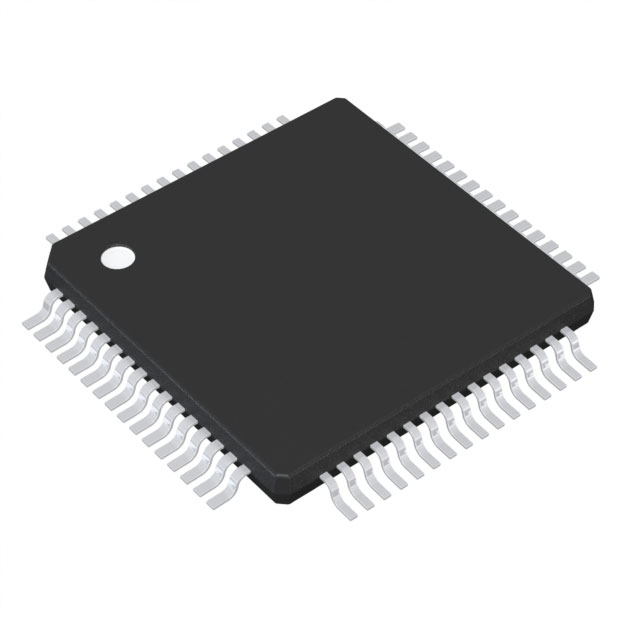
SN74ABTH182646APM
ActiveSCAN TEST DEVICES WITH 18-BIT TRANSCEIVERS AND REGISTERS
Deep-Dive with AI
Search across all available documentation for this part.
SN74ABTH182646APM
ActiveSCAN TEST DEVICES WITH 18-BIT TRANSCEIVERS AND REGISTERS
Deep-Dive with AI
Technical Specifications
Parameters and characteristics for this part
| Specification | SN74ABTH182646APM |
|---|---|
| Logic Type | Scan Test Device With Transceivers And Registers |
| Mounting Type | Surface Mount |
| Operating Temperature [Max] | 85 °C |
| Operating Temperature [Min] | -40 C |
| Package / Case | 64-LQFP |
| Supplier Device Package | 64-LQFP (10x10) |
| Supply Voltage [Max] | 5.5 V |
| Supply Voltage [Min] | 4.5 V |
Pricing
Prices provided here are for design reference only. For realtime values and availability, please visit the distributors directly
| Distributor | Package | Quantity | $ | |
|---|---|---|---|---|
| Digikey | N/A | 0 | $ 14.97 | |
| 2984 | $ 14.97 | |||
| Tray | 160 | $ 16.05 | ||
| Texas Instruments | JEDEC TRAY (10+1) | 1 | $ 17.36 | |
| 100 | $ 15.16 | |||
| 250 | $ 11.69 | |||
| 1000 | $ 10.46 | |||
Description
General part information
74ABTH182646 Series
The 'ABTH18646A and 'ABTH182646A scan test devices with 18-bit bus transceivers and registers are members of the Texas Instruments SCOPETMtestability integrated-circuit family. This family of devices supports IEEE Standard 1149.1-1990 boundary scan to facilitate testing of complex circuit-board assemblies. Scan access to the test circuitry is accomplished via the 4-wire test access port (TAP) interface.
In the normal mode, these devices are 18-bit bus transceivers and registers that allow for multiplexed transmission of data directly from the input bus or from the internal registers. They can be used either as two 9-bit transceivers or one 18-bit transceiver. The test circuitry can be activated by the TAP to take snapshot samples of the data appearing at the device pins or to perform a self test on the boundary-test cells. Activating the TAP in the normal mode does not affect the functional operation of the SCOPETMbus transceivers and registers.
Transceiver function is controlled by output-enable () and direction (DIR) inputs. Whenis low, the transceiver is active and operates in the A-to-B direction when DIR is high or in the B-to-A direction when DIR is low. Whenis high, both the A and B outputs are in the high-impedance state, effectively isolating both buses.
Documents
Technical documentation and resources