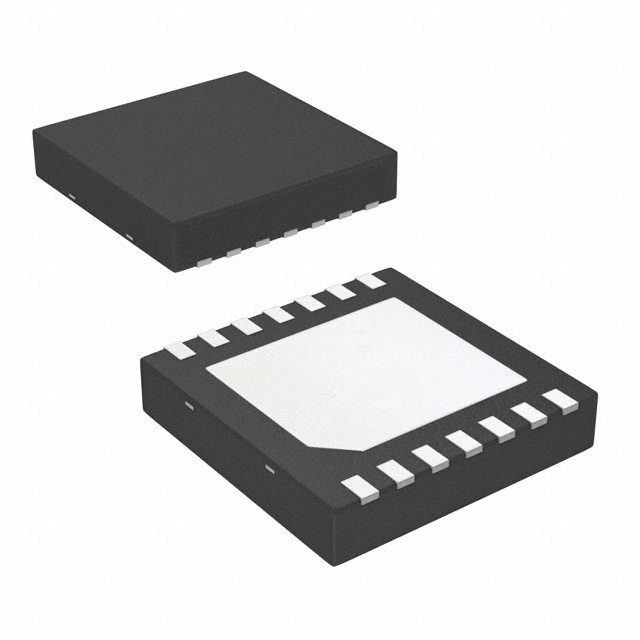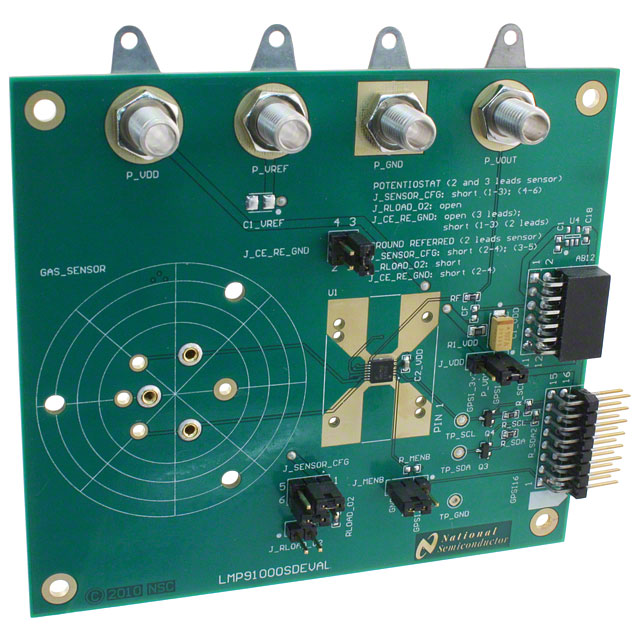
LMP91000EVM/NOPB
ActiveLMP91000 ANALOG FRONT END EVALUATION BOARD
Deep-Dive with AI
Search across all available documentation for this part.
LMP91000EVM/NOPB
ActiveLMP91000 ANALOG FRONT END EVALUATION BOARD
Deep-Dive with AI
Technical Specifications
Parameters and characteristics for this part
| Specification | LMP91000EVM/NOPB |
|---|---|
| Embedded | False |
| Function | Analog Front End (AFE) |
| Secondary Attributes | I2C Interface(s) |
| Supplied Contents | Board(s) |
| Type | Interface |
| Utilized IC / Part | LMP91000 |
Pricing
Prices provided here are for design reference only. For realtime values and availability, please visit the distributors directly
| Distributor | Package | Quantity | $ | |
|---|---|---|---|---|
| Digikey | Bulk | 1 | $ 118.80 | |
Description
General part information
LMP91000 Series
The LMP91000 is a programmable analog front-end (AFE) for use in micro-power electrochemical sensing applications. It provides a complete signal path solution between a sensor and a microcontroller that generates an output voltage proportional to the cell current. The LMP91000’s programmability enables it to support multiple electrochemical sensors such as 3-lead toxic gas sensors and 2-lead galvanic cell sensors with a single design as opposed to the multiple discrete solutions. The LMP91000 supports gas sensitivities over a range of 0.5 nA/ppm to 9500 nA/ppm. It also allows for an easy conversion of current ranges from 5 µA to 750 µA full scale.
The LMP91000’s adjustable cell bias and transimpedance amplifier (TIA) gain are programmable through the I2C interface. The I2C interface can also be used for sensor diagnostics. An integrated temperature sensor can be read by the user through the VOUT pin and used to provide additional signal correction in the µC or monitored to verify temperature conditions at the sensor.
The LMP91000 is optimized for micro-power applications and operates over a voltage range of 2.7 to 5.25 V. The total current consumption can be less than 10 µA. Further power savings are possible by switching off the TIA amplifier and shorting the reference electrode to the working electrode with an internal switch.
Documents
Technical documentation and resources