Deep-Dive with AI
Search across all available documentation for this part.
Deep-Dive with AI
Technical Specifications
Parameters and characteristics for this part
| Specification | PCA9557PWT |
|---|---|
| Clock Frequency | 400 kHz |
| Current - Output Source/Sink [custom] | 10 mA |
| Current - Output Source/Sink [custom] | 25 mA |
| Features | POR |
| Interface | I2C, SMBus |
| Interrupt Output | False |
| Mounting Type | Surface Mount |
| Number of I/O | 8 |
| Operating Temperature [Max] | 85 °C |
| Operating Temperature [Min] | -40 °C |
| Output Type | Open Drain, Push-Pull |
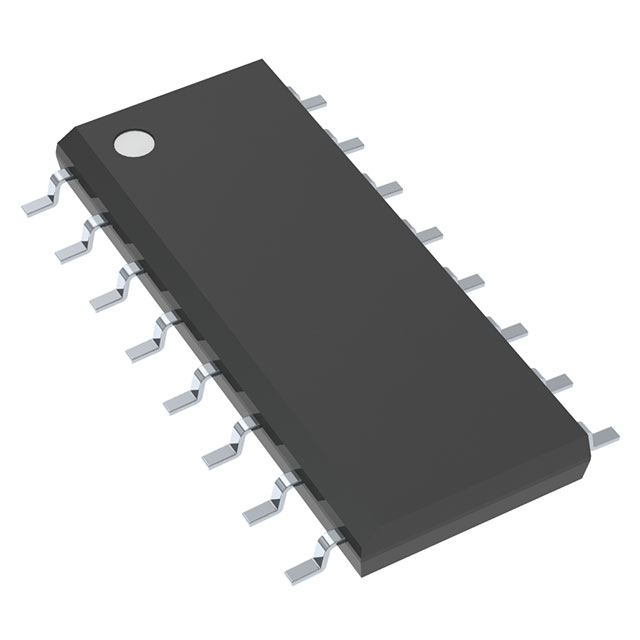
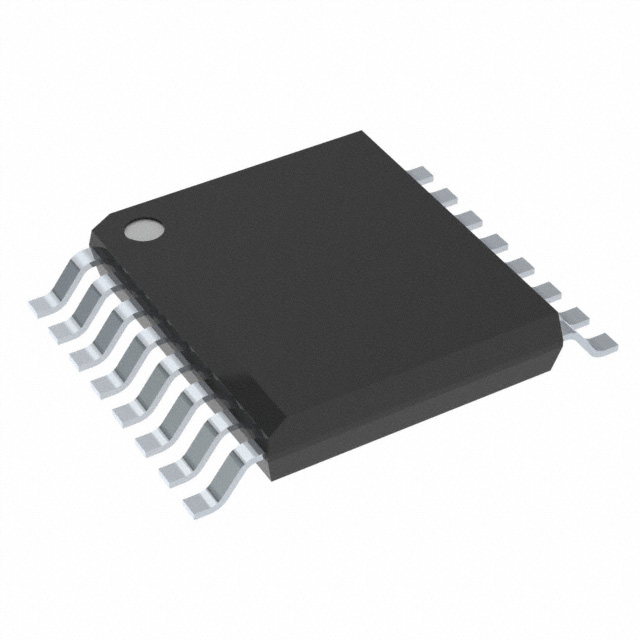
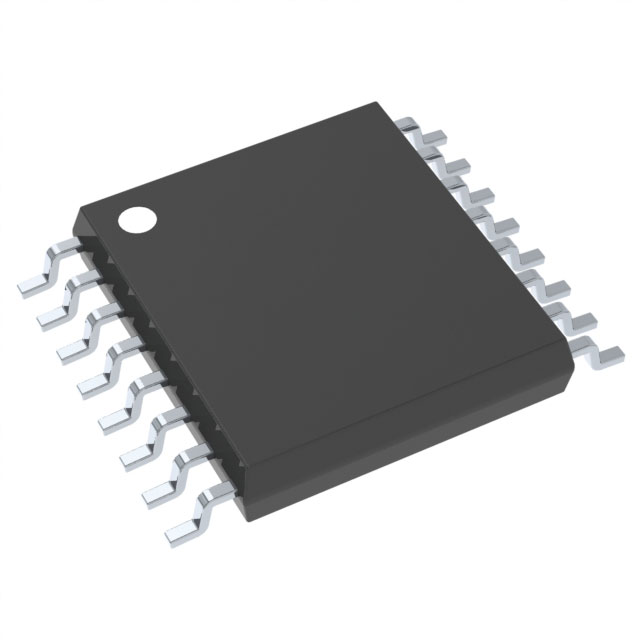
| Package / Case | 16-TSSOP |
| Package / Case [x] | 0.173 in |
| Package / Case [y] | 4.4 mm |
| Supplier Device Package | 16-TSSOP |
| Voltage - Supply [Max] | 5.5 V |
| Voltage - Supply [Min] | 2.3 V |
Pricing
Prices provided here are for design reference only. For realtime values and availability, please visit the distributors directly
| Distributor | Package | Quantity | $ | |
|---|---|---|---|---|
| Digikey | Cut Tape (CT) | 1 | $ 2.03 | |
| 10 | $ 1.83 | |||
| 25 | $ 1.72 | |||
| 100 | $ 1.47 | |||
| Digi-Reel® | 1 | $ 2.03 | ||
| 10 | $ 1.83 | |||
| 25 | $ 1.72 | |||
| 100 | $ 1.47 | |||
| Tape & Reel (TR) | 250 | $ 1.38 | ||
| 500 | $ 1.21 | |||
| 1250 | $ 1.00 | |||
| 2500 | $ 0.93 | |||
| 6250 | $ 0.90 | |||
Description
General part information
PCA9557 Series
This 8-bit I/O expander for the two-line bidirectional bus (I2C) is designed for 2.3V to 5.5V VCC operation. The device provides general-purpose remote I/O expansion for most microcontroller families through the I2C interface [serial clock (SCL) and serial data (SDA)].
The PCA9557 consists of one 8-bit configuration (input or output selection), input port, output port, and polarity inversion (active-high) registers. At power on, the I/Os are configured as inputs. However, the system controller can enable the I/Os as either inputs or outputs by writing to the I/O configuration bits. The data for each input or output is kept in the corresponding input or output register. The polarity of the input port register can be inverted with the polarity inversion register. All registers can be read by the system controller.
The device outputs (latched) have high-current drive capability for directly driving LEDs. The device has low current consumption.
Documents
Technical documentation and resources
No documents available