


Deep-Dive with AI
Search across all available documentation for this part.
Deep-Dive with AI
Technical Specifications
Parameters and characteristics for this part
| Specification | JBP28L42MJ |
|---|---|
| Access Time | 110 ns |
| Memory Format | PROM |
| Memory Interface | Parallel |
| Memory Organization [custom] | 512 |
| Memory Organization [custom] | 8 |
| Memory Size | 4 Kbit |
| Memory Type | Non-Volatile |
| Mounting Type | Through Hole |
| Operating Temperature [Max] | 125 °C |
| Operating Temperature [Min] | -55 °C |
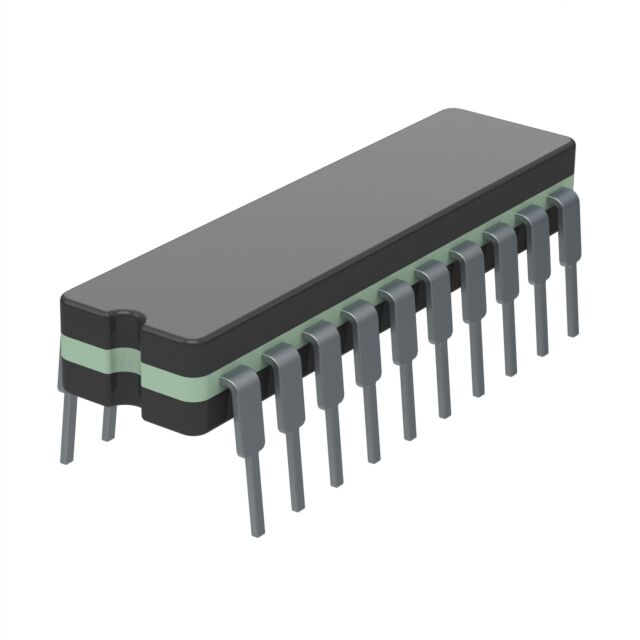
| Package / Case | 20-CDIP |
| Supplier Device Package | 20-CDIP |
| Voltage - Supply [Max] | 5.5 V |
| Voltage - Supply [Min] | 4.5 V |
Pricing
Prices provided here are for design reference only. For realtime values and availability, please visit the distributors directly
| Distributor | Package | Quantity | $ | |
|---|---|---|---|---|
| Texas Instruments | TUBE | 1 | $ 71.74 | |
| 100 | $ 63.77 | |||
| 250 | $ 52.42 | |||
| 1000 | $ 46.89 | |||
Description
General part information
JBP28L42 Series
The 24 and 28 Series of monolithic TTL programmable read-only memories (PROMs) feature an expanded selection of standard and low-power PROMs. This expanded PROM family provides the system designer with considerable fexibility in upgrading existing designs or optimizing new designs. Featuring proven titanium-tungsten (Ti-W) fuse links with low-current MOS-compatible p-n-p inputs, all family members utilize a common programming technique designed to program each link with a 20-microsecond pulse.
The 4096-bit and 8192-bit PROMs are offered in a wide variety of packages ranging from 18-pin 300 mil-wide thru 24 pin 600 mil-wide. The 16,384-bit PROMs provide twice the bit density of the 8192-bit PROMs and are provided in a 24 pin 600 mil-wide package.
All PROMs are supplied with a logic-high output level stored at each bit location. The programming procedure will produce open-circuits in the Ti-W metal links, which reverses the stored logic level at the selected location. The procedure is irreversible; once altered, the output for that bit location is permanently programmed. Outputs that have never been altered may later be programmed to supply the opposite output level. Operation of the unit within the recommended operating conditions will not alter the memory content.
Documents
Technical documentation and resources