


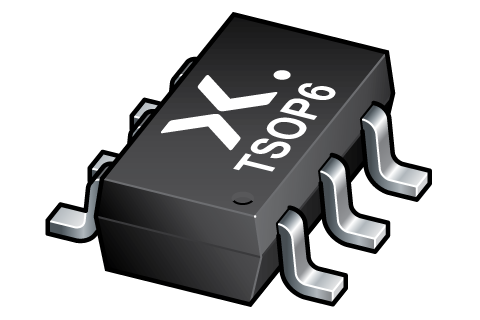
74LVC1G175GV-Q100H
ActiveFLIP FLOPS SINGLE D-TYPE FLIP-FLOP WITH RESET; POSITIVE-EDGE TRIGGER
Deep-Dive with AI
Search across all available documentation for this part.
74LVC1G175GV-Q100H
ActiveFLIP FLOPS SINGLE D-TYPE FLIP-FLOP WITH RESET; POSITIVE-EDGE TRIGGER
Deep-Dive with AI
Technical Specifications
Parameters and characteristics for this part
| Specification | 74LVC1G175GV-Q100H |
|---|---|
| Clock Frequency | 200 MHz |
| Current - Output High, Low | 32 mA, 32 mA |
| Function | Reset |
| Grade | Automotive |
| Input Capacitance | 2.5 pF |
| Max Propagation Delay @ V, Max CL | 4 ns |
| Mounting Type | Surface Mount |
| Number of Bits per Element | 1 |
| Number of Elements | 1 |
| Operating Temperature [Max] | 125 °C |
| Operating Temperature [Min] | -40 °C |
| Output Type | Non-Inverted |
| Package / Case | SOT-457, SC-74 |
| Qualification | AEC-Q100 |
| Supplier Device Package | 6-TSOP |
| Trigger Type | Positive Edge |
| Type | D-Type |
| Voltage - Supply [Max] | 5.5 V |
| Voltage - Supply [Min] | 1.65 V |
Pricing
Prices provided here are for design reference only. For realtime values and availability, please visit the distributors directly
Description
General part information
74LVC1G175GV-Q100 Series
The 74LVC1G175-Q100 is a low-power, low-voltage single positive edge triggered D-type flip-flop with individual data (D) input, clock (CP) input, master reset (MR) input, and Q output. The master reset (MR) is an asynchronous active LOW input and operates independently of the clock input. Information on the data input is transferred to the Q output on the LOW-to-HIGH transition of the clock pulse. The D input must be stable one set-up time prior to the LOW-to-HIGH clock transition for predictable operation. The inputs can be driven from either 3.3 V or 5 V devices. This feature allows the use of this device in a mixed 3.3 V and 5 V environment. This device is fully specified for partial power-down applications using IOFF. The IOFFcircuitry disables the output, preventing the damaging backflow current through the device when it is powered down. Schmitt trigger action at all inputs makes the circuit highly tolerant of slower input rise and fall times.
Documents
Technical documentation and resources