


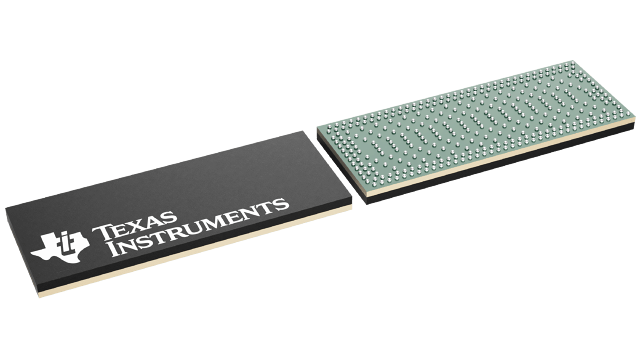
DS160PR1601ZDGT
ActivePCIE® 4.0 16-GBPS 16-LANE LINEAR REDRIVER
Deep-Dive with AI
Search across all available documentation for this part.
DS160PR1601ZDGT
ActivePCIE® 4.0 16-GBPS 16-LANE LINEAR REDRIVER
Technical Specifications
Parameters and characteristics for this part
| Specification | DS160PR1601ZDGT |
|---|---|
| Applications | PCIe |
| Capacitance - Input | 1.2 pF |
| Data Rate (Max) | 16 Gbps |
| Delay Time | 130 ps |
| Input | Differential |
| Mounting Type | Surface Mount |
| Number of Channels [custom] | 32 |
| Operating Temperature [Max] | 85 °C |
| Operating Temperature [Min] | -40 °C |
| Output | Differential |
| Package / Case | WLBGA, 354-LFBGA |
| Signal Conditioning | Input Equalization, Output De-Emphasis |
| Supplier Device Package | 354-NFBGA (22.8x8.9) |
| Type | ReDriver, Buffer |
| Voltage - Supply [Max] | 3.6 V |
| Voltage - Supply [Min] | 3 V |
Pricing
Prices provided here are for design reference only. For realtime values and availability, please visit the distributors directly
| Distributor | Package | Quantity | $ | |
|---|---|---|---|---|
| Digikey | Cut Tape (CT) | 1 | $ 50.83 | |
| 10 | $ 47.75 | |||
| 25 | $ 46.21 | |||
| 100 | $ 42.82 | |||
| Digi-Reel® | 1 | $ 50.83 | ||
| 10 | $ 47.75 | |||
| 25 | $ 46.21 | |||
| 100 | $ 42.82 | |||
| Tape & Reel (TR) | 250 | $ 41.59 | ||
| Texas Instruments | SMALL T&R | 1 | $ 46.66 | |
| 100 | $ 41.48 | |||
| 250 | $ 34.10 | |||
| 1000 | $ 30.50 | |||
Description
General part information
DS160PR1601 Series
The DS160PR1601 is a 32-channel (16-channel in each direction) x16 (16-lane) low-power high-performance linear repeater or redriver designed to support PCIe 4.0, UPI 2.0 and other interfaces up to 16 Gbps.
The DS160PR1601 receivers deploy continuous time linear equalizers (CTLE) to provide a programmable high-frequency boost. The equalizer can open an input eye that is completely closed due to inter-symbol interference (ISI) induced by an interconnect medium, such as PCB traces. The CTLE receiver is followed by a linear output driver. The linear datapaths of DS160PR1601 preserves transmit preset signal characteristics. The linear redriver becomes part of the passive channel that as a whole get link trained for best transmit and receive equalization settings. This transparency in the link training protocol results in best electrical link and lowest possible latency. Low channel-channel cross-talk, low additive jitter and excellent return loss makes the device almost a passive element in the link, but with its equalization.
.
Documents
Technical documentation and resources