


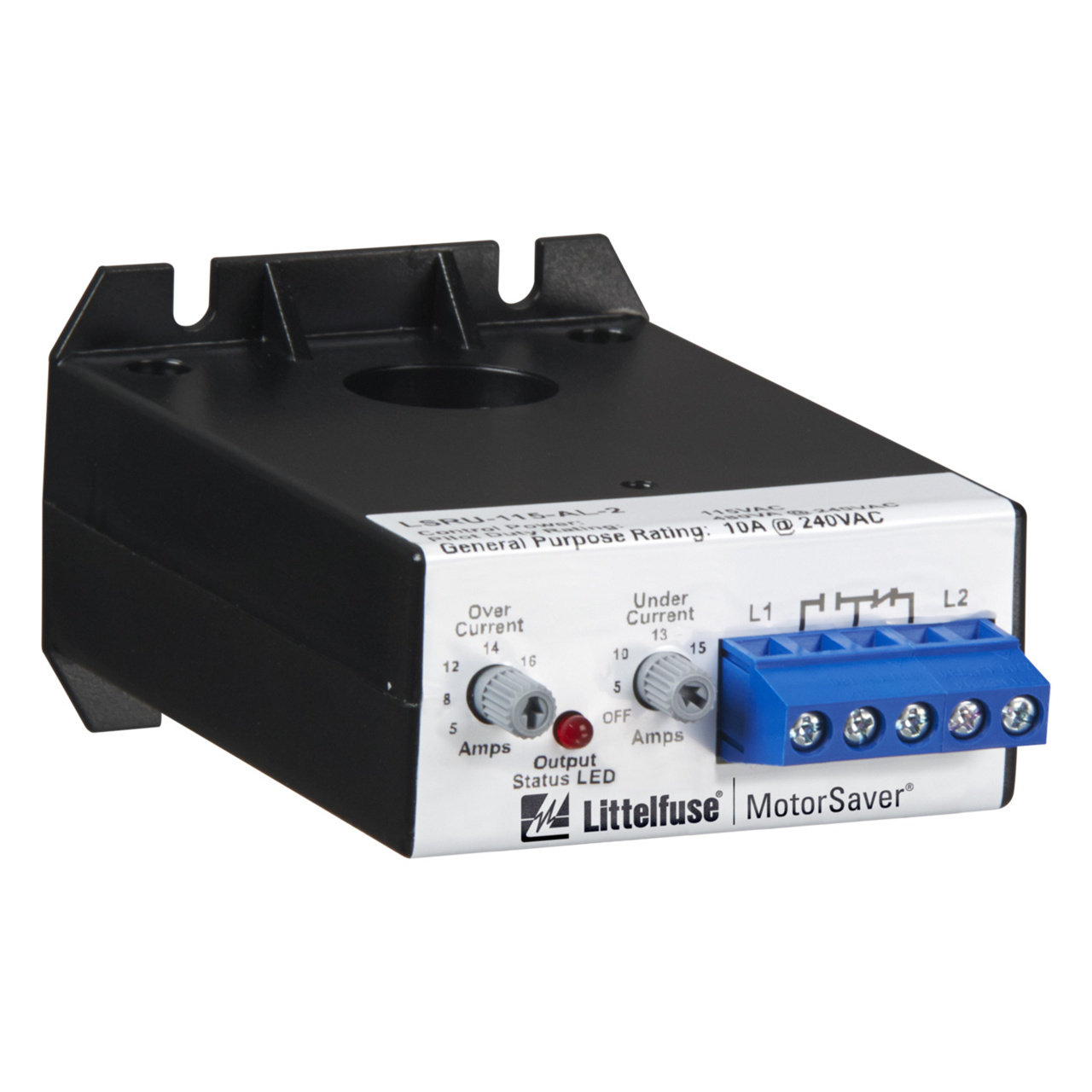
LSRU-115-OU-3
ActiveLOAD SENSOR/ 115V/ 25-100A/ OC/ BOX
LSRU-115-OU-3
ActiveLOAD SENSOR/ 115V/ 25-100A/ OC/ BOX
Technical Specifications
Parameters and characteristics for this part
| Specification | LSRU-115-OU-3 |
|---|---|
| Contact Rating @ Voltage | 10 A, 240 VAC |
| Delay Time | False |
| Mounting Type | Chassis Mount |
| Operating Temperature [Max] | 70 °C |
| Operating Temperature [Min] | -40 °C |
| Trip Range [Max] | 100 A AC |
| Trip Range [Min] | 25 A AC |
| Trip Status | Energized High/Low |
| Type | Current Sensing AC |
| Voltage - Supply | 115 VAC |
Pricing
Prices provided here are for design reference only. For realtime values and availability, please visit the distributors directly
Description
General part information
LSRU-115-OU-3 Series
The LSRU is a microcontroller-based family of load sensors. The LSRU family of products employ three basic types of control logic: motor control logic, alarm logic and feed control logic. Motor Control Logic Several combinations of functions are available in the LSRU, including overcurrent and undercurrent or either overcurrent or undercurrent with variable trip, restart or extended restart delay settings. These various versions of the LSRU trip on the respective fault and then automatically reset after the restart delay expires, in preparation for the next motor start. LSRUs do not trip on undercurrent when the load turns off, this is recognized as a normal condition.Alarm Logic The LSRU-AL simply indicates whether the current is between the setpoints or outside of the setpoints. This product is best used with a PLC or other controller where status indication is desired.Feed Control The LSRU-FC is a load monitor intended to control feeder mechanisms in a variety of applications. It stops the feeder when the grinder, chipper, saw, auger, etc. nears overload. When the load is reduced to a preset level, the feeder is restarted.
Documents
Technical documentation and resources