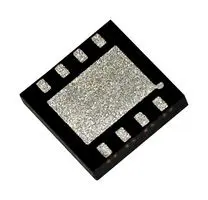
S25FL256SAGMFI000
ActiveFLASH MEMORY, SERIAL NOR, 256 MBIT, 32M X 8BIT, SPI, WSOIC, 16 PINS
Deep-Dive with AI
Search across all available documentation for this part.
S25FL256SAGMFI000
ActiveFLASH MEMORY, SERIAL NOR, 256 MBIT, 32M X 8BIT, SPI, WSOIC, 16 PINS
Deep-Dive with AI
Technical Specifications
Parameters and characteristics for this part
| Specification | S25FL256SAGMFI000 |
|---|---|
| Clock Frequency | 133 MHz |
| Memory Format | FLASH |
| Memory Interface | SPI - Quad I/O |
| Memory Organization | 32 M |
| Memory Size | 256 Gbit |
| Memory Type | Non-Volatile |
| Mounting Type | Surface Mount |
| Operating Temperature [Max] | 85 C |
| Operating Temperature [Min] | -40 ¯C |
| Package / Case | 16-SOIC |
| Package / Case | 7.5 mm |
| Package / Case | 0.295 " |
| Supplier Device Package | 16-SOIC |
| Technology | FLASH - NOR |
| Voltage - Supply [Max] | 3.6 V |
| Voltage - Supply [Min] | 2.7 V |
Pricing
Prices provided here are for design reference only. For realtime values and availability, please visit the distributors directly
Description
General part information
S25FL256S Series
S25FL256SAGMFI000 is a SPI Multi-I/O, 3.0V flash memory. This device connects to a host system via a SPI. Traditional SPI single-bit serial input and output (single I/O or SIO) is supported as well as optional two-bit (dual I/O or DIO) and four-bit (quad I/O or QIO) serial commands. This multiple-width interface is called SPI Multi-I/O or MIO. In addition, the FL-S family adds support for DDR read commands for SIO, DIO, and QIO that transfer address and read data on both edges of the clock. Executing code directly from flash memory is often called eXecute-in-Place or XIP. By using FL-S devices at the higher clock rates supported, with QIO or DDR-QIO commands, the instruction read transfer rate can match or exceed traditional parallel interface, asynchronous, NOR flash memories while reducing signal count dramatically. It offers high densities coupled with the flexibility and fast performance required by a variety of embedded applications.
Documents
Technical documentation and resources