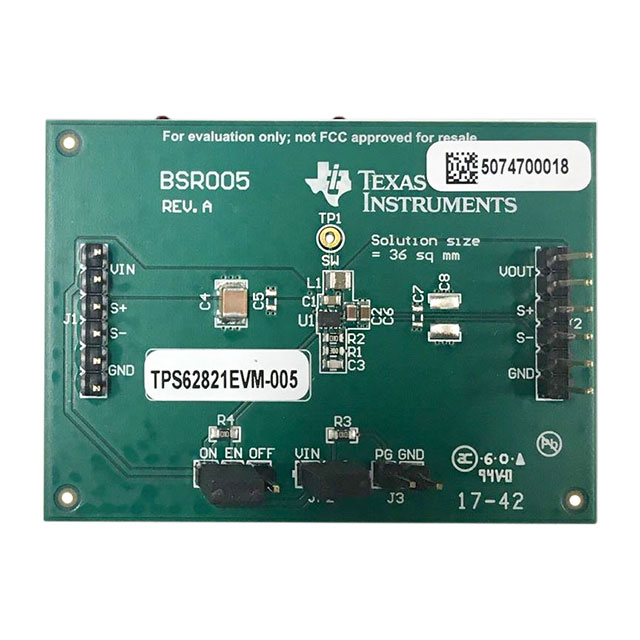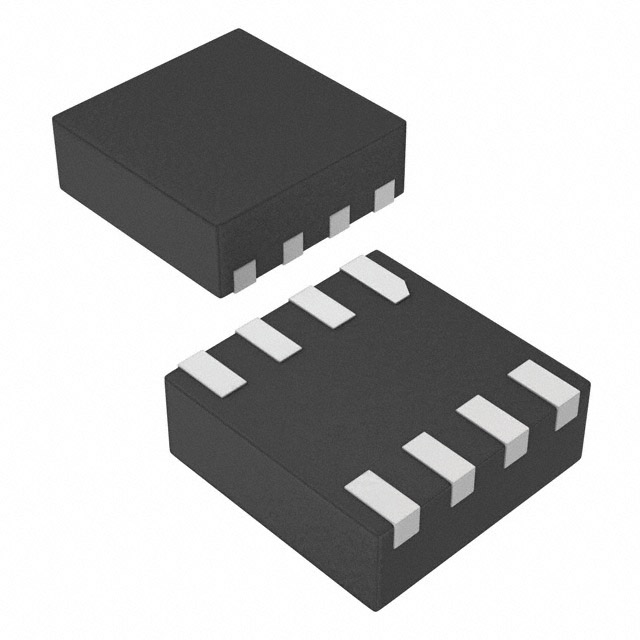
TPS62821DLCT
Active2.4-V TO 5.5-V INPUT, 1-A STEP-DOWN CONVERTER WITH 1% ACCURACY IN 1.5-MM X 2-MM VSON-HR PACKAGE
Deep-Dive with AI
Search across all available documentation for this part.
TPS62821DLCT
Active2.4-V TO 5.5-V INPUT, 1-A STEP-DOWN CONVERTER WITH 1% ACCURACY IN 1.5-MM X 2-MM VSON-HR PACKAGE
Technical Specifications
Parameters and characteristics for this part
| Specification | TPS62821DLCT |
|---|---|
| Current - Output | 1 A |
| Frequency - Switching | 2.2 MHz |
| Function | Step-Down |
| Mounting Type | Surface Mount |
| Number of Outputs | 1 |
| Operating Temperature [Max] | 125 °C |
| Operating Temperature [Min] | -40 C |
| Output Configuration | Positive |
| Output Type | Adjustable |
| Package / Case | 8-PowerVFDFN |
| Supplier Device Package | 8-VSON-HR (2x1.5) |
| Synchronous Rectifier | True |
| Topology | Buck |
| Voltage - Input (Max) [Max] | 5.5 V |
| Voltage - Input (Min) [Min] | 2.4 V |
| Voltage - Output (Max) [Max] | 4 V |
| Voltage - Output (Min/Fixed) | 0.6 V |
Pricing
Prices provided here are for design reference only. For realtime values and availability, please visit the distributors directly
| Distributor | Package | Quantity | $ | |
|---|---|---|---|---|
| Digikey | Cut Tape (CT) | 1 | $ 1.60 | |
| 10 | $ 1.43 | |||
| 25 | $ 1.36 | |||
| 100 | $ 1.12 | |||
| Digi-Reel® | 1 | $ 1.60 | ||
| 10 | $ 1.43 | |||
| 25 | $ 1.36 | |||
| 100 | $ 1.12 | |||
| N/A | 4265 | $ 1.52 | ||
| Tape & Reel (TR) | 250 | $ 1.04 | ||
| 500 | $ 0.92 | |||
| 1250 | $ 0.73 | |||
| 2500 | $ 0.68 | |||
| 6250 | $ 0.65 | |||
| 12500 | $ 0.62 | |||
| Texas Instruments | SMALL T&R | 1 | $ 1.19 | |
| 100 | $ 0.91 | |||
| 250 | $ 0.67 | |||
| 1000 | $ 0.48 | |||
Description
General part information
TPS62821 Series
The TPS6282x is an all-purpose and easy to use synchronous step-down DC-DC converter with a very low quiescent current of only 4 µA. It supplies up to 3A output current (TPS62823) from a 2.4-V to 5.5-V input voltage. Based on the DCS-Control™ topology it provides a fast transient response.
The internal reference allows to regulate the output voltage down to 0.6 V with a high feedback voltage accuracy of 1% over the junction temperature range of -40°C to 125°C. The 1-A, 2-A, 3-A scalable pin-to-pin and BOM-to-BOM compatible device family can be used with small 470-nH inductors.
The TPS6282x include an automatically entered power save mode to maintain high efficiency down to very light loads.
Documents
Technical documentation and resources