LM2575MX-ADJ/NOPB
ActiveSIMPLE SWITCHER 1A STEP-DOWN VOLTAGE REGULATOR
Deep-Dive with AI
Search across all available documentation for this part.
LM2575MX-ADJ/NOPB
ActiveSIMPLE SWITCHER 1A STEP-DOWN VOLTAGE REGULATOR
Deep-Dive with AI
Technical Specifications
Parameters and characteristics for this part
| Specification | LM2575MX-ADJ/NOPB |
|---|---|
| Current - Output | 1 A |
| Frequency - Switching | 52 kHz |
| Function | Step-Down |
| Mounting Type | Surface Mount |
| Number of Outputs | 1 |
| Operating Temperature [Max] | 125 ¯C |
| Operating Temperature [Min] | -40 °C |
| Output Configuration | Positive |
| Output Type | Adjustable |
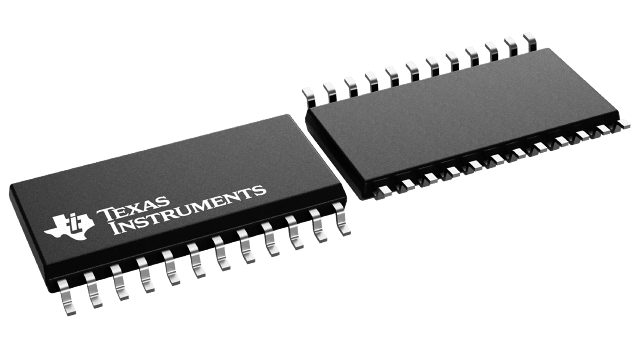
| Package / Case | 24-SOIC |
| Package / Case [custom] | 7.5 mm |
| Package / Case [custom] | 0.295 in |
| Supplier Device Package | 24-SOIC |
| Synchronous Rectifier | False |
| Topology | Buck |
| Voltage - Input (Min) [Min] | 4 V |
| Voltage - Output (Max) | 37 V |
| Voltage - Output (Min/Fixed) | 1.23 V |
Pricing
Prices provided here are for design reference only. For realtime values and availability, please visit the distributors directly
| Distributor | Package | Quantity | $ | |
|---|---|---|---|---|
| Digikey | Cut Tape (CT) | 1 | $ 3.05 | |
| 10 | $ 2.74 | |||
| 25 | $ 2.59 | |||
| 100 | $ 2.24 | |||
| 250 | $ 2.13 | |||
| 500 | $ 1.91 | |||
| Digi-Reel® | 1 | $ 3.05 | ||
| 10 | $ 2.74 | |||
| 25 | $ 2.59 | |||
| 100 | $ 2.24 | |||
| 250 | $ 2.13 | |||
| 500 | $ 1.91 | |||
| Tape & Reel (TR) | 1000 | $ 1.61 | ||
| 2000 | $ 1.53 | |||
| 5000 | $ 1.47 | |||
| Texas Instruments | LARGE T&R | 1 | $ 2.30 | |
| 100 | $ 2.01 | |||
| 250 | $ 1.41 | |||
| 1000 | $ 1.14 | |||
Description
General part information
LM2575-N Series
The LM2575 series of regulators are monolithic integrated circuits that provide all the active functions for a step-down (buck) switching regulator, capable of driving a 1A load with excellent line and load regulation. These devices are available in fixed output voltages of 3.3V, 5V, 12V, 15V, and an adjustable output version.
Requiring a minimum number of external components, these regulators are simple to use and include internal frequency compensation and a fixed-frequency oscillator.
The LM2575 series offers a high-efficiency replacement for popular three-terminal linear regulators. It substantially reduces the size of the heat sink, and in many cases no heat sink is required.
Documents
Technical documentation and resources