Deep-Dive with AI
Search across all available documentation for this part.
Deep-Dive with AI
Technical Specifications
Parameters and characteristics for this part
| Specification | TPS65283EVM-646 |
|---|---|
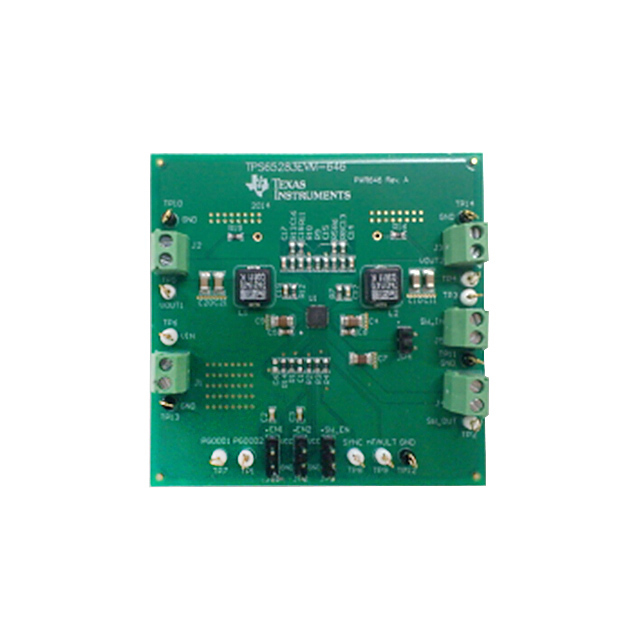
| Board Type | Fully Populated |
| Contents | Board(s) |
| Current - Output | 2.5 A, 3.5 A |
| Frequency - Switching | 500 kHz |
| Main Purpose | DC/DC, Step Down |
| Outputs and Type | 2 |
| Outputs and Type | Non-Isolated, 2 Non-Isolated Outputs |
| Regulator Topology | Buck |
| Supplied Contents | Board(s) |
| Utilized IC / Part | TPS65283 |
| Voltage - Input [Max] | 18 V |
| Voltage - Input [Min] | 4.5 V |
| Voltage - Output | 1.2 V, 5 V |
Pricing
Prices provided here are for design reference only. For realtime values and availability, please visit the distributors directly
| Distributor | Package | Quantity | $ | |
|---|---|---|---|---|
| Digikey | Box | 1 | $ 238.80 | |
| N/A | 2 | $ 238.80 | ||
Description
General part information
TPS65283 Series
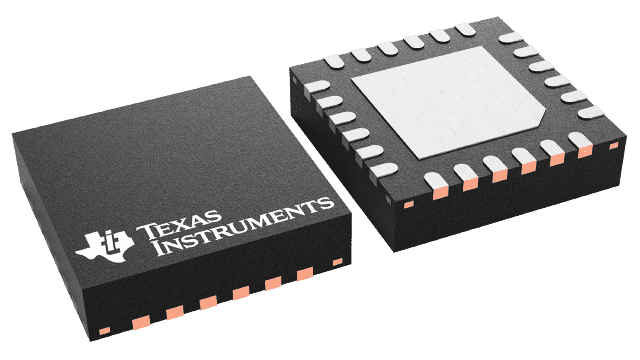
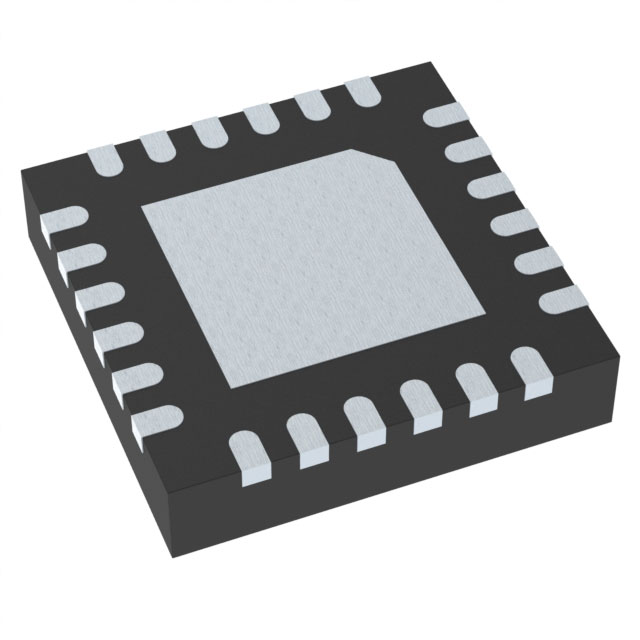
The TPS65283, TPS65283-1 in thermally-enhanced 4-mm × 4-mm VQFN package is a full featured4.5- to 18-V Vin, 3.5-A/2.5-A output current synchronous step down DC-DC converter, which is optimized for small designs through high efficiency and integrating the high-side and low-side MOSFETs. The device also incorporates one N-channel MOSFET power switches for power distribution systems. This device provides a total power distribution solution, where precision current limiting and fast protection response are required.
The 60-mΩ independent power distribution switch limits the output current to a programmable current limit threshold by using an external resistor. The current limit accuracy can be achieved as tight as ±10% at typical 1.25 A. The nFAULT output asserts low under overcurrent and reverse-voltage conditions.
Constant frequency peak current mode control in DC-DC converter simplifies the compensation and optimizes transient response. Cycle-by-cycle overcurrent protection and operating in hiccup mode limit MOSFET power dissipation during buck output short circuit or over loading conditions. When die temperature exceeds thermal over loading threshold, the overtemperature protection shuts down the device.
Documents
Technical documentation and resources