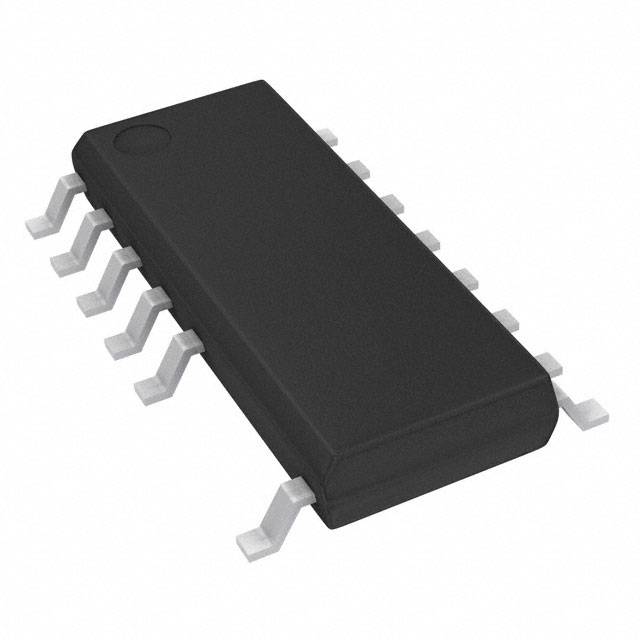
LYT3326D-TL
ActiveLED DRIVER, AC / DC, 124 KHZ, SOIC-16, -40 TO 150 °C, SMD, BOOST/BUCK/BUCK-BOOST/FLYBACK, 185-265 V
Deep-Dive with AI
Search across all available documentation for this part.
LYT3326D-TL
ActiveLED DRIVER, AC / DC, 124 KHZ, SOIC-16, -40 TO 150 °C, SMD, BOOST/BUCK/BUCK-BOOST/FLYBACK, 185-265 V
Deep-Dive with AI
Technical Specifications
Parameters and characteristics for this part
| Specification | LYT3326D-TL |
|---|---|
| Applications | Lighting |
| Dimming | TRIAC |
| Frequency [Max] | 124 kHz |
| Frequency [Min] | 40 kHz |
| Internal Switch(s) | True |
| Mounting Type | Surface Mount |
| Number of Outputs | 1 |
| Operating Temperature [Max] | 150 °C |
| Operating Temperature [Min] | -40 °C |
| Package / Case | 0.154 in, 3.9 mm, 14 Leads |
| Package / Case | 16-SOIC |
| Supplier Device Package | 16-SO B |
| Topology | Step-Up (Boost), Flyback, Step-Down (Buck) |
| Type | AC DC Offline Switcher |
| Voltage - Supply (Max) [Max] | 132 VAC |
| Voltage - Supply (Min) [Min] | 85 VAC |
Pricing
Prices provided here are for design reference only. For realtime values and availability, please visit the distributors directly
Description
General part information
LYT3326 Series
LYTSwitch™-3 family is ideal for single-stage power factor corrected constant current LED bulbs and downlighters. Each device incorporates a high-voltage power MOSFET and discontinuous mode, variable frequency variable on-time controller. The controller also provides cycle-by-cycle current limit, output OVP, line overvoltage, comprehensive protection features, plus advanced thermal management circuitry. All LYTSwitch-3 ICs have a built-in TRIAC detector that discriminates between leading-edge and trailing-edge dimmers. This capability together with load monitoring circuitry regulates bleeder current during each switching cycle. The controller disables the bleeder circuit completely if no dimmer is detected, significantly increasing efficiency. The combination of a low-side switching topology, cooling via electronically quiet SOURCE pins and frequency jitter ensure extremely low EMI. This reduces size of input filter components, greatly reducing audible noise during dimming.
Documents
Technical documentation and resources