MC74HC244ADTG
ActiveOCTAL 3-STATE NON-INVERTING BUFFER/LINE DRIVER/LINE RECEIVER
Deep-Dive with AI
Search across all available documentation for this part.
MC74HC244ADTG
ActiveOCTAL 3-STATE NON-INVERTING BUFFER/LINE DRIVER/LINE RECEIVER
Deep-Dive with AI
Technical Specifications
Parameters and characteristics for this part
| Specification | MC74HC244ADTG |
|---|---|
| Current - Output High, Low [custom] | 7.8 mA |
| Current - Output High, Low [custom] | 7.8 mA |
| Logic Type | Buffer, Non-Inverting |
| Mounting Type | Surface Mount |
| Number of Bits per Element | 4 |
| Number of Elements | 2 |
| Operating Temperature [Max] | 125 °C |
| Operating Temperature [Min] | -55 °C |
| Output Type | 3-State |
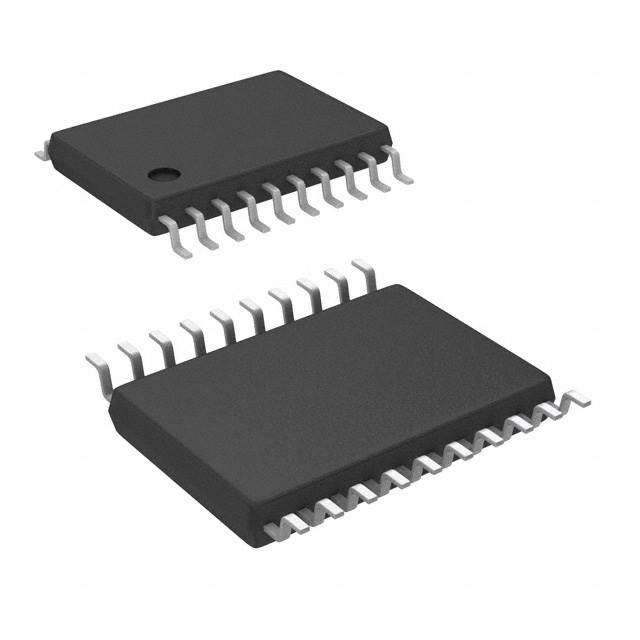
| Package / Case | 20-TSSOP |
| Package / Case [x] | 0.173 in |
| Package / Case [y] | 4.4 mm |
| Supplier Device Package | 20-TSSOP |
| Voltage - Supply [Max] | 6 V |
| Voltage - Supply [Min] | 2 V |
Pricing
Prices provided here are for design reference only. For realtime values and availability, please visit the distributors directly
| Distributor | Package | Quantity | $ | |
|---|---|---|---|---|
| Digikey | Tube | 1 | $ 1.37 | |
| 10 | $ 0.83 | |||
| 75 | $ 0.57 | |||
| 150 | $ 0.51 | |||
| 300 | $ 0.46 | |||
| 525 | $ 0.43 | |||
| 1050 | $ 0.39 | |||
| 2550 | $ 0.35 | |||
| 5025 | $ 0.33 | |||
| Newark | Each | 1 | $ 1.42 | |
| 10 | $ 0.90 | |||
| 150 | $ 0.46 | |||
| 525 | $ 0.44 | |||
| 1050 | $ 0.43 | |||
| 2550 | $ 0.39 | |||
| 10050 | $ 0.34 | |||
| ON Semiconductor | N/A | 1 | $ 0.32 | |
Description
General part information
MC74HC244A Series
The MM74HC244 is a non-inverting buffer and has two active low enables (1G and 2G); each enable independently controls 4 buffers. This device does not have Schmitt trigger inputs. These 3-STATE buffers utilize advanced silicon-gate CMOS technology and are general purpose high speed non-inverting buffers. They possess high drive current outputs which enable high speed operation even when driving large bus capacitances. These circuits achieve speeds comparable to low power Schottky devices, while retaining the advantage of CMOS circuitry, i.e., high noise immunity, and low power consumption. All three devices have a fanout of 15 LS-TTL equivalent inputs. All inputs are protected from damage due to static discharge by diodes to VCCand ground.
Documents
Technical documentation and resources