


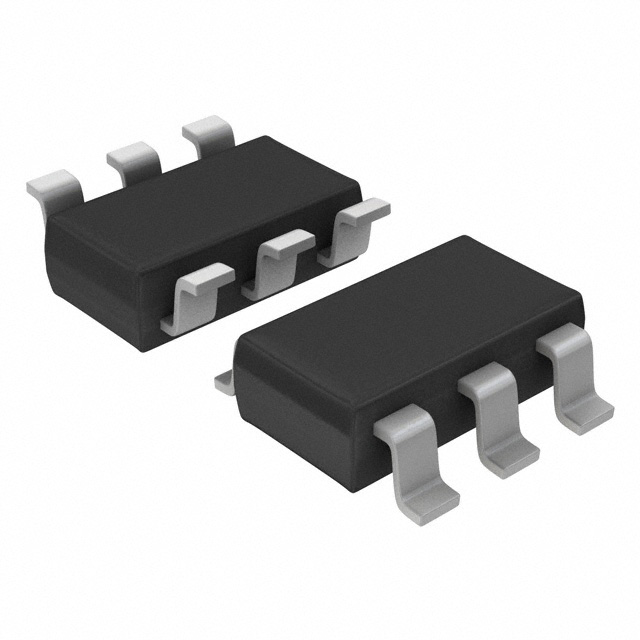
NCP1254ASN65T1G
ObsoletePWM CONTROLLER, CURRENT MODE, FOR OFFLINE POWER SUPPLIES
Deep-Dive with AI
Search across all available documentation for this part.
NCP1254ASN65T1G
ObsoletePWM CONTROLLER, CURRENT MODE, FOR OFFLINE POWER SUPPLIES
Deep-Dive with AI
Technical Specifications
Parameters and characteristics for this part
| Specification | NCP1254ASN65T1G |
|---|---|
| Duty Cycle | 80 % |
| Fault Protection | Over Voltage, Over Power, Short Circuit, Over Load |
| Frequency - Switching | 65 kHz |
| Internal Switch(s) | False |
| Mounting Type | Surface Mount |
| Operating Temperature [Max] | 125 ¯C |
| Operating Temperature [Min] | -40 °C |
| Output Isolation | Isolated |
| Package / Case | TSOT-23-6, SOT-23-6 Thin |
| Supplier Device Package | 6-TSOP |
| Topology | Flyback |
| Voltage - Start Up | 18 V |
| Voltage - Supply (Vcc/Vdd) [Max] | 35 V |
| Voltage - Supply (Vcc/Vdd) [Min] | 8.8 V |
Pricing
Prices provided here are for design reference only. For realtime values and availability, please visit the distributors directly
| Distributor | Package | Quantity | $ | |
|---|---|---|---|---|
Description
General part information
NCP1254 Series
The NCP1254 is a highly integrated PWM controller capable of delivering a rugged and high performance offline power supply in a TSOP-6 package. With a supply range up to 35 V, the controller hosts a jittered 65-kHz switching circuitry operated in peak current mode control. When the power on the secondary side starts to decrease, the controller automatically folds back its switching frequency down to a minimum level of 26 kHz. As the power further goes down, the part enters skip cycle while freezing the peak current setpoint.To help building rugged converters, the controller features several key protective features: a non-dissipative Over Power Protection for a constant maximum output current regardless of the input voltage, two latched over voltage protection inputs - either through a dedicated pin or via the Vcc input and a dual-level auto-recover/latched overload/short-circuit timer.The controller architecture is designed to authorize a transient peak power excursion when the current setpoint hits the limit. At this point, the switching frequency is increased form 65 kHz to 130 kHz until the peak event disappears. The timer duration is then modulated as the converter crosses a peak power excursion mode (long) or undergoes a short circuit (short).
Documents
Technical documentation and resources