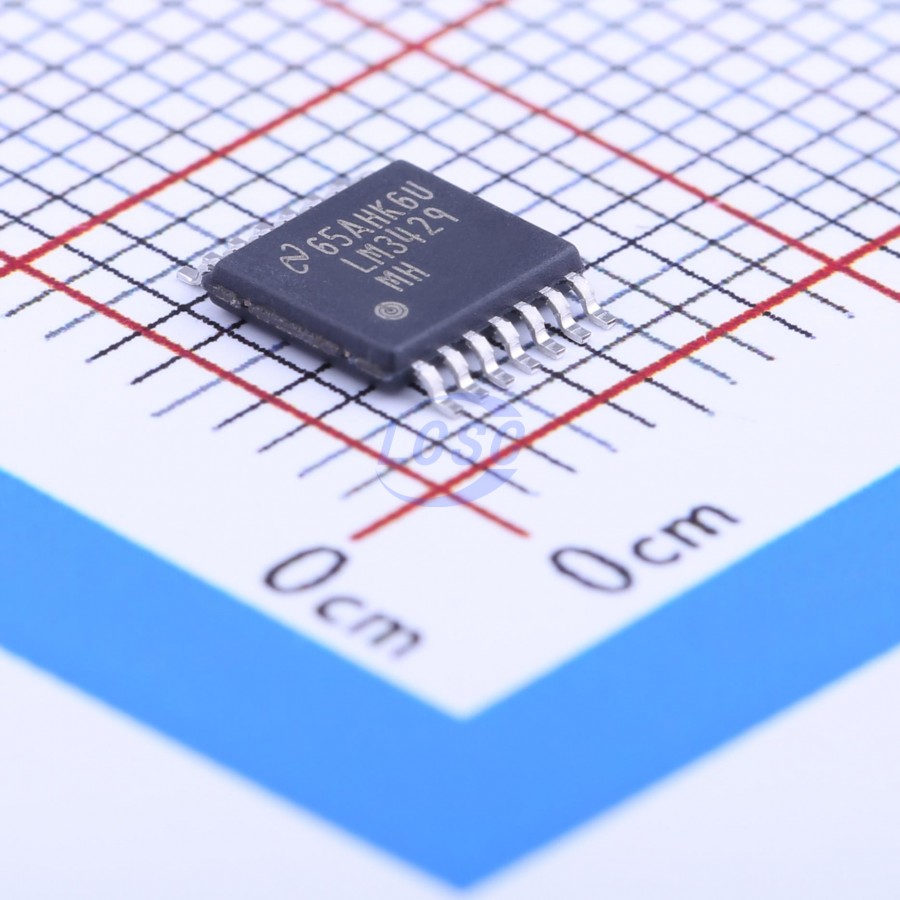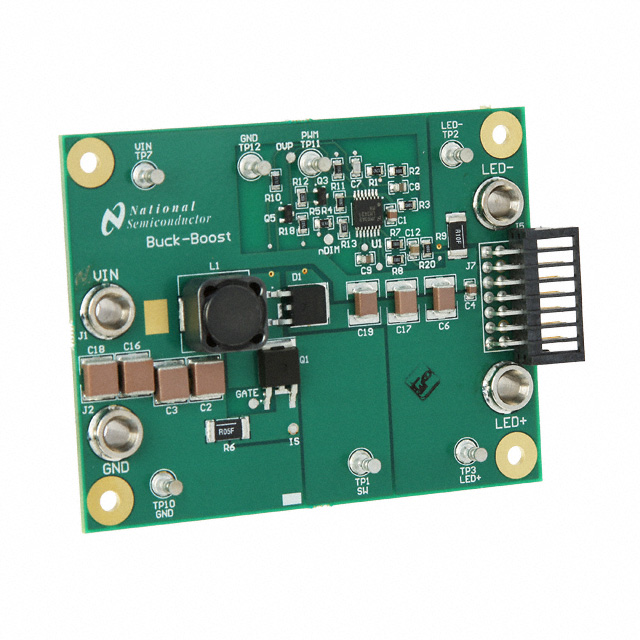
LM3429BKBSTEVAL/NOPB
ActiveBOARD EVAL FOR BUCK-BOOST LM3429
Deep-Dive with AI
Search across all available documentation for this part.
LM3429BKBSTEVAL/NOPB
ActiveBOARD EVAL FOR BUCK-BOOST LM3429
Deep-Dive with AI
Technical Specifications
Parameters and characteristics for this part
| Specification | LM3429BKBSTEVAL/NOPB |
|---|---|
| Current - Output / Channel [custom] | 1 A |
| Features | Dimmable |
| Outputs and Type | Non-Isolated |
| Outputs and Type | 1 |
| Supplied Contents | Board(s) |
| Utilized IC / Part | LM3429 |
| Voltage - Input [Max] | 70 V |
| Voltage - Input [Min] | 10 V |
Pricing
Prices provided here are for design reference only. For realtime values and availability, please visit the distributors directly
| Distributor | Package | Quantity | $ | |
|---|---|---|---|---|
| Digikey | Box | 1 | $ 118.80 | |
Description
General part information
LM3429-Q1 Series
The LM3429 is a versatile high voltage N-channel MosFET controller for LED drivers. It can be easily configured in buck, boost, buck-boost and SEPIC topologies. This flexibility, along with an input voltage rating of 75V, makes the LM3429 ideal for illuminating LEDs in a very diverse, large family of applications.
Adjustable high-side current sense voltage allows for tight regulation of the LED current with the highest efficiency possible. The LM3429 uses Predictive Off-time (PRO) control, which is a combination of peak current-mode control and a predictive off-timer. This method of control eases the design of loop compensation while providing inherent input voltage feed-forward compensation.
The LM3429 includes a high-voltage startup regulator that operates over a wide input range of 4.5 V to 75 V. The internal PWM controller is designed for adjustable switching frequencies of up to 2 MHz, thus enabling compact solutions. Additional features include analog dimming, PWM dimming, overvoltage protection, undervoltage lock-out, cycle-by-cycle current limit, and thermal shutdown.
Documents
Technical documentation and resources