DS100KR800SQE/NOPB
Active10.3-GBPS 8 CHANNEL (UNI-DIRECTIONAL) REDRIVER WITH EQ AND DE
Deep-Dive with AI
Search across all available documentation for this part.
DS100KR800SQE/NOPB
Active10.3-GBPS 8 CHANNEL (UNI-DIRECTIONAL) REDRIVER WITH EQ AND DE
Technical Specifications
Parameters and characteristics for this part
| Specification | DS100KR800SQE/NOPB |
|---|---|
| Data Rate (Max) | 10.3 Gbps |
| Delay Time | 200 ps |
| Input | CML |
| Mounting Type | Surface Mount |
| Number of Channels | 8 |
| Operating Temperature [Max] | 85 °C |
| Operating Temperature [Min] | -40 °C |
| Output | CML |
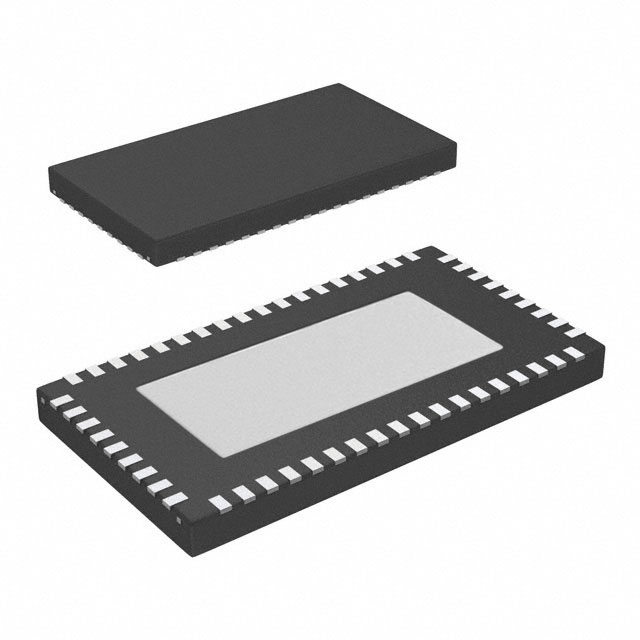
| Package / Case | 54-WFQFN Exposed Pad |
| Signal Conditioning | Input Equalization, Output De-Emphasis |
| Supplier Device Package | 54-WQFN (10x5.5) |
| Type | ReDriver, Buffer |
| Voltage - Supply [Max] | 3.6 V |
| Voltage - Supply [Min] | 2.375 V |
Pricing
Prices provided here are for design reference only. For realtime values and availability, please visit the distributors directly
| Distributor | Package | Quantity | $ | |
|---|---|---|---|---|
| Digikey | Cut Tape (CT) | 1 | $ 20.48 | |
| Digi-Reel® | 1 | $ 20.48 | ||
| Tape & Reel (TR) | 250 | $ 15.39 | ||
| 500 | $ 14.64 | |||
| Texas Instruments | SMALL T&R | 1 | $ 17.44 | |
| 100 | $ 15.23 | |||
| 250 | $ 11.75 | |||
| 1000 | $ 10.51 | |||
Description
General part information
DS100KR800 Series
The DS100KR800 device is a high performance repeater designed to support 8-channel (unidirectional), 10G-KR, and other high-speed interface serial protocols up to 10.3 Gbps. The continuous time linear equalizer (CTLE) of the receiver provides a boost of up to 36 dB at 5 GHz (10.3125 Gbps) in each of its eight channels. This equalizer is capable of opening an input eye that is completely closed due to inter symbol interference (ISI) induced by interconnect medium such as long backplanes or cables. The transmitter provides a de-emphasis boost of up to –12 dB and output voltage amplitude control from 700 mV to 1300 mV.
When operating in 10G-KR mode, the DS100KR800 transparently allows the host controller and the end point to optimize the full link and negotiate transmit equalizer coefficients as defined in the 802.3ap standard. This seamless management of the link training protocol ensures system level interoperability with minimum latency.
The programmable settings can be applied through pin settings, SMBus (I2C) protocol or an external EEPROM. When operating in the EEPROM mode, the configuration information is automatically loaded on power-up. This eliminates the need for an external microprocessor or software driver.
Documents
Technical documentation and resources