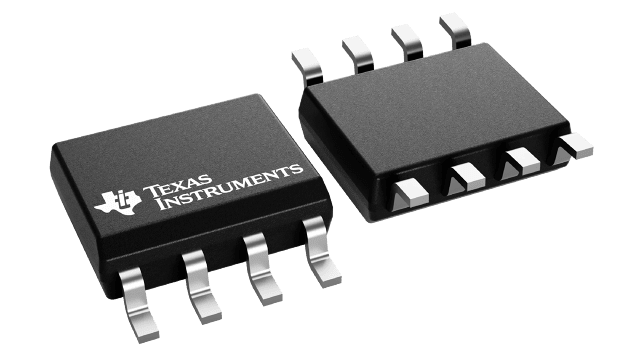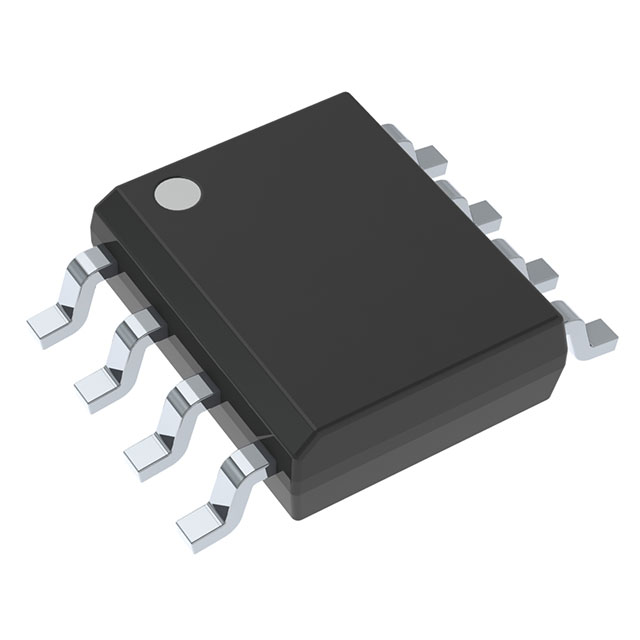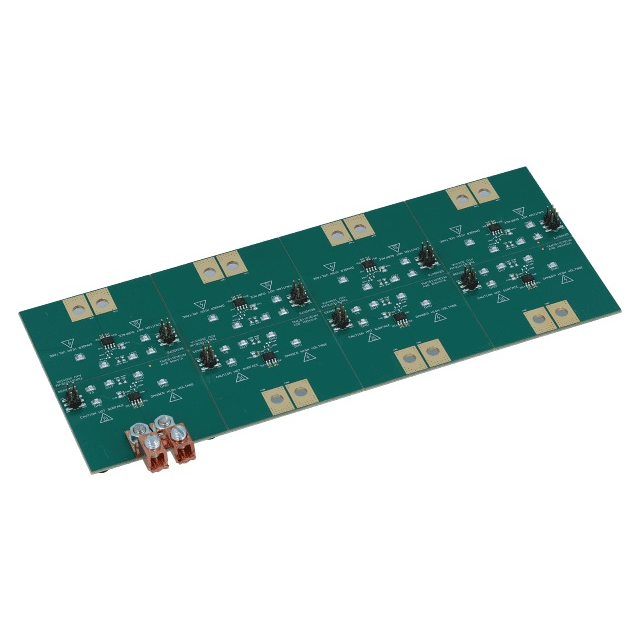
TMCS1107EVM
ActiveTMCS1107 ISOLATED HALL-EFFECT CU
Deep-Dive with AI
Search across all available documentation for this part.
TMCS1107EVM
ActiveTMCS1107 ISOLATED HALL-EFFECT CU
Deep-Dive with AI
Technical Specifications
Parameters and characteristics for this part
| Specification | TMCS1107EVM |
|---|---|
| Embedded | False |
| Sensor Type | Current Sensor |
| Supplied Contents | Board(s) |
| Utilized IC / Part | TMCS1107 |
| Voltage - Supply [Max] | 5.5 V |
| Voltage - Supply [Min] | 3 V |
Pricing
Prices provided here are for design reference only. For realtime values and availability, please visit the distributors directly
| Distributor | Package | Quantity | $ | |
|---|---|---|---|---|
| Digikey | Box | 1 | $ 70.80 | |
Description
General part information
TMCS1107 Series
The TMCS1107 is a galvanically isolated Hall-effect current sensor capable of DC or AC current measurement with high accuracy, excellent linearity, and temperature stability. A low-drift, temperature-compensated signal chain provides <3% full-scale error across the device temperature range.
The input current flows through an internal 1.8-mΩ conductor that generates a magnetic field measured by an integrated Hall-effect sensor. This structure eliminates external concentrators and simplifies design. Low conductor resistance minimizes power loss and thermal dissipation. Inherent galvanic insulation provides a 420-V lifetime working voltage and 3-kVRMSbasic isolation between the current path and circuitry. Integrated electrical shielding enables excellent common-mode rejection and transient immunity.
The output voltage is proportional to the input current with multiple sensitivity options. Fixed sensitivity allows the TMCS1107 to operate from a single 3-V to 5.5-V power supply, eliminates ratiometry errors, and improves supply noise rejection. The current polarity is considered positive when flowing into the positive input pin. Both unidirectional and bidirectional sensing variants are available.
Documents
Technical documentation and resources