


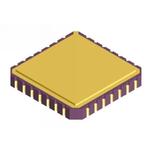
SNJ54ABT543AFK
ActiveOCTAL REGISTERED TRANSCEIVER WITH 3-STATE OUTPUTS
Deep-Dive with AI
Search across all available documentation for this part.
SNJ54ABT543AFK
ActiveOCTAL REGISTERED TRANSCEIVER WITH 3-STATE OUTPUTS
Deep-Dive with AI
Technical Specifications
Parameters and characteristics for this part
| Specification | SNJ54ABT543AFK |
|---|---|
| Current - Output High, Low [custom] | 24 mA |
| Current - Output High, Low [custom] | 48 mA |
| Mounting Type | Surface Mount |
| Number of Bits per Element | 8 |
| Number of Elements | 1 |
| Operating Temperature [Max] | 125 °C |
| Operating Temperature [Min] | -55 °C |
| Output Type | 3-State |
| Package / Case | 28-CLCC |
| Supplier Device Package | 28-LCCC |
| Supplier Device Package [x] | 11.43 |
| Supplier Device Package [y] | 11.43 |
| Voltage - Supply [Max] | 5.5 V |
| Voltage - Supply [Min] | 4.5 V |
Pricing
Prices provided here are for design reference only. For realtime values and availability, please visit the distributors directly
| Distributor | Package | Quantity | $ | |
|---|---|---|---|---|
| Arrow | N/A | 42 | $ 26.01 | |
| 504 | $ 25.39 | |||
| Texas Instruments | TUBE | 1 | $ 28.08 | |
| 100 | $ 24.96 | |||
| 250 | $ 20.52 | |||
| 1000 | $ 18.35 | |||
Description
General part information
SN54ABT543A Series
The 'ABT543A octal transceivers contain two sets of D-type latches for temporary storage of data flowing in either direction. Separate latch-enable (LEAB\ or LEBA\) and output-enable (OEAB\ or OEBA\) inputs are provided for each register to permit independent control in either direction of data flow.
The A-to-B enable (CEAB\) input must be low to enter data from A or to output data from B. If CEAB\ is low and LEAB\ is low, the A-to-B latches are transparent; a subsequent low-to-high transition of LEAB\ puts the A latches in the storage mode. With CEAB\ and OEAB\ both low, the 3-state B outputs are active and reflect the data present at the output of the A latches. Data flow from B to A is similar, but requires using the CEBA\, LEBA\, and OEBA\ inputs.
To ensure the high-impedance state during power up or power down, OE\ should be tied to VCCthrough a pullup resistor; the minimum value of the resistor is determined by the current-sinking capability of the driver.
Documents
Technical documentation and resources